
🔍 Read the full analysis: 13 Ways To Get Clearer Notes With AI Meeting Transcription Software In 2027 on ThorstenMeyerAI.com

Get business pricing on office and shipping supplies
- Business-only prices and quantity discounts
- Tax-exempt purchasing
- Multiple users, one account, clear invoices
TL;DR
A roundup from ThorstenMeyerAI.com compares 13 tools for capturing meetings and turning recordings into notes, from desk hardware to wearables and dedicated transcription software. It recommends matching the tool to where meetings happen and checking accuracy, exports, language support and service terms before relying on it.
ThorstenMeyerAI.com has published a comparison of 13 tools for capturing meetings and turning recordings into notes, spanning desk hardware, portable recorders, wearables and transcription software. The guide says buyers should choose based on where they meet and how they use transcripts, while noting that product listings alone do not establish transcription accuracy, integrations or subscription terms.
The roundup names the HiDock H1E as its preferred starting point for people who want a meeting-focused desk dock and the Philips SpeechExec for buyers seeking a more traditional transcription-software workflow. It also points to the Fieldy 3 and other wearable recorders for hands-free capture away from a desk. These are the guide’s recommendations, not independently verified performance findings.
The other options in the 13-product lineup include a wristband recorder, an Apple Watch-band recorder, a pen-shaped recorder, pocket devices and standalone software. The source highlights the NOTEVOX’s 128GB storage and several recorders with 64GB, but cautions that capacity does not show how easily a user can transfer, organize or transcribe recordings. It does not provide a complete product-by-product specification table in the supplied material.
The guide’s selection criteria include recording access, transcription and summaries, transfer to usable notes, form factor, app dependence, storage and translation claims. It advises checking how recording starts and stops, where processing takes place, whether accounts or ongoing plans are required, and how transcripts can be retrieved and shared. For more on choosing a device, see what to look for in an AI meeting transcription recorder.
The 13 picks
- 1
 Gem AI Voice Recorder for Apple Watch BandsView on Amazon →
- 2
 AI Voice Recorder with Automatic Transcription and Real-Time TranslationView on Amazon →
- 3
 Philips SpeechExec Transcribe Software, 2-Year Subscription, Version 11.5View on Amazon →
- 4
 Tupuniu AI Voice Recorder with 64GB Storage and TranscriptionView on Amazon →
- 5
 DOWAY AI Voice Recorder and Note Taker, 64GB, Silver GrayView on Amazon →
- 6
 Fieldy 3 AI Wearable Transcriber, BlackView on Amazon →
- 7
 Wearable AI Voice Recorder Wristband with Transcription, Summaries, and Mind…View on Amazon →
- 8
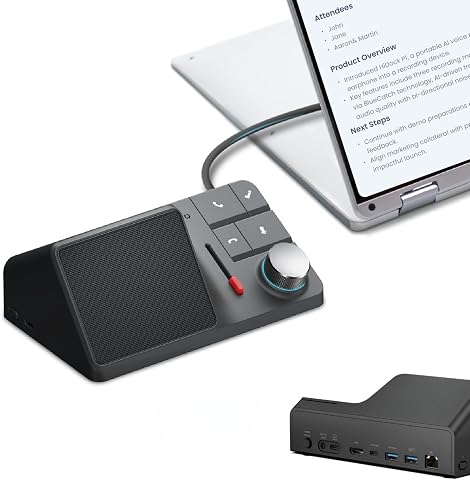 HiDock H1E AI Meeting Note-Taker and 8-in-1 Docking StationView on Amazon →
- 9
 Neyes AI Voice Recorder Pen with Transcription and Real-Time TranslationView on Amazon →
- 10
 viaim NoteKit AI Meeting Voice RecorderView on Amazon →
- 11
 NOTEVOX AI Voice Recorder with 128GB Storage and Transcription AppView on Amazon →
- 12
 RECPOINT AI Voice Recorder with Transcription and SummarizationView on Amazon →
- 13
 AI Voice Recorder with Magnetic Back, Transcription, Summaries, and TranslationView on Amazon →
A Clearer Route From Audio to Notes
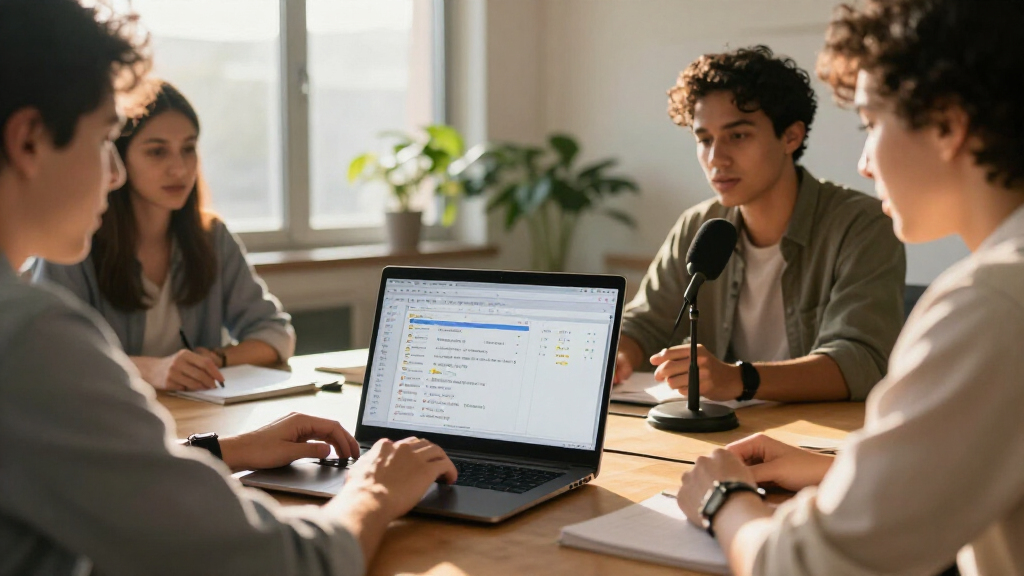
The comparison matters because meeting notes are shaped by the entire workflow, not just the transcription feature. A tool that is inconvenient to carry or makes transcripts difficult to find may be a poor fit even if it advertises summaries or substantial storage. The guide’s central takeaway is to prioritize consistent capture and usable output over a long feature list.
That distinction can affect teams that rely on notes to track decisions, assign work or preserve a record of discussions. The source cautions that a summary does not prove every transcript detail is correct. Where accuracy matters, readers should test realistic audio and check uncertain passages against playback before treating text as an official record.
Products Worth Considering

FlexiSpot E6 Electric Standing Desk, 55 × 28 in, Bamboo Top, White Frame

Canon SELPHY CP1500 Wireless Dye-Sublimation Photo Printer Bundle with 108 Sheets of Paper and 3 Ink Cartridges

Dell UltraSharp U4025QW 40 5K2K WUHD Curved LED Monitor (21:9)
As an affiliate, we earn on qualifying purchases.
From Desk Docks to Wearables
The roundup treats the 13 products as different approaches to meeting capture rather than interchangeable voice recorders. Its first two choices illustrate that range: the HiDock H1E is positioned around a desk setup, while Philips SpeechExec is the software-oriented option. Wearables and pocket recorders address meetings that happen away from a fixed workstation.
The source says it ranked products by their stated use cases and formats, not by assuming that extra storage or bundled features produce better transcripts. It supplies no measured accuracy results, controlled comparison data or confirmed details about integrations and subscription pricing. Readers should treat the ranking as a buying guide, not a product test establishing which option generates the clearest transcript.
“Hardware and software solve different problems.”
— ThorstenMeyerAI.com, in its roundup
Accuracy and Product Terms Need Checking
The supplied source does not report measured transcription accuracy for any of the 13 products. It also does not confirm supported integrations, subscription terms, processing location, or the full language coverage of translation features. Details about which products support live translation versus translation after recording are not established here.
Performance may depend on room noise, microphone placement, overlapping speakers, accents and specialist vocabulary. The guide recommends testing audio similar to a buyer’s actual meetings, checking speaker labels where needed, and confirming that playback is available for reviewing uncertain text. Its product recommendations should not be read as proof that any option will deliver accurate notes in every setting.
Test the Full Notes Workflow
The guide points buyers toward a practical next step: map the process from starting a recording through retrieving, checking and sharing the notes. Before committing, verify how transcripts are exported, whether an account or plan is needed, which languages are supported and how translation works. A short trial using representative meeting audio can reveal whether the format and transcript quality suit the intended use.
The source provides no schedule for new tests or follow-up updates. Until product terms and performance are confirmed directly with vendors, buyers should treat the rankings as recommendations based on the described use cases and verify current features before purchasing.
Key Questions
Which product does the roundup recommend for a desk-based meeting setup?
The guide names the HiDock H1E as its starting recommendation for people who want meeting note-taking paired with a desk dock. That is the source’s assessment, not a reported head-to-head accuracy result.
What does it recommend for a software-first transcription workflow?
It points to Philips SpeechExec for buyers who prefer a more traditional transcription-software option. The supplied material does not confirm its current subscription terms or integrations.
Does more storage mean clearer transcripts?
No. The guide notes storage capacities such as 128GB for the NOTEVOX and 64GB for several recorders, but says capacity does not establish transcription quality or fit with a buyer’s transfer and organization habits.
How can buyers check whether a transcript is reliable?
Test a recording that resembles the meetings the tool will capture, then compare uncertain passages with the audio. The source says noise, overlapping speech, accents and technical vocabulary can affect results.
Are the listed translation features all live?
The source does not establish that. It advises checking whether a product translates speech during a conversation, processes a recording afterward or translates an existing transcript, as well as confirming supported languages.
Source: ThorstenMeyerAI.com