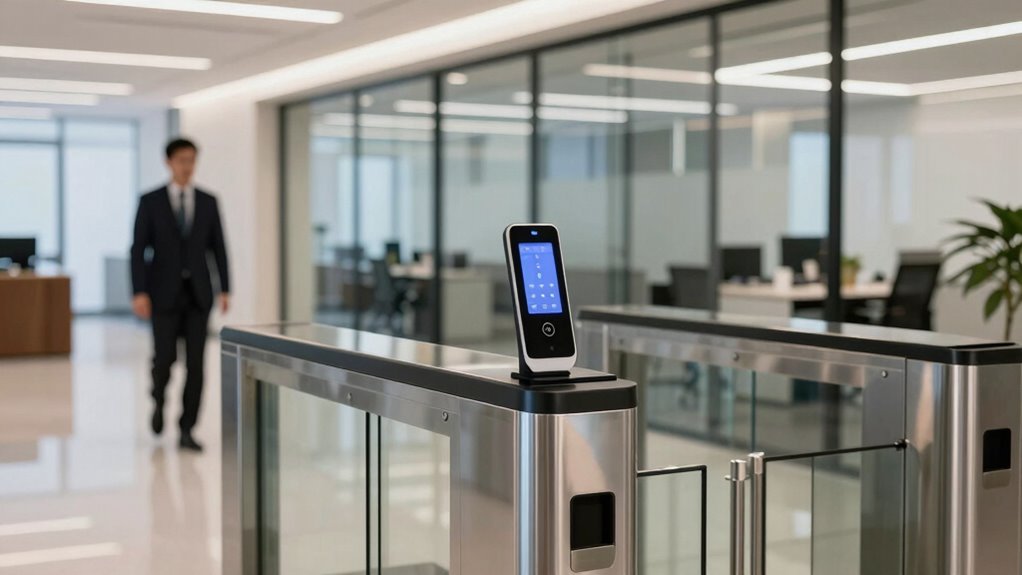

Secure entry systems change your office operations by providing quick, contactless access that boosts security and efficiency. They verify identities through biometric data or digital credentials, reducing the risk of theft or unauthorized entry. You can set clear access policies and monitor activity in real time, making management easier. Automating access for departing employees keeps your building secure. To discover how these systems can create a safer, more organized workspace, keep exploring the details.

Get business pricing on office and shipping supplies
- Business-only prices and quantity discounts
- Tax-exempt purchasing
- Multiple users, one account, clear invoices
Key Takeaways
- Enhance security by verifying identities through biometric data, reducing unauthorized access risks.
- Automate access management, enabling quick permission updates and real-time monitoring of entry activities.
- Eliminate physical keys, lowering theft and duplication risks, and streamlining contactless entry for employees.
- Maintain detailed access records and remote management, improving security oversight and incident response.
- Strengthen overall office safety by integrating advanced security features into a comprehensive security strategy.

In today’s fast-paced office environments, securing your premises is more important than ever, and the right entry system plays a crucial role in safeguarding sensitive information and assets. Modern security solutions, especially those utilizing biometric authentication, have transformed how you control access to your workplace. This not only enhances security but also streamlines entry for authorized personnel, reducing delays and frustration. When you implement biometric authentication, you create a more dependable barrier against unauthorized access, ensuring that only approved employees can enter sensitive areas.
Biometric authentication enhances security and streamlines access for authorized personnel.
Furthermore, effective access control policies are essential to maximize these advanced entry systems. You need clear rules that define who can access specific zones within your office and under what conditions. These policies help you manage permissions efficiently, adapt quickly to changing personnel, and prevent security breaches. For example, you might restrict certain departments or confidential areas to a select group of employees, with biometric authentication serving as the gatekeeper. When combined with real-time monitoring and audit trails, access control policies give you an all-encompassing overview of who enters and exits your premises, making it easier to identify suspicious activity or respond to incidents swiftly. Incorporating biometric authentication further strengthens these security measures by providing a reliable method of verification.
The integration of secure entry systems also influences how your office operates on a daily basis. With biometric authentication, you eliminate the need for physical keys, reducing the risk of duplication or theft. Employees appreciate the convenience of quick, contactless access, which can improve overall efficiency and morale. Additionally, these systems can be programmed to automatically revoke access for departing staff, ensuring your security remains tight without the need for manual rekeying or issuing new cards. This automation saves you time and reduces human error, while maintaining a high level of security. Advanced security solutions like these contribute to a safer and more organized work environment, providing peace of mind for management and staff alike. Implementing these systems also supports office security by offering detailed access records and remote management capabilities.
Beyond convenience, understanding site security involves not just controlling access but also monitoring potential vulnerabilities and responding proactively to threats. Incorporating comprehensive security measures ensures that your security strategy remains resilient against evolving risks, protecting your entire office ecosystem. All these features come together to create a safer, more organized work environment. When you adopt sophisticated entry systems with biometric authentication, you’re not just protecting your assets—you’re also empowering your team with a more secure and efficient way to operate.
Frequently Asked Questions
Can Entry Systems Be Integrated With Existing Office Software?
Yes, entry systems can be integrated with your existing office software. By focusing on access control and system compatibility, you guarantee seamless communication between security systems and office management tools. This integration streamlines user access, improves security oversight, and simplifies administration. You’ll find it easier to manage permissions, monitor entry logs, and enhance overall office security, making daily operations more efficient and secure.
What Is the Average Lifespan of Electronic Entry Devices?
Imagine your electronic entry device as a rebellious teenager—usually good for about 3 to 7 years before needing a serious upgrade. Biometric authentication and wireless connectivity keep it current, but wear and tear, tech advances, and security improvements shorten its lifespan. Expect these devices to give you reliable service roughly 5 years, after which they might start acting out, demanding replacement or upgrades to keep your office secure.
Are There Options for Temporary or Guest Access?
Yes, you can set up temporary access for guests using secure entry systems. These systems allow you to customize guest permissions, granting them limited or time-specific access. You can easily generate temporary codes or digital keys that expire after a certain period, ensuring your office remains secure while accommodating visitors. This flexibility simplifies managing guest access without compromising safety or requiring physical keys.
How Do Entry Systems Handle Power Outages?
During a power outage, your entry system stays operational thanks to backup power and system redundancy. You might worry about losing access, but these systems switch seamlessly to backup batteries or generators, ensuring continuous security. Visualize a relay race, where the backup power takes over instantly when main power fails, keeping your office secure and accessible without interruption. This reliable design minimizes downtime and maintains safety at all times.
What Training Is Required for Staff to Operate New Systems?
You need to provide staff training on access control systems to guarantee they operate the new secure entry systems effectively. This training should cover how to use biometric scanners, key cards, or PIN codes, as well as troubleshooting common issues. By doing so, you empower your team to manage access confidently and maintain security protocols, reducing the risk of unauthorized entry and ensuring smooth office operations.
Conclusion
As you implement these secure entry systems, you might think your office is fully protected. But the real question remains: what unforeseen vulnerabilities could still be lurking? Each upgrade brings new possibilities, but also new challenges. Are you truly prepared for the unexpected? The future of office security hinges on your choices today. Stay vigilant—because in this game of security, the next move could change everything. Are you ready to face what’s coming?
Halloween Picks
halloween
As an affiliate, we earn on qualifying purchases.