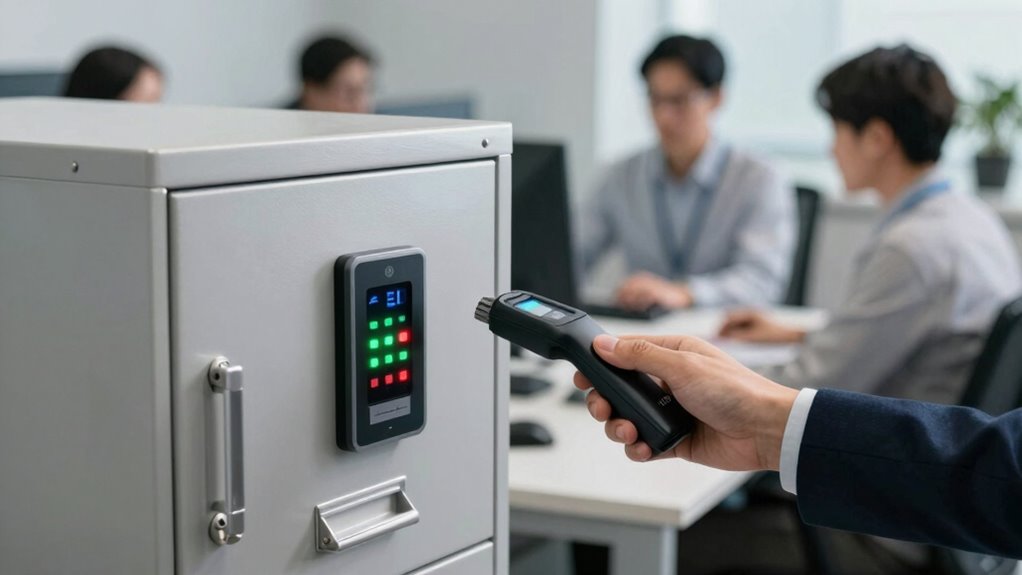
In real offices, document security combines digital encryption, access controls, and employee protocols to protect sensitive data. You’ll use encryption to scramble information, making it unreadable to unauthorized people. Access controls, like permissions and multi-factor authentication, limit who can view or edit documents. Proper employee training and regular system maintenance help prevent human errors and security gaps. Keep securing your environment—discover more ways to strengthen your document security practices.

Get business pricing on office and shipping supplies
- Business-only prices and quantity discounts
- Tax-exempt purchasing
- Multiple users, one account, clear invoices
Key Takeaways
- Digital encryption transforms sensitive documents into coded formats only accessible with authorized keys.
- Access controls restrict document views and edits based on user roles and permissions.
- Employee training ensures staff understand security protocols and follow best practices for handling sensitive data.
- Regular security audits and system updates maintain effective encryption and access management.
- Layered security combines encryption, access controls, and compliance measures to protect against internal and external threats.

In today’s office environments, safeguarding sensitive documents is more crucial than ever. With digital data becoming the backbone of daily operations, companies rely heavily on digital encryption to protect their information from unauthorized access. Digital encryption transforms your data into a coded format that only authorized individuals can decipher with the correct key. This process guarantees that even if someone intercepts the data during transmission or gains physical access to storage devices, they can’t read or misuse it. Encryption acts as a first line of defense, especially for confidential emails, financial records, or proprietary research, making it much harder for cybercriminals or careless employees to compromise sensitive information.
But encryption alone isn’t enough. You also need strong access control measures to regulate who can see, modify, or share documents. Access control involves setting permissions and restrictions based on user roles or specific needs. For instance, you might allow your finance team to view payroll files but prevent them from editing the data. Similarly, only HR personnel should access employee records, while IT staff manage system configurations. Implementing multi-factor authentication adds an extra layer of security, requiring users to verify their identity through multiple means—like a password and a fingerprint—before gaining access. These controls not only limit the risk of data breaches but also help maintain strict accountability, as every action taken on sensitive documents can be tracked and audited. Regular training and awareness programs also play a critical role in ensuring employees understand the importance of document security protocols.
In real offices, security isn’t just about installing software; it’s an extensive system that integrates digital encryption and access control seamlessly. Employees should be trained on the importance of safeguarding documents, understanding which information is sensitive, and following proper protocols. You may also employ secure document management systems that automatically apply encryption and enforce access restrictions, reducing the chances of human error. Regularly updating security settings and conducting audits ensures that access privileges remain appropriate and that no unauthorized users have slipped through the cracks. Additionally, understanding the security measures involved in protecting digital information is vital for maintaining a robust defense against threats. Employing a multi-layered security approach helps organizations better defend against evolving cyber threats. Establishing a comprehensive security strategy ensures all aspects of document protection are consistently addressed and improved over time. Recognizing the importance of continuous security assessment allows organizations to adapt to new vulnerabilities as they emerge.
Ultimately, the combination of digital encryption and access control provides a layered approach to document security. It helps you protect sensitive information from potential threats, whether internal or external, and ensures compliance with data privacy regulations. In your office, these measures work together to create a secure environment where confidential documents stay protected, and your organization maintains trust with clients and partners. By understanding and implementing these security practices, you help safeguard your office’s most valuable information assets every day.
digital document encryption software
As an affiliate, we earn on qualifying purchases.
As an affiliate, we earn on qualifying purchases.
Frequently Asked Questions
How Often Should Office Document Security Protocols Be Updated?
You should update office document security protocols at least annually or whenever significant changes occur. Regularly review and strengthen digital encryption and access controls to stay ahead of potential threats. As technology evolves, so do security risks, so keeping protocols current guarantees sensitive information stays protected. Periodic updates help identify vulnerabilities and adapt to new security standards, maintaining a robust defense against unauthorized access or data breaches.
Are There Specific Laws Governing Document Security in Different Industries?
Yes, specific laws govern document security across various industries. You must follow industry regulations and compliance standards like HIPAA for healthcare, GDPR for data protection in Europe, or PCI DSS for payment card security. These laws dictate how you handle, store, and transmit sensitive information, ensuring your organization maintains legal compliance. Staying informed about relevant regulations helps you protect data effectively and avoid hefty penalties.
What Training Is Recommended for Employees on Document Security?
Think of your team as the gatekeepers of your company’s secrets. To keep this gate secure, you should provide training on employee awareness and security policies. Regular sessions teach staff how to spot phishing scams, handle sensitive documents properly, and follow protocols. This ongoing education makes sure everyone understands their role in protecting information, turning them into vigilant guardians rather than unwitting vulnerabilities.
How Can We Securely Dispose of Sensitive Documents?
You should implement shredding procedures for physical documents by using cross-cut shredders or professional shredding services to guarantee sensitive information is completely destroyed. For digital files, use strong digital encryption before deletion, and consider secure data wiping tools that overwrite information. Combining these methods guarantees that both physical and digital sensitive documents are securely disposed of, preventing unauthorized access and maintaining your office’s confidentiality.
What Are the Costs Associated With Implementing Advanced Document Security?
Cost considerations can certainly cause concern, but careful cost analysis clarifies what’s required. Implementing advanced document security involves costs for security measures like encryption, secure storage, and access controls. You might face initial investments in technology, training, and ongoing maintenance. While costs can be considerable, the protection they provide against data breaches and leakage often outweighs expenses, making it a worthwhile investment for safeguarding sensitive information effectively.
multi-factor authentication security device
As an affiliate, we earn on qualifying purchases.
As an affiliate, we earn on qualifying purchases.
Conclusion
In real offices, document security isn’t just about locking files; it’s about creating a culture of vigilance. While some believe digital encryption alone suffices, studies suggest that layered security—combining physical safeguards, employee training, and access controls—proves most effective. This aligns with the “defense in depth” theory, which posits that multiple security measures working together offer the best protection. Ultimately, staying proactive and informed keeps your office’s sensitive information truly secure.
secure document management system
As an affiliate, we earn on qualifying purchases.
As an affiliate, we earn on qualifying purchases.
employee cybersecurity training kit
As an affiliate, we earn on qualifying purchases.
As an affiliate, we earn on qualifying purchases.
Fall Picks
fall essentials
As an affiliate, we earn on qualifying purchases.