
TL;DR

Get business pricing on office and shipping supplies
- Business-only prices and quantity discounts
- Tax-exempt purchasing
- Multiple users, one account, clear invoices
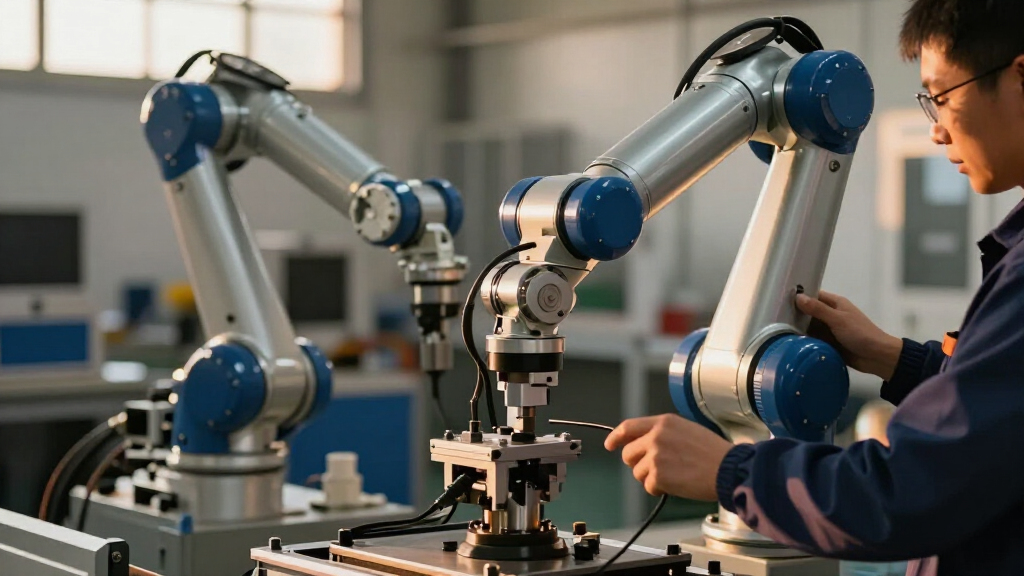
Siemens announced a major push into industrial AI, developing its own physical AI models and partnering with NVIDIA to create an AI-driven manufacturing platform. This signals a strategic shift toward AI applications in factories, emphasizing domain expertise and proprietary data.
Siemens has announced a major initiative to embed artificial intelligence into manufacturing, including the development of its Industrial Foundation Model and an expanded partnership with NVIDIA to build an Industrial AI Operating System. This move aims to transform factory automation and design, marking a significant shift toward physical AI applications in industry.
At CES 2026, Siemens revealed its strategy to harness AI for manufacturing by creating models trained specifically on industrial data, such as 3D models, engineering drawings, and sensor telemetry. The Industrial Foundation Model (IFM), announced earlier at Hannover Messe 2025, is designed to process and contextualize these data types to optimize engineering and automation processes.
The company also announced a partnership with NVIDIA to develop an Industrial AI Operating System, which will support GPU-accelerated simulations, physics-based AI models, and digital twins. The first fully AI-driven, adaptive factory is scheduled to launch in 2026 at Siemens’ Electronics Factory in Erlangen, Germany, serving as a blueprint for future facilities globally.
Siemens emphasizes its proprietary industrial data, long-standing customer relationships, and domain expertise as key advantages in this AI push, positioning itself differently from startups relying on general-purpose models. However, much of the AI infrastructure depends on NVIDIA’s hardware and software, raising questions about technological sovereignty and the pace of adoption given the long industrial deployment cycles.
Implications of Siemens’ Industrial AI Strategy
This development signals a shift in industrial AI focus from language-based models to physical and operational data, potentially revolutionizing manufacturing efficiency and automation. Siemens’ approach leverages its extensive proprietary data and domain knowledge, giving it a competitive edge in creating tailored AI solutions for factories. The partnership with NVIDIA accelerates this effort, aiming to embed AI deeply into the manufacturing lifecycle. If successful, this could set a new standard for industrial productivity and digital transformation, influencing global manufacturing practices.
industrial AI software for manufacturing
As an affiliate, we earn on qualifying purchases.
As an affiliate, we earn on qualifying purchases.
Background on Siemens’ Industrial AI Initiatives
Siemens has a 175-year history in industrial automation and digitalization, with a broad portfolio of manufacturing and engineering software. The company first announced its focus on AI for industry at Hannover Messe 2025 with the launch of the Industrial Foundation Model, aiming to process complex industrial data. Its partnership with NVIDIA, announced at CES 2026, builds on this foundation, emphasizing GPU-accelerated simulations and digital twins. The concept of AI-driven factories is gaining momentum across the sector, with Siemens positioning itself as a leader in applying AI to physical manufacturing environments.
“Industrial AI is no longer a feature; it’s a force that will reshape the next century.”
— Roland Busch, Siemens CEO
As an affiliate, we earn on qualifying purchases.
Uncertainties Surrounding Siemens’ Industrial AI Rollout
While Siemens has announced ambitious plans, specific details about the deployment timelines, performance metrics, and scalability of the new AI systems remain undisclosed. The first AI-driven factory in Erlangen is scheduled for 2026, but it is not yet clear how quickly the technology will be adopted across other facilities or how it will perform in complex, real-world environments. Additionally, the dependency on NVIDIA’s infrastructure raises questions about technological sovereignty and long-term independence.
GPU-accelerated industrial AI platform
As an affiliate, we earn on qualifying purchases.
As an affiliate, we earn on qualifying purchases.
Next Steps for Siemens’ Industrial AI Expansion
Siemens plans to operationalize its first AI-driven factory in Erlangen in 2026, serving as a proof of concept. The company will also introduce Digital Twin Composer and expand its industrial copilots, aiming to embed AI into more manufacturing processes. Monitoring the performance and adoption rate of these initiatives over the coming years will be critical to assess their impact and scalability. Siemens is expected to provide further technical details and performance results as deployment progresses.
factory automation sensors and hardware
As an affiliate, we earn on qualifying purchases.
As an affiliate, we earn on qualifying purchases.
Key Questions
What is Siemens’ Industrial Foundation Model?
The Industrial Foundation Model (IFM) is Siemens’ specialized AI model designed to process and analyze industrial data such as 3D models, engineering drawings, and sensor telemetry to optimize manufacturing and engineering processes.
How does Siemens’ partnership with NVIDIA enhance its AI capabilities?
The partnership provides GPU-accelerated simulation, physics-based AI models, and digital twin technology, enabling Siemens to develop real-time, generative simulations for manufacturing optimization.
When will the first AI-driven factory be operational?
Siemens plans to launch its fully AI-driven, adaptive manufacturing site at the Erlangen factory in 2026.
What are the main risks or challenges Siemens faces in this AI initiative?
Key challenges include dependency on NVIDIA’s infrastructure, the slow adoption cycle in industrial settings, and the need for proven performance metrics before widespread deployment.
Why is Siemens focusing on physical AI instead of chatbots or language models?
Siemens believes that the most valuable AI applications in industry are in physical systems, where models can process complex engineering data and physics, rather than language-based AI which is less relevant to manufacturing environments.
Source: ThorstenMeyerAI.com
Halloween Picks
halloween
As an affiliate, we earn on qualifying purchases.