📊 Full opportunity report: A Signal Monitor For United States–Belgium Trade And Supply Chains on IdeaNavigator AI — validation score, market gap, and execution plan.

Get business pricing on office and shipping supplies
- Business-only prices and quantity discounts
- Tax-exempt purchasing
- Multiple users, one account, clear invoices
TL;DR
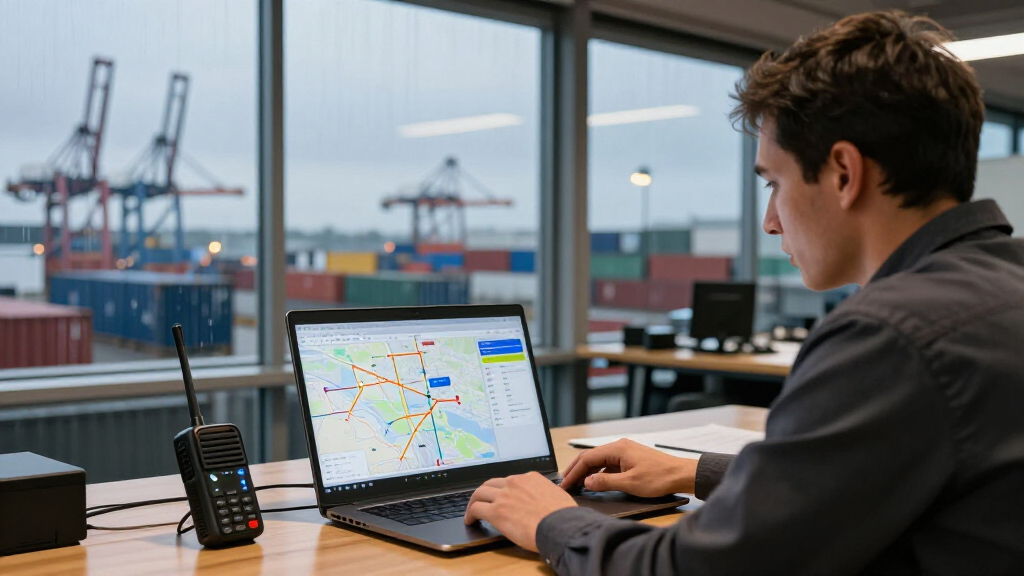
IdeaNavigator AI has outlined an early-stage idea for a subscription monitor that would turn geopolitical and trade signals related to the United States and Belgium into operational briefs. Its materials cite a Google Trends score of 88/100, but provide no measurement window or comparison baseline, and do not establish a specific trade event or disruption.
IdeaNavigator AI has proposed a test of a trade and supply-chain signal monitor focused on developments involving the United States and Belgium, aimed at operations leads managing trade exposure. The proposal describes a potential service, not a launched product, and does not identify a particular U.S.-Belgium policy change, shipment delay or supply-chain disruption behind the idea.
The proposed monitor would track Google Trends and similar feeds, then filter geopolitical and trade developments for their relevance to an operations lead. Each selected item would be turned into a short brief explaining what changed, why it matters and what to do. The stated problem is that relevant developments appear across news, forums and filings, making it difficult for a busy operations team to identify signals that require action.
IdeaNavigator AI describes the service as a possible subscription product for trade and supply-chain operations professionals. Its suggested initial test is to hand-deliver the U.S.-Belgium brief alongside two other geopolitical or trade updates to five people matching the target role. The test would track whether recipients change a decision or forward a brief to a colleague. No test results, customer commitments, pricing or operating product are reported.
Testing Whether Trade Alerts Change Decisions
For operations teams, the proposed value is not simply receiving more headlines; it is finding developments that could affect sourcing, shipments, compliance or contingency planning and presenting them in a usable format. If a concise alert reaches the right person early enough to inform a decision, it could help teams respond without monitoring a broad stream of news themselves.
That benefit remains a hypothesis to test. The proposed five-person exercise is small and measures practical engagement—whether someone changes a decision or shares the information—rather than establishing market demand or proving that the alerts improve supply-chain outcomes. Readers should not treat the proposal as evidence that U.S.-Belgium trade conditions have changed.
Products Worth Considering

Dell UltraSharp U2725QE 27-Inch 4K UHD IPS Black Monitor

Dell UltraSharp 27 Thunderbolt Hub Monitor (U2726DER)

Samsung 27-inch Odyssey OLED G6 QD-OLED QHD Gaming Monitor
As an affiliate, we earn on qualifying purchases.
From Trend Signal to Pilot
The idea is framed as a narrow first workflow for an operations lead responsible for trade and supply-chain exposure, rather than as a broad geopolitical news service. The specific geographic pairing in the proposal is the United States and Belgium, but it does not explain why that route or relationship was selected or name a particular industry, product category or trade lane.
The proposal says Google Trends surfaced the opportunity with a score of 88/100. It gives no date range, geographic settings, search term details or comparison baseline for that figure. It should therefore be read only as a reported signal score, not as evidence of an 88% increase in interest or of a measured rise in trade risk. The suggested next step is direct feedback from five prospective users, not a public product launch.
No Trade Disruption Is Identified
The proposal does not specify what U.S.-Belgium development prompted the signal, when it occurred, or whether it involved tariffs, regulation, diplomatic action, transport or another issue. It also provides no supporting news reports, filings or other detail that would establish a concrete event. The idea’s wording alone does not confirm that trade flows or supply chains are currently disrupted.
It remains unclear whether the proposed monitor exists, which feeds it would use beyond Google Trends and similar sources, how it would assess relevance or verify information, and how often users would receive alerts. The 88/100 figure lacks a stated baseline and time window. There is also no reported feedback from the five-person validation group, subscription price, or evidence that prospective users would pay.
A Five-User Validation Test
The next step set out in the proposal is to deliver three briefs to five target users: the U.S.-Belgium item and two additional geopolitical or trade developments. The proposed measure is whether recipients say the information changed a decision or forward it to a colleague. No timetable beyond the phrase “this week” is provided, and no completed test or follow-up results are included.
If the test proceeds, useful evidence would include which alerts users found relevant, whether the information was timely and accurate, and what action—if any—it informed. Until those results are reported, the monitor remains a business concept under consideration, rather than an established source of operational alerts.
Key Questions
Has a U.S.-Belgium trade disruption been reported?
The proposal does not identify or document a specific trade disruption. It describes a monitoring idea prompted by a signal, not a confirmed change in trade conditions.
Is the signal monitor available now?
No launch or functioning service is reported. The material describes a possible subscription product and a suggested validation exercise.
What does the 88/100 score measure?
IdeaNavigator AI says Google Trends surfaced an 88/100 signal, but gives no measurement window, comparison baseline or further methodology. The figure cannot be interpreted as a percentage increase.
How would the proposed service help operations teams?
It would filter geopolitical and trade updates for a target role and summarize what changed, why it may matter and what action to consider. Whether that would affect decisions has not yet been tested in reported results.
How would the idea be validated?
The proposed test is to send three briefs to five operations professionals and track whether a brief changes a decision or is shared with a colleague. No findings from that test are available.
Source: IdeaNavigator AI