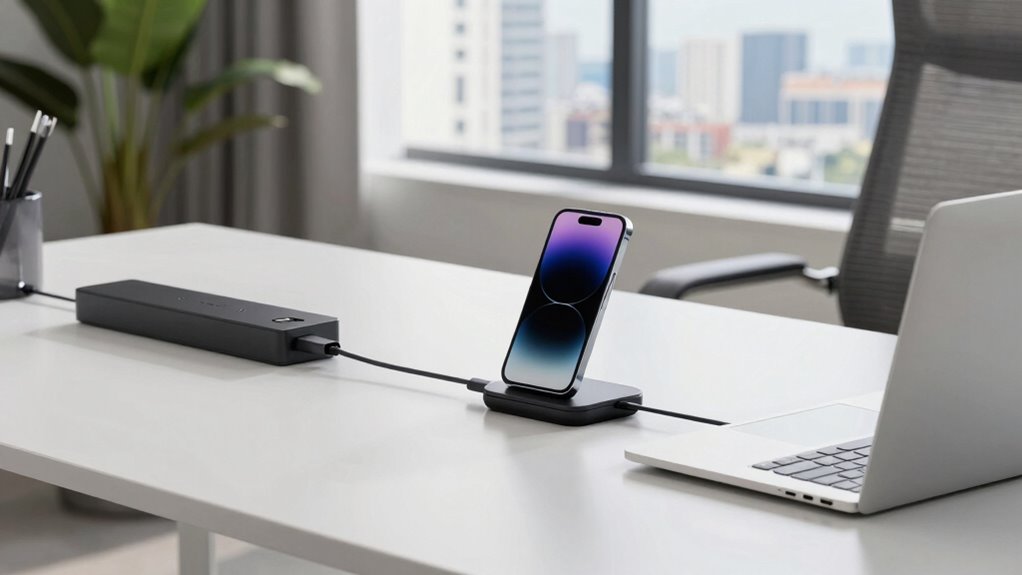

Including device charging in your workplace planning keeps your team productive and connected all day. Wireless charging reduces clutter and hassle, while strategically placed stations in shared spaces encourage convenience and collaboration. Upgrading infrastructure guarantees safe, reliable power, preventing disruptions. Thoughtful placement and modern design boost employee satisfaction and adapt to evolving technology. By prioritizing charging solutions now, you set the stage for a more efficient, future-ready workspace—learn more about making this integration seamless.
Open a free Amazon Business account
Business pricing, bulk buying and tax-exempt orders.
As an affiliate, we earn on qualifying purchases.
Key Takeaways
- Ensures continuous device use, minimizing downtime and boosting productivity in fast-paced work environments.
- Facilitates seamless connectivity and reduces clutter by embedding charging solutions into shared spaces.
- Supports infrastructure reliability through proper electrical system assessment and upgrades.
- Enhances employee satisfaction and retention by demonstrating commitment to modern, supportive workplace amenities.
- Future-proofs the workspace by aligning charging infrastructure with evolving device standards and sustainability goals.
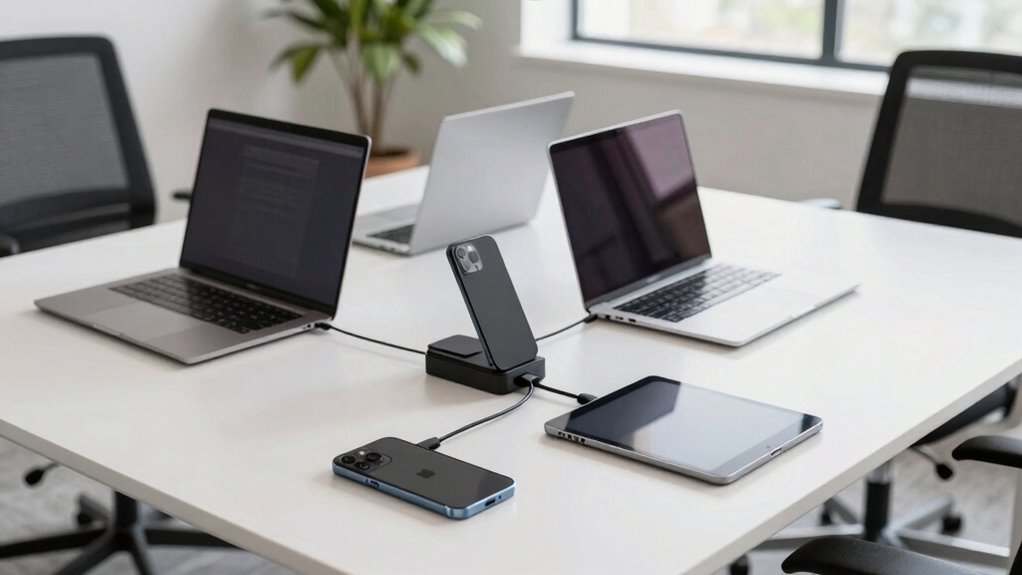
In today’s fast-paced work environment, ensuring that devices stay charged is essential for maintaining productivity and smooth operations. As technology continues to evolve, more workplaces are adopting innovative charging solutions to meet the demands of their teams. Wireless charging has become a game-changer, allowing employees to power up devices without the hassle of cords and adapters. By integrating wireless charging stations into common areas, conference rooms, and individual workspaces, you reduce downtime and keep everyone connected and focused. These stations can be embedded into desks, tables, or even shared spaces, creating seamless access to power that fits naturally into daily routines.
However, implementing wireless charging isn’t just about adding a few charging pads; it requires thoughtful infrastructure upgrades. You need to assess your existing electrical systems and determine whether your power supply can support the increased demand that comes with installing multiple charging stations. Upgrading your infrastructure ensures that these systems are reliable, safe, and capable of handling the load, preventing issues like power outages or slow charging speeds. This proactive approach minimizes disruptions and helps create a workplace environment that prioritizes convenience and efficiency. Incorporating power capacity considerations during planning can help avoid potential issues before they arise. Additionally, understanding your electrical system capacity is crucial for a smooth integration process.
Including device charging as part of your workplace planning also involves considering layout and design. You want to position charging stations in high-traffic areas where employees naturally gather, such as break rooms, reception areas, or collaborative zones. This not only encourages usage but also promotes a culture of connectivity and comfort. When infrastructure upgrades are executed thoughtfully, they become part of your workspace’s overall functionality rather than a mere add-on. The goal is to make charging effortless so employees don’t have to think about hunting for outlets or dealing with tangled cords. Recognizing the importance of technological adaptability can help future-proof your workplace against evolving device standards.
Moreover, planning for wireless charging and infrastructure upgrades shows that you’re committed to supporting your team’s needs. It demonstrates foresight and adaptability, which can enhance employee satisfaction and retention. As more devices become compatible with wireless charging standards, having a well-planned infrastructure ensures your workplace stays current and competitive. A focus on biodiversity and sustainable practices can also be integrated into your workplace strategies, emphasizing environmental responsibility alongside technological advancement. It’s about creating an environment where technology works for you, not against you, reducing frustration and boosting efficiency. Additionally, selecting energy-efficient charging solutions can further align your workplace with sustainability goals.
Ultimately, integrating device charging into workplace planning isn’t an optional luxury anymore—it’s a necessity. It enables your team to stay productive, reduces clutter, and supports a modern, forward-thinking workspace. By prioritizing infrastructure upgrades and embracing wireless charging, you set your workplace up for success, making it easier for everyone to stay connected, powered up, and ready to perform at their best.
wireless charging station for office
As an affiliate, we earn on qualifying purchases.
As an affiliate, we earn on qualifying purchases.
Frequently Asked Questions
How Does Device Charging Impact Overall Workplace Productivity?
Device charging directly boosts overall workplace productivity by enhancing device efficiency. When your devices stay charged, employees can focus more on their tasks without interruptions or concerns about battery life. This seamless access to power reduces downtime, improves workflow, and keeps employees engaged. By integrating effective charging solutions, you create a more efficient environment, allowing your team to maintain high levels of employee focus and accomplish more in less time.
What Are the Cost Considerations for Installing Charging Stations?
Cost considerations for installing charging stations focus on a thorough cost analysis and infrastructure investment. You’ll want to guarantee initial expenses like hardware, installation, and setup against ongoing costs such as maintenance and upgrades. While the upfront investment may seem significant, consider long-term benefits like boosted productivity and employee satisfaction. Balancing budget basics with future needs ensures your workplace provides power and productivity without putting a strain on resources.
How Can Charging Stations Be Securely Integrated Into the Workspace?
To securely integrate charging stations into your workspace, opt for a secure installation that prevents tampering or theft. Use access control measures like key cards or PIN codes to restrict usage to authorized employees only. Position stations in well-lit, monitored areas to deter misuse. Regularly check and maintain the stations to guarantee safety and functionality. This approach ensures your devices are protected while maintaining workplace security and convenience.
What Are the Best Practices for Managing Device Charging Schedules?
Managing device charging schedules is like orchestrating a symphony—you need harmony. You should establish clear charging etiquette, such as limiting charging time and prioritizing shared devices. Keep an eye on battery lifespan by avoiding overcharging and unplugging devices once fully charged. Encourage employees to plan their charging routines, ensuring everyone’s devices stay powered without overloading outlets, creating a smooth, efficient workflow.
How Do Charging Needs Differ Across Various Industries?
Your industry’s charging needs differ based on its specific demands. For example, healthcare requires industry-specific power solutions to guarantee uninterrupted device use, while offices benefit from ergonomic charging setups to prevent workspace clutter. Retail environments need quick, accessible charging stations, whereas manufacturing plants often require rugged, reliable power sources. Tailoring your charging infrastructure to these industry-specific needs helps boost efficiency, safety, and overall productivity.
As an affiliate, we earn on qualifying purchases.
Conclusion
Including device charging in workplace planning isn’t just a convenience—it’s essential. Imagine a busy office where employees constantly hunt for outlets, wasting time and losing focus. By integrating charging stations, you create a seamless environment that boosts productivity and morale. Think of it like providing fuel for a car; without it, the journey stalls. Prioritize charging solutions, and you’ll see smoother workflows and happier, more engaged team members.
multi-device charging station for workplace
As an affiliate, we earn on qualifying purchases.
As an affiliate, we earn on qualifying purchases.
As an affiliate, we earn on qualifying purchases.
NFL season / tailgating Picks
team gear
As an affiliate, we earn on qualifying purchases.