
🔍 Read the full analysis: AnySpeechRecognizer And AnyDecisionModel Bring AI To Apple Platforms on ThorstenMeyerAI.com

Get business pricing on office and shipping supplies
- Business-only prices and quantity discounts
- Tax-exempt purchasing
- Multiple users, one account, clear invoices
TL;DR
Hugging Face has announced AnySpeechRecognizer and AnyDecisionModel, Swift packages that let developers select among speech and decision models through shared interfaces. The announcement describes on-device options and model features, but the supplied material does not include independent benchmarks, package version details or a device compatibility matrix.
Hugging Face has announced AnySpeechRecognizer and AnyDecisionModel, two Swift packages that let developers select speech-recognition and decision models through shared APIs for Apple-platform apps. The packages are described as supporting on-device use and models from the Hugging Face Hub, though the announcement material provided does not establish a release date, device support matrix or independent performance results.
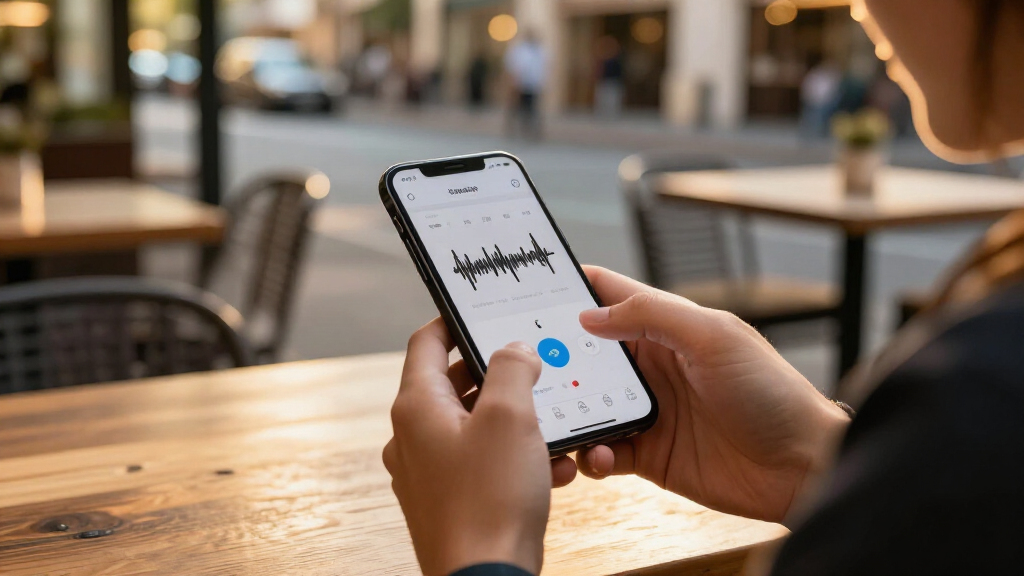
AnySpeechRecognizer is designed to mirror Apple’s SpeechAnalyzer API, with components for transcription, detection and model-asset management. The source says developers can keep the same general analyzer setup, asset installation and result-reading steps while switching the model used to create a transcriber. Apple’s Speech framework remains an available default; listed alternatives include NVIDIA Parakeet and Alibaba Qwen3-ASR.
The announcement describes different feature sets for those speech models. It says Parakeet v3 recognizes 25 European languages and supports live audio and files, word timing and confidence reporting. Qwen3-ASR is described as supporting 30 languages and 22 Chinese dialects, but returning a final result for segments up to 40 seconds without the same timing and confidence features. The source characterizes Qwen as slower and more suited to file transcription than live input; no independent test results are included in the material supplied.
AnyDecisionModel is intended for yes-or-no, multiple-choice and rating-scale tasks. Its typed results and probabilities are described as coming from model probabilities rather than text generated by a general language model. The announcement lists local model routes through MLX, Core AI or llama.cpp, as well as decision models from Jev or Ollama. Both packages are described as able to download open models from the Hub and run them on device.
More Model Choice in Swift Apps
The packages address a practical choice for developers building speech and decision features into Apple-platform software: whether to rely on one provider’s interface or make it easier to swap models. A shared API can reduce the amount of application code tied to a particular engine, although it does not mean the models behave alike or can be substituted without testing.
For speech applications, the listed options differ in language coverage, live-input support and the information returned with a transcript. That may matter for apps that need real-time captions, word-level timing or transcription of uploaded recordings. In decision workflows, returning typed choices and probabilities offers a more structured integration pattern than asking a text-generating model for prose and then parsing the response.
Local execution could let an app process audio or decision requests on a user’s device instead of sending each request to a hosted service. But the announcement’s model sizes indicate a meaningful download and storage tradeoff: it lists Parakeet models at about 600 MB and Qwen3-ASR at 0.9–2.4 GB. Those figures do not by themselves establish how a model will perform on a particular device, or what memory and processing capacity an app will need.
Products Worth Considering

Apple MacBook Pro (14.2-inch, 2025) – M5 chip, 16GB Unified Memory, 1TB SSD, Space Black

Apple Mac mini (2026) with M5 Pro chip and 3-year AppleCare+
Apple iMac 2024 All-in-One Desktop with M4 Chip, 24‑inch Retina Display, 16GB Unified Memory, 256GB SSD, Silver
As an affiliate, we earn on qualifying purchases.
How the Packages Fit Apple Speech
The source says Apple introduced SpeechAnalyzer with macOS 26 and iOS 26. That framework processes audio files or streams and returns results asynchronously, while AssetInventory manages model installation. AnySpeechRecognizer is presented as a way to preserve a similar Swift-facing workflow while adding alternative recognition engines.
The announcement also describes Core ML conversions of Parakeet, Qwen3-ASR and NVIDIA Sortformer models published on the Hugging Face Hub. It says the repositories identify their source checkpoints and file checksums, and that the package pins models to fixed revisions. These are project-reported details, not an independent audit of model provenance, performance or distribution terms.
According to the source, Parakeet repositories include an encoder for live input that reduces analysis time by about a third, with a somewhat higher word error rate. The supplied material does not give the test conditions behind that comparison. It also says Parakeet Ultra performed better in most measurements, but does not provide enough benchmark methodology or data here to assess the claim independently.
““familiar Swift APIs with a choice of model””
— Hugging Face announcement
Release and Performance Details
The supplied announcement does not identify package version numbers, a publication date, or a device compatibility matrix. It also does not give independent benchmarks, detailed test conditions or a full comparison of accuracy and latency across the listed engines. Project-reported performance descriptions should not be treated as equivalent results across devices or workloads.
Minimum hardware requirements, memory use and the full licensing and distribution requirements for each model are not established in the source material. The excerpt also ends while discussing speaker diarization, so it does not clarify the complete diarization feature set or its limitations. For AnyDecisionModel, the material does not show comparative results on real application tasks or explain how its probabilities should be interpreted for each model.
Testing on Target Devices
Developers evaluating the packages can consult their READMEs for implementation examples and documented differences from Apple’s Speech framework. The announcement says new recognition engines can be added by implementing the packages’ model and executor protocols, but gives no schedule for future releases or named upcoming milestone.
The immediate practical step is to test candidate models with the app’s actual audio, decision tasks and target devices. Teams will need to measure accuracy, latency, download size and memory use, and check relevant licensing and distribution terms before choosing an engine. More detailed benchmarks, hardware guidance and documentation on diarization would help establish how the options perform beyond the examples described in the announcement.
Key Questions
What are AnySpeechRecognizer and AnyDecisionModel?
They are Swift packages announced by Hugging Face. One is for selecting speech-recognition models through a shared API; the other handles structured tasks such as yes-or-no, multiple-choice and rating-scale decisions.
Which speech models are named in the announcement?
The supplied material names NVIDIA Parakeet and Alibaba Qwen3-ASR as alternatives for AnySpeechRecognizer, alongside Apple’s Speech framework. Their listed language and output features differ.
Can these models run on a device?
The announcement says the packages support on-device models and names MLX, Core AI and llama.cpp as routes for local decision-model use. It does not provide a complete device compatibility matrix or minimum hardware requirements.
Do the materials establish which model is most accurate or fastest?
No. The source includes project-reported performance descriptions but provides no independent benchmark results or detailed test conditions in the supplied material. Developers would need to test models against their own workloads and devices.
When will the packages be available, and what devices do they support?
The supplied source does not state a release date, package versions or a device support matrix. Those details remain unclear from the announcement material provided.
Source: ThorstenMeyerAI.com