
🔍 Read the full analysis: Gemini 4 Carbon Takes A One-Point AI Lead: The Ranking In Perspective on ThorstenMeyerAI.com

Get business pricing on office and shipping supplies
- Business-only prices and quantity discounts
- Tax-exempt purchasing
- Multiple users, one account, clear invoices
TL;DR
Gemini 4 Carbon scored 59 on Artificial Analysis’ Intelligence Index v5, one point ahead of Claude Opus 5.5 and two ahead of GPT-6 Astra. The ranking is based on nine tests, and Carbon leads four while losing five; it is not yet publicly available. Its release schedule and performance on buyers’ own workloads remain unsettled.
Google’s Gemini 4 Carbon, at its high-reasoning setting, has taken first place on the Artificial Analysis Intelligence Index v5, scoring 59 points—one ahead of Claude Opus 5.5 and two ahead of GPT-6 Astra. The result is a narrow lead on one nine-test benchmark, not a finding that Carbon is best at every kind of work; Google has not yet made the model publicly available.
The scores place Claude Opus 5.5 at 58, GPT-6 Astra at 57, GPT-6.1 Sol at 55 and Google’s earlier Gemini 4 Argon at 50. Carbon ranked first on four of the index’s nine tests and did not lead on the other five, according to the source’s account of the Artificial Analysis results.
Carbon’s wins included HLE-Diamond, a difficult reasoning and knowledge test, where it scored 69% against 68% for Claude Opus 5.5. It scored 65% on Terminal-Bench-Science, compared with 63% for GPT-6 Astra, and reached 78% on AutomationBench-AA, a business-workflow test. Its strongest reported margin came on AA-Omniscience, where it scored 54 points, six ahead of Claude Opus 5.5.
The model’s weaker results qualify the headline ranking. On the office-oriented AA-Briefcase test, Carbon scored 1,609 Elo, below Claude Sonnet 5.5 at 1,812 and Claude Opus 5.5 at 1,800. On FrontierCode 2.0, it scored 41%, compared with 46% for Claude Opus 5.5. It also trailed competitors on a physics research test, terminal tasks and document reasoning, the source reports.
Infographic 01 · What the #1 is made of
Number one overall. First in four of nine tests.
The Intelligence Index is a decathlon score: nine tests, one number. Carbon wins on reasoning, science and careful knowledge, and trails on office work and coding.
The nine tests behind the score
Carbon at its highest setting (high) against the best model on each test.
| Test | Weight | Carbon | Leader or runner-up |
|---|---|---|---|
| HLE-Diamond Hard reasoning + knowledge questions | Weight 10% | Carbon 69% | Carbon leads Next: Claude Opus 5.5, 68% |
| Terminal-Bench-Science Science research work in a terminal | Weight 15% | Carbon 65% | Carbon leads Next: GPT-6 Astra, 63% |
| AA-Omniscience v1.1 Knowledge, wrong answers penalized | Weight 15% | Carbon 54 | Carbon leads Next: Claude Opus 5.5, 48 |
| AutomationBench-AA Business workflows across apps | Weight 5% | Carbon 78% | Carbon leads Next: Gemini 4 Argon, 78% |
| AA-Briefcase Office-style knowledge work | Weight 15% | Carbon 1,609 Elo | Behind Claude Sonnet 5.5, 1,812 |
| FrontierCode 2.0 Code a maintainer would merge | Weight 15% | Carbon 41% | Behind Claude Opus 5.5, 46% |
| CritPt v2 (hard) Research-level physics | Weight 10% | Carbon 63% | Behind GPT-6 Astra, 71% |
| Terminal-Bench 4.0 Agentic terminal tasks | Weight 10% | Carbon 65% | Behind Kimi K3.1 Pro, 67% |
| GDP.pdf Reasoning over documents | Weight 5% | Carbon 28% | Behind Muse Wonder Full, 33% |
The surprise in the knowledge test
- Accuracy: Claude Fable 5.1 68%, Claude Opus 5.5 66%, GPT-6.1 Sol and GPT-6 Astra 62%, Carbon 58%
- Hallucination rate: Carbon 11%, Claude Opus 5.5 and GPT-6 Astra about 50%
- Carbon wins because it rarely bluffs, not because it knows the most
Read the weights
- Each of the four blocks counts 25%: knowledge work, coding, science, general
- Carbon trails in two of the four heaviest tests (15% each): office-style work and real-world code
- Hallucination rate = wrong answers among all questions not answered correctly
Source: Artificial Analysis, 28 Oct 2026; Index v5 announcement, 27 Oct 2026; Artificial Analysis model data, retrieved 29 Oct 2026. Scores rounded as in the article; Carbon tested at high, other models at their highest tested setting.
Powered by Thorsten Meyer AI
A Narrow Lead, Not a Universal Win
For businesses comparing models, the result is a signal about performance on a defined set of demanding tasks—not a ready-made purchasing decision. Carbon’s overall advantage is one index point, while its results vary by workload. A team focused on coding or office documents may get a different answer from a team running research agents or business workflows.
Price and access also affect the practical comparison. The source reports an index-task cost of $7.76 for Carbon, versus $10.04 for Claude Opus 5.5 and $6.24 for GPT-6 Astra, using standard prices. Those are benchmark-related estimates, not a guarantee of what a company will spend on its own tasks. The report says Carbon’s introductory API pricing is $2 per million input tokens and $10 per million output tokens, later rising to $4 and $20, respectively.
For everyday users, there is no immediate change because the model is not publicly available. If the reported rollout proceeds, the result may matter most for longer, more complex work rather than ordinary chat. Actual usefulness will depend on access, tools, reliability and the task being performed.
Products Worth Considering
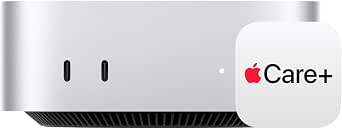
Apple Mac mini (2026) with M5 Pro chip and 3-year AppleCare+

Dell XPS 13 9350 AI Professional Laptop 13.4 120Hz FHD+ Display

LG UltraGear 27-Inch QHD OLED Gaming Monitor, 240Hz, 0.03ms, G-SYNC Compatible, FreeSync Premium Pro, HDMI 2.1
As an affiliate, we earn on qualifying purchases.
How the Nine-Test Index Works
Artificial Analysis introduced version 5 of its index on October 27, 2026, according to the source. It combines nine tests into a score, split evenly among four areas: knowledge work, coding, science and general performance. The tests include agent tasks such as working in a terminal, producing reports and handling software workflows, rather than only short question-and-answer prompts.
The source says 60% of the index uses private test sets or held-out answers, intended to limit the effect of models having memorized test questions. That design and the weighting choices shape the resulting order. The score therefore describes how models perform under this particular test framework and configuration; it is not a broad, context-free measure of intelligence.
One result illustrates how a test’s scoring rules can change the apparent winner. Carbon answered 58% of AA-Omniscience questions correctly, below several models, including Claude Fable 5.1 at 68% and Claude Opus 5.5 at 66%. But the test penalizes wrong answers. Artificial Analysis reports an 11% hallucination rate for Carbon, compared with about 50% for Claude Opus 5.5 and GPT-6 Astra. Carbon’s lead on that test reflects cautious answering under its penalty system, not the highest raw accuracy.
“Choose by task and by cost per finished task, not by rank.”
— Thorsten Meyer, source article
Access, Costs and Test Limits
Carbon is not publicly available, and Google has not provided a date for general release in the supplied material. The reported rollout is set to begin with a subset of cyber defenders, followed by trusted partners, then developers, businesses and consumers. The timing and scope of those stages are not confirmed here.
The source does not provide the complete benchmark tables or full methodology details for every result. Its account says Carbon wins four tests and loses five, but the supplied material gives detailed figures for only some comparisons. The full quoted statement about the coding-agent results is also incomplete. Readers should treat those points as limits on what can be independently checked from this material.
Benchmark prices do not establish the cost of completing a real company task, which can depend on prompt length, output volume, retries, tools and human review. Nor does the index establish how the models compare across every possible setting or product integration. The results are a snapshot of the specified versions and configurations, not a promise of future performance.
Google’s Staged Release Plan
According to the source, Google plans to offer Gemini 4 Carbon first to a subset of cyber defenders, then to trusted partners, before expanding access to developers, businesses and consumers. No timetable was provided, so the next practical milestone is confirmation of when the first users can access the model and under what terms.
For organizations evaluating the ranking, the next step is to test Carbon on representative internal tasks and compare the cost and quality of completed work with available alternatives. Further details from Google on API access and pricing, alongside full benchmark data and methodology from Artificial Analysis, would help clarify how broadly the one-point lead applies.
Key Questions
What does Gemini 4 Carbon’s score of 59 mean?
It is Carbon’s score on Artificial Analysis Intelligence Index v5, a composite based on nine tests across knowledge work, coding, science and general performance. It is not a universal score for every use of an AI model.
How far ahead is Carbon?
Carbon scored one point ahead of Claude Opus 5.5 (58) and two ahead of GPT-6 Astra (57). The source reports that Carbon led four of the nine tests and lost the other five.
Can the public use Gemini 4 Carbon now?
No public access date is given. The reported plan starts with a subset of cyber defenders, followed by trusted partners and later wider groups, but the schedule remains unspecified.
Does Carbon answer more questions correctly than its rivals?
Not on the AA-Omniscience raw-accuracy figures in the source. Carbon scored 58% accuracy, below several listed models. It led that test’s overall score because the scoring penalizes wrong answers and Carbon had a lower reported hallucination rate.
Should companies switch because Carbon ranks first?
The ranking alone does not settle that decision. The source recommends comparing models on a company’s own tasks and measuring the cost per completed task, since Carbon’s results differ across coding, office work, science and other tests.
Source: ThorstenMeyerAI.com