
📊 Full opportunity report: Stenvrik: News as Geography on ThorstenMeyerAI.com — validation score, market gap, and execution plan.
TL;DR
Stenvrik has unveiled a news platform that visualizes stories geographically on a rotating 3D globe. The system clusters live stories into 49 city hubs, providing real-time regional insights. The platform’s innovative approach aims to change how news is consumed and utilized for trend analysis.
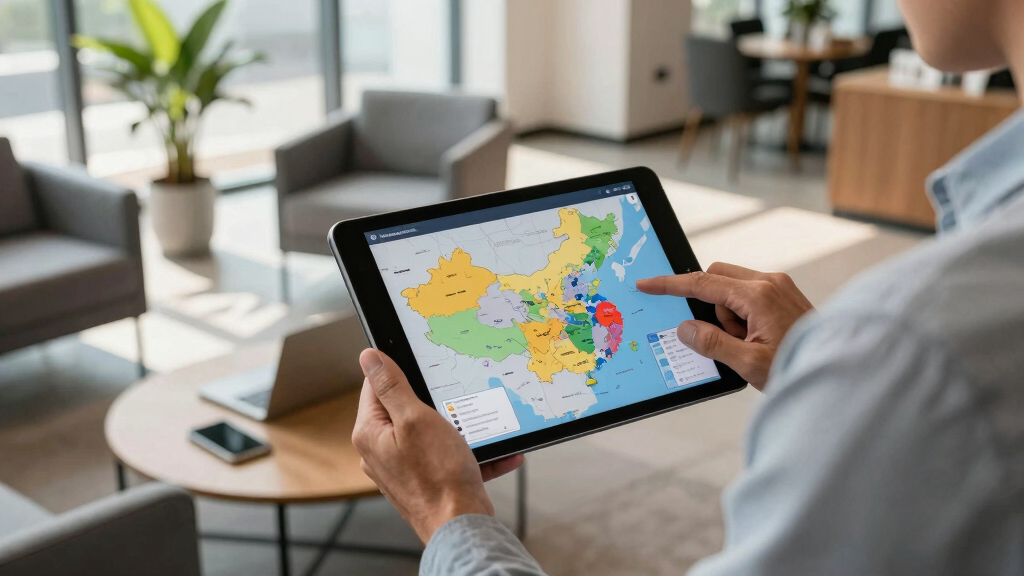
Stenvrik has introduced a new news platform that visualizes live news stories on a rotating 3D globe, organizing approximately 1,700 stories across 49 city hubs. This development aims to shift the way news is consumed by emphasizing geographic context, making it easier to identify regional trends and clusters in real time.
The platform features a globe interface where stories are pinned to specific city hubs, such as Tokyo or Berlin, providing a spatial perspective on current events. Behind the scenes, an autonomous trend engine continuously surfacing, clustering, and pinning stories operates without human intervention, ensuring up-to-date information across the globe.
According to sources from the platform’s developers, the system’s infrastructure is designed for near-zero operational costs. The client-side rendering of the globe and the use of owned compute resources for trend analysis keep expenses minimal, enabling the product to run at roughly €0 per month. This cost efficiency allows for a long-term development cycle and potential scalability.
Stenvrik — news as geography
Not what is the news — where is it happening. ~1,700 live stories pinned to 49 city hubs on a rotating globe, with an autonomous trend engine that also feeds the network.
Spin the world; the news sorts itself.
A 60fps 3D globe where every story is pinned to the city it belongs to. Clusters, gaps, regions heating up — context a vertical feed throws away.
Independent commentary, produced with AI assistance under human editorial oversight. The views are the author’s own and may change. Stenvrik is in closed beta; features, availability, and behavior may change and it is provided without guarantee of uptime or fitness for a particular purpose. The autonomous trend engine clusters and places stories programmatically and may contain errors, mis-placements, or omissions — verify independently before relying on any of it. Product and company names are trademarks of their respective owners; mention does not imply endorsement.
Implications of Geographical News Visualization
This platform represents a significant shift in news consumption and analysis, offering users a spatial understanding of current events that can influence market decisions, political analysis, and regional reporting. The embedded trend detection also provides strategic insights for media organizations and businesses, making the system valuable beyond simple news browsing.
By organizing news geographically, Stenvrik aims to address the limitations of traditional feed-based news, which often lack contextual relevance. The approach could influence future news platforms to prioritize geographic and trend-based organization, potentially reshaping the digital news landscape.
3D globe news visualization device
As an affiliate, we earn on qualifying purchases.
As an affiliate, we earn on qualifying purchases.
Background and Development of Stenvrik’s Approach
Traditional news aggregators rely heavily on chronological feeds, which can lead to information overload and a lack of contextual understanding. The idea of visualizing news on a globe was initially a prototype created by Claude Design as a demo, which unexpectedly proved its viability as a production product.
Stenvrik’s development leverages autonomous trend engines that cluster stories and detect regional hot spots, providing real-time insights. The platform’s low-cost infrastructure is a key factor, as it runs primarily client-side and on owned hardware, avoiding high cloud costs common in similar projects.
“The globe isn’t just a visualization; it’s an information architecture that helps reason about clusters, gaps, and regional heating in real time.”
— Thorsten Meyer, platform developer
interactive globe with news display
As an affiliate, we earn on qualifying purchases.
As an affiliate, we earn on qualifying purchases.
Unanswered Questions About Platform Adoption and Impact
It is not yet clear how widely the platform will be adopted once in open access, or how users will respond to a geographic-based news interface. The effectiveness of the trend engine in diverse news environments and its influence on traditional journalism practices remain to be seen.
Additionally, the long-term scalability and the potential integration with other news systems are still under development, and details about future updates are not yet available.
geographic news trend analysis tool
As an affiliate, we earn on qualifying purchases.
As an affiliate, we earn on qualifying purchases.
Next Steps for Stenvrik and Broader Adoption
The platform is currently in closed beta, with limited availability. The developers plan to gather user feedback and refine the interface and trend detection algorithms. Public release details are expected to be announced soon, along with potential integrations into existing news ecosystems.
Further, the company aims to explore how geographic visualization can influence news consumption habits and support strategic decision-making in various sectors, including finance and politics.
As an affiliate, we earn on qualifying purchases.
Key Questions
How does the globe interface improve news understanding?
The globe provides a spatial perspective, allowing users to see where news stories are happening and identify regional clusters and trends quickly, offering context that traditional feeds lack.
What is the cost structure of the platform?
The platform runs on client-side rendering and owned compute resources, resulting in an operational cost of roughly €0 per month, making it highly sustainable.
Will this platform replace traditional news feeds?
It is unlikely to replace feeds entirely but aims to complement them by offering a different perspective—geographic and trend-based—enhancing overall understanding of current events.
When will the platform be available to the public?
The platform is currently in closed beta. The developers have not announced a specific release date but plan to share more details soon.
Can this system be used for market or political analysis?
Yes, the embedded trend detection and geographic clustering can serve as valuable tools for market intelligence and political strategy, providing early signals of regional shifts.
Source: ThorstenMeyerAI.com