
Your office layout shapes how your team interacts, communicates, and builds culture every day. Open workspaces encourage spontaneous chats and foster transparency, but can distract if not balanced with private spaces. Private offices give your team quiet zones for focused work or sensitive conversations. The design reflects your company’s priorities, balancing collaboration with individual needs. How space is arranged influences team spirit and efficiency—if you want to know exactly how, keep exploring these dynamics further.
Key Takeaways
- Office layout influences communication patterns, encouraging spontaneous interactions or providing private spaces for focused work.
- Open workspaces foster approachability and teamwork but can also cause distractions, affecting collaboration quality.
- Private offices support confidentiality and deep focus, balancing openness with individual productivity needs.
- Layout design reflects company values, promoting transparency or respecting privacy, thus shaping team dynamics.
- Physical environment design affects relationships, hierarchy perception, and overall employee engagement and well-being.
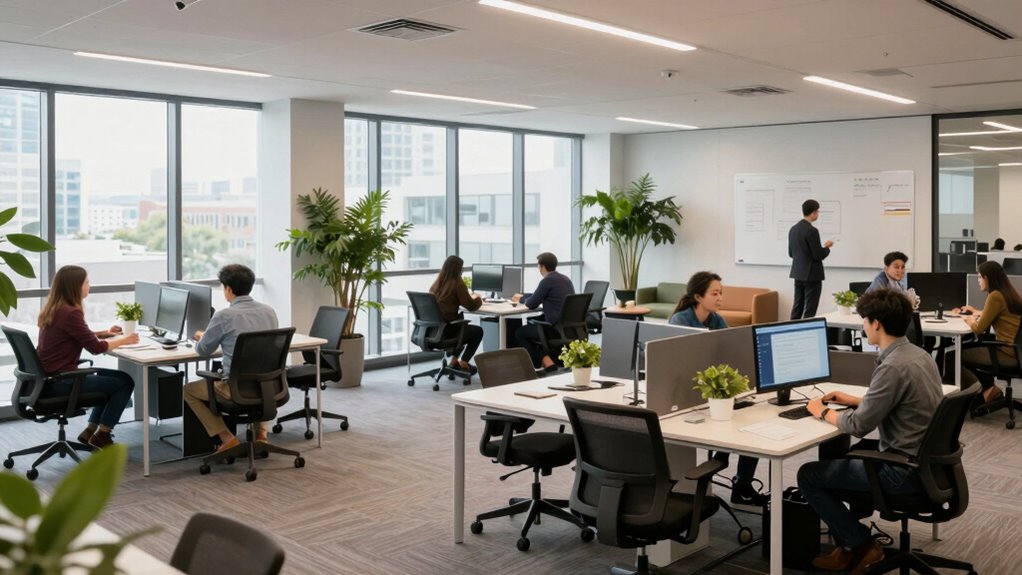
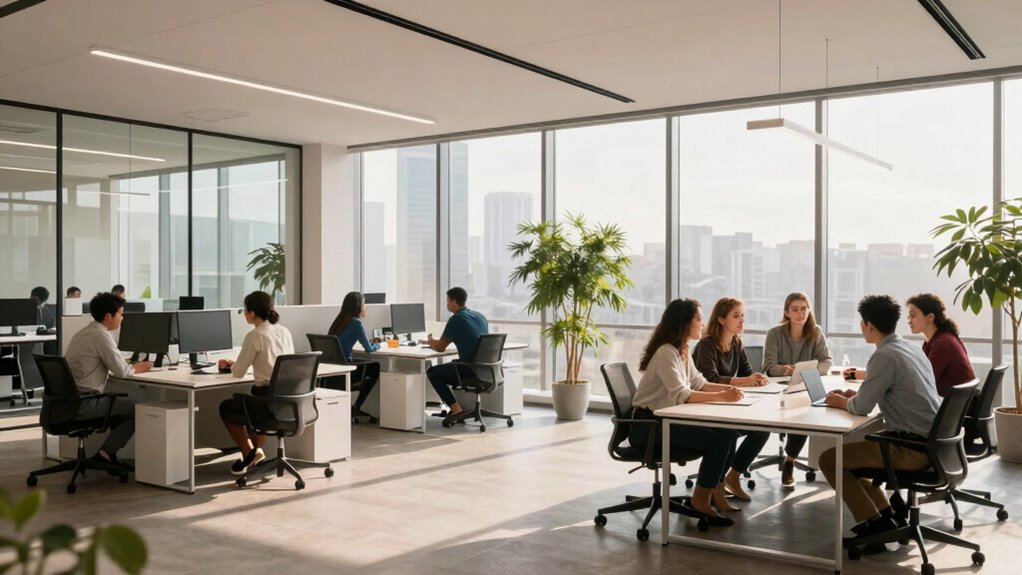
The way your office is arranged can considerably influence how your team interacts and collaborates. When you choose an open workspace, you’re fostering an environment that encourages spontaneous conversations, quick idea exchanges, and a sense of community. Open layouts make it easier for team members to see each other, which can boost transparency and camaraderie. However, they can also lead to distractions and noise, making it harder for some to focus. That’s where private offices come into play. By providing designated quiet zones, you give your team members the option to retreat for deep focus or confidential discussions, balancing collaboration with individual productivity.
Open workspaces foster community and quick collaboration but require private areas for focus and confidentiality.
An open workspace isn’t just about removing walls; it’s about creating a culture of openness and accessibility. When desks are arranged in a way that promotes eye contact and easy movement, communication flows more naturally. People are more likely to approach each other with questions or ideas, leading to faster problem-solving and innovation. Still, an entirely open environment can sometimes compromise privacy and lead to a feeling of being overwhelmed. That’s why integrating private offices within an open layout is essential. They serve as strategic retreats, giving employees a space to think without interruption or handle sensitive matters discreetly. Recognizing how the physical environment influences team behavior can help organizations design more effective workspaces.
Your decision on office layout sends strong signals about your company’s priorities. An open workspace suggests you’re committed to transparency and teamwork, while private offices indicate respect for individual work styles and confidentiality. The key is balance. When you plan your office, consider how different spaces can support various work modes. For example, collaborative zones with comfortable seating and communal tables can stimulate teamwork, while quiet zones or private offices are perfect for tasks requiring deep concentration.
The physical environment shapes behavior, so if your goal is to foster a collaborative, innovative team, your office layout should reflect that. An open workspace can break down hierarchical barriers, making leadership seem more approachable and encouraging informal mentoring. Conversely, private offices can empower employees to take ownership of their work without feeling exposed. Additionally, understanding how these spatial arrangements influence team dynamics can help optimize overall productivity. Incorporating elements like designated zones can further optimize space utilization and team interaction. Moreover, paying attention to psychological comfort within these environments can significantly enhance employee well-being and engagement.
As an affiliate, we earn on qualifying purchases.
Frequently Asked Questions
How Does Office Layout Influence Employee Creativity?
Office layout influences your creativity by providing dedicated creative zones and brainstorming spaces where you feel free to share ideas openly. When you have access to these areas, you’re more likely to think outside the box and collaborate effectively. These spaces foster spontaneous discussions and inspire innovation, making it easier for you and your team to generate fresh ideas. An optimized layout empowers your creative process and boosts overall team productivity.
What Are the Cost Implications of Different Office Designs?
Different office designs impact your costs through factors like cost efficiency and space utilization. Open layouts often reduce expenses by maximizing space use and decreasing furniture costs, while private offices can increase costs due to more space and furniture needs. You’ll find that flexible, collaborative spaces often balance cost efficiency with effective space utilization, helping you control expenses while fostering team interaction. Careful planning guarantees your office layout aligns with your budget goals.
How Can Layout Changes Improve Remote Team Collaboration?
You can improve remote team collaboration by designing a flexible remote workspace that encourages open communication and easy access to shared resources. Incorporate virtual collaboration tools, like video calls and project management platforms, to foster real-time interaction. By creating an environment that emphasizes connectivity and clarity, you make it easier for team members to stay engaged, share ideas, and work efficiently, regardless of physical location.
Do Open-Plan Offices Increase Employee Privacy Concerns?
Yes, open-plan offices do increase privacy concerns, especially regarding acoustic privacy. You might find it harder to concentrate or have confidential conversations without interruptions or overhearing others. The lack of walls and enclosed spaces can make noise levels unpredictable, leading to discomfort and stress. To address this, consider implementing quiet zones or soundproof booths, which help balance collaboration with the need for privacy, ensuring you feel both connected and secure.
How Does Office Layout Impact Long-Term Employee Retention?
You’ll find that your office layout greatly impacts long-term employee retention, especially when it champions workspace flexibility. If your space boosts employee satisfaction by offering adaptable areas and privacy options, folks stick around longer. Conversely, a rigid, uninspiring layout sends the message that you don’t value their needs, making them more likely to jump ship. So, design with care, and watch your team stay loyal and happy.
adjustable height sit stand desk
As an affiliate, we earn on qualifying purchases.
As an affiliate, we earn on qualifying purchases.
Conclusion
So, don’t overlook how your office layout influences your team’s behavior. It’s natural to think that team dynamics are solely about personalities and skills, but your environment plays a huge role too. Embrace thoughtful design to foster collaboration, creativity, and productivity. Even if changes seem intimidating, remember small adjustments can make a big difference. Your office layout isn’t just a backdrop—it’s a powerful tool to shape a thriving, engaged team.
As an affiliate, we earn on qualifying purchases.

Marsail Ergonomic Office Chair: Office Desk Chair with High Back Mesh and Adjustable Lumbar Support Rolling Work Swivel Task Chairs with Wheel 3D Armrests and Headrest
- Fully Adjustable Headrest: 2D adjustable for personalized support
- Reclining Backrest: Adjusts from 90° to 120°
- 3D Adjustable Armrests: Customizable for various postures
As an affiliate, we earn on qualifying purchases.
As an affiliate, we earn on qualifying purchases.