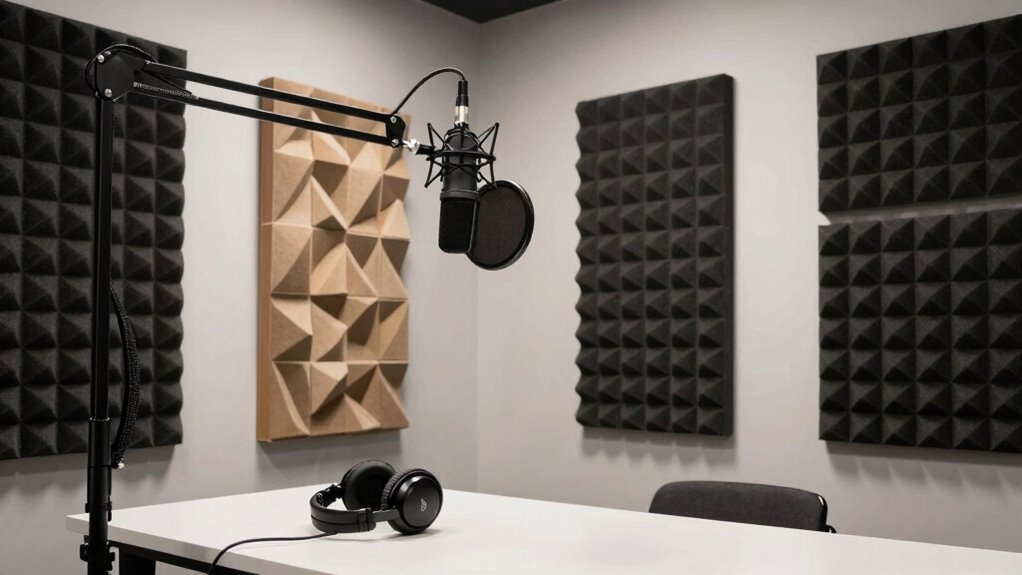

To improve your office recording space, focus on sound absorption by installing acoustic panels, foam tiles, and diffusers on walls and ceilings, especially at reflection points. Use curtains and bass traps to control echoes and low-frequency build-up. Arrange furniture and decor to disrupt sound paths and promote diffusion, creating a balanced sound environment. Regularly assess and tweak your setup for the best results. Keep exploring these strategies, and you’ll discover more tips to perfect your acoustics.

Get business pricing on office and shipping supplies
- Business-only prices and quantity discounts
- Tax-exempt purchasing
- Multiple users, one account, clear invoices
Key Takeaways
- Install acoustic panels or foam tiles on walls and ceilings to absorb sound reflections and reduce echo.
- Use bass traps in corners to control low-frequency echoes and improve sound clarity.
- Hang fabric-covered panels or thick curtains to break up sound reflections and prevent bouncing.
- Incorporate sound diffusion techniques by adding irregular objects or furniture to disperse sound waves evenly.
- Regularly assess and adjust acoustic treatments to maintain optimal sound quality over time.
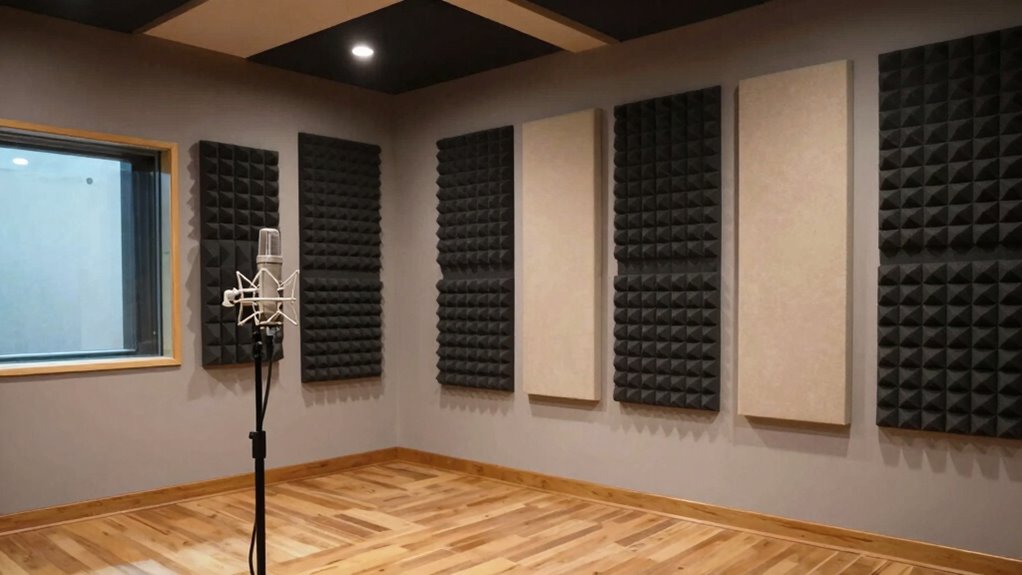
When it comes to achieving perfect sound quality in your space, knowing the right acoustic treatment moves can make all the difference. In an office recording environment, your goal is to create a space that minimizes unwanted noise and ensures clear, accurate sound capture. One of the most effective strategies involves sound absorption. By adding materials that absorb sound waves, you prevent them from bouncing around the room and creating a muddy, indistinct audio. Acoustic panels, foam tiles, or even specialized diffusers can be positioned on walls and ceilings to soak up excess sound energy. These treatments help tame echo, making your recordings sound cleaner and more professional. The key is to place sound-absorbing materials at reflection points—areas where sound waves bounce directly from sources like speakers, monitors, or your voice. When you target these spots, you significantly reduce echo, which otherwise distorts your recordings and makes editing more challenging.
Target reflection points with acoustic panels to reduce echo and improve sound clarity in your recording space.
In addition to sound absorption, echo reduction should be a primary focus. Echoes occur when sound waves bounce repeatedly between hard surfaces, creating a reverberant environment that muddles audio clarity. To combat this, you need to strategically treat reflective surfaces. For example, hanging thick curtains or installing fabric-covered panels on walls can break up sound reflections. Positioning bass traps in corners also helps, as these areas tend to amplify low-frequency echoes. By controlling sound reflections, you create a more controlled acoustic environment where the sound you record is true to source, not colored by room reverberations. Incorporating sound diffusion** techniques can further optimize your space by dispersing sound waves evenly, preventing specific frequencies from dominating. Regularly assessing your room’s acoustics and making adjustments aligns with the concept of acoustic treatment, which emphasizes ongoing optimization rather than a one-time fix. Understanding how sound behavior interacts with your space allows for more targeted and effective treatments. Additionally, using room layout strategically can influence how sound waves travel and reflect, leading to better overall acoustics. Maintaining awareness of sound energy** and how it moves within your space can help you identify new areas needing treatment as your setup evolves.
You should also consider the room’s layout and how it influences sound behavior. Arrange furniture and equipment in ways that disrupt direct sound paths and prevent sound waves from bouncing excessively. Using bookshelves filled with books or placing irregularly shaped objects around your space can diffuse sound waves effectively. This diffusion helps scatter sound energy, further reducing echo and creating a more balanced sound field. Remember, the goal isn’t just to absorb sound but also to scatter it purposefully, ensuring that no single reflection dominates the environment. Consistently monitoring your space and fine-tuning your treatments will help maintain optimal sound quality over time.
Finally, keep in mind that acoustic treatment isn’t a one-time fix. Regularly assess your space’s sound quality and adjust your treatments as needed. Small tweaks, like repositioning panels or adding more diffusers, can make a noticeable difference. When you implement these moves—focusing on sound absorption and echo reduction—you’ll create an office recording space that’s optimized for clear, professional-quality audio, making your recordings stand out with pristine clarity.
office acoustic panels for sound absorption
As an affiliate, we earn on qualifying purchases.
As an affiliate, we earn on qualifying purchases.
Frequently Asked Questions
How Do I Measure My Office’s Existing Acoustics Accurately?
You can measure your office’s existing acoustics by using a sound level meter or a smartphone app to assess sound absorption and echo control. Record the noise levels and listen for echo or reverb issues. Play a test sound or clap your hands, then observe how quickly the sound dissipates. These steps help identify areas needing treatment, improving overall sound absorption and reducing unwanted echo for better recording quality.
What Budget Options Are Available for Acoustic Treatment?
Think of your budget as a paintbrush, shaping your space’s soundscape. You can start with decorative panels that serve dual purposes—art and sound absorption—offering an affordable, stylish solution. Soundproof curtains act like a shield, blocking unwanted noise without breaking the bank. These options let you improve your office acoustics without overspending, making your space both functional and inviting.
Can DIY Acoustic Treatments Be as Effective as Professional Ones?
DIY solutions can be quite effective if you carefully follow guidelines, but they may not match the precision of professional assessments. You’ll need to understand your room’s specific acoustic issues and choose materials wisely. While DIY treatments can substantially improve sound quality, consulting a professional can guarantee ideal placement and materials, especially for complex spaces. Combining DIY efforts with expert advice often yields the best results for your office recording environment.
How Often Should Acoustic Treatments Be Replaced or Upgraded?
You should upgrade or replace your acoustic treatments every 3 to 5 years, depending on material durability and your evolving needs. Over time, materials can degrade, lose effectiveness, or accumulate dust, which can impact sound quality. Regularly inspecting your treatments helps identify signs of wear. Upgrading guarantees ideal sound absorption and clarity, especially as your recording needs grow or space conditions change, keeping your office space acoustically optimized.
Are There Specific Materials Best Suited for Office Environments?
Did you know that 85% of office workers report noise distractions affecting productivity? For office environments, acoustic treatment materials should prioritize durability, ensuring long-lasting performance, and aesthetic integration, so they blend seamlessly with your decor. Materials like fabric-covered panels, foam, and wood diffusers work well because they balance sound absorption with visual appeal. Choosing the right materials helps maintain a professional look while effectively managing noise levels.
bass traps for low-frequency control
As an affiliate, we earn on qualifying purchases.
As an affiliate, we earn on qualifying purchases.
Conclusion
Now that you know the key acoustic treatment moves, you can confidently create a calmer, clearer office recording space. By balancing bass, banishing echoes, and boosting absorption, you craft a cozy, controlled environment. These simple, strategic steps transform chaos into clarity, making your recordings crisp and professional. So, step up your space’s soundscape, sculpt silence, and see your studio shine — a true testament to your thoughtful, tailored tweaks. Your perfect recording awaits!
sound diffusion panels for recording studio
As an affiliate, we earn on qualifying purchases.
As an affiliate, we earn on qualifying purchases.
soundproof curtains for office recording
As an affiliate, we earn on qualifying purchases.
As an affiliate, we earn on qualifying purchases.
Halloween Picks
halloween
As an affiliate, we earn on qualifying purchases.