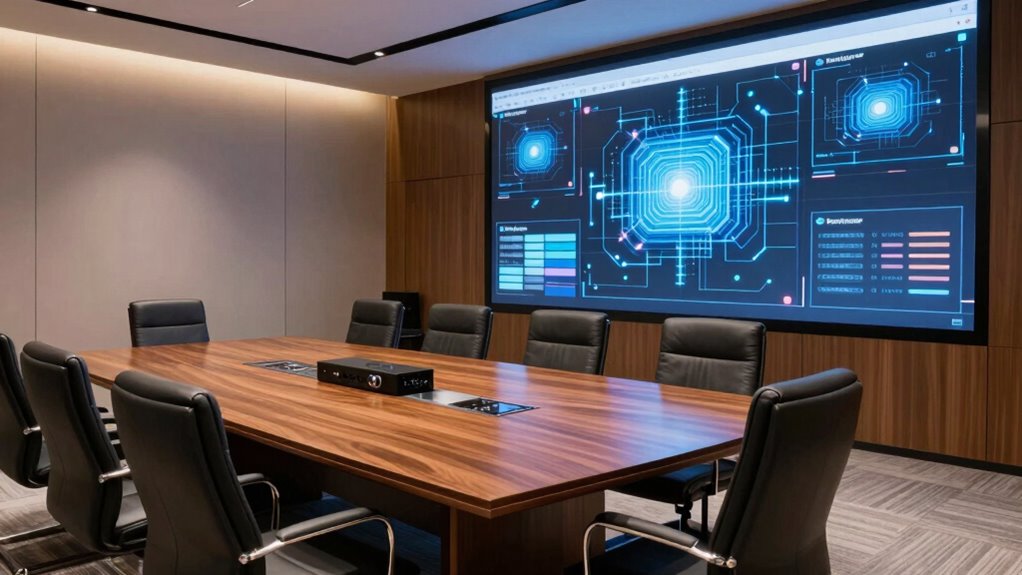

In larger conference rooms, DSPs are essential because they analyze and adjust audio signals in real-time to guarantee clear sound. They combat issues like echo, reverberation, and room reflections that can blur voices and reduce speech intelligibility. By compensating for room acoustics and optimizing microphone placement, DSPs help make your conversations more natural and understandable. If you want to learn more about how they improve your audio experience, keep exploring these key solutions.

Get business pricing on office and shipping supplies
- Business-only prices and quantity discounts
- Tax-exempt purchasing
- Multiple users, one account, clear invoices
Key Takeaways
- DSPs analyze and adjust audio signals in real-time to maintain voice clarity in large, reflective spaces.
- They compensate for room acoustics, reducing echo and reverberation that impair speech intelligibility.
- DSPs optimize sound quality by filtering unwanted reflections, ensuring consistent audio across different room sizes.
- Proper microphone processing and placement, enhanced by DSPs, improve voice pickup and noise suppression.
- Integration of DSPs with conference technology creates seamless, clear communication in expansive environments.
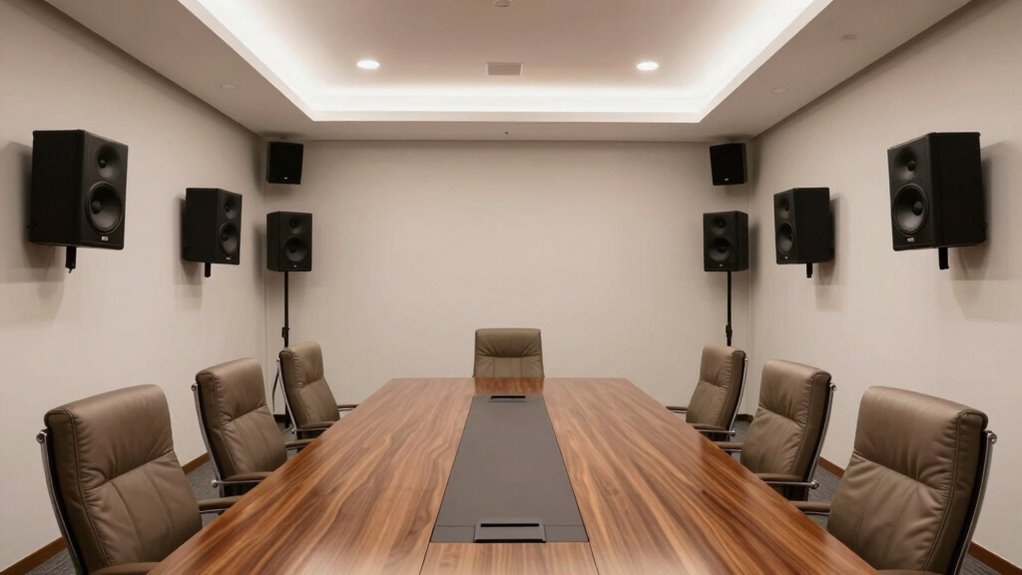
Digital Signal Processors (DSPs) are transforming conference rooms by enhancing audio clarity and communication efficiency. When you’re in a larger room, sound can easily become muddled or echo, making it hard for everyone to hear or be heard. That’s where DSPs make a real difference. They analyze and adjust audio signals in real-time, compensating for room acoustics that might otherwise distort sound or create unwanted reverberations. By doing so, DSPs help guarantee that voice clarity is preserved, no matter how big or reflective the space is.
DSPs improve conference room audio by analyzing and adjusting signals in real-time for clear, echo-free sound.
One of the key factors in maximizing audio in larger conference rooms is understanding room acoustics. Larger spaces tend to have more echo and sound reflections, which can cause voice signals to bounce around and blur together. With a DSP in place, you can fine-tune the audio to counteract these issues. It can apply filters that reduce reverb, cancel echoes, and improve speech intelligibility. This results in a more natural listening experience, so everyone in the room can focus on the conversation instead of trying to decipher muffled or distorted speech. Additionally, room acoustics play a crucial role in determining the right DSP settings for optimal performance. Incorporating acoustic treatment into the room design can further enhance these effects by reducing unwanted reflections and improving overall sound quality. Understanding sound reflections can help in choosing the most effective acoustic treatments for your space.
Another critical aspect is microphone placement. In bigger conference rooms, choosing the right microphones and positioning them properly is essential. You need microphones that can pick up voices clearly across the entire space without capturing too much background noise. DSPs work hand-in-hand with these microphones by processing their signals to enhance voice pickup and suppress unwanted sounds. Proper placement ensures that the microphones are within the ideal range of speakers’ voices, minimizing the need for excessive processing and reducing feedback or noise issues. When you combine strategic microphone placement with the power of DSPs, you get a setup that captures voices accurately and delivers them with clarity through the room’s sound system. Additionally, understanding cloud server solutions and networking strategies can help integrate these audio systems more effectively into broader conference technology infrastructure.
conference room digital signal processor
As an affiliate, we earn on qualifying purchases.
As an affiliate, we earn on qualifying purchases.
Frequently Asked Questions
How Do DSPS Improve Audio Clarity in Large Spaces?
DSPs improve audio clarity in large spaces by optimizing acoustics and enhancing speech intelligibility. They automatically adjust sound levels, filter out background noise, and balance audio signals, ensuring everyone hears clearly. By analyzing the environment, DSPs adapt in real-time, reducing echoes and dead spots. This acoustic optimization creates a more natural, intelligible sound, making conversations easier and meetings more productive in larger conference rooms.
Can DSPS Integrate With Existing Conference Room Technology?
Yes, DSPs can seamlessly integrate with your existing conference room technology. Remarkably, 85% of users find that compatible DSPs enhance audio clarity without complicated setups. They adapt to room acoustics, optimizing sound quality automatically. Plus, most DSPs feature user-friendly interfaces, so you can control and customize settings easily. This integration ensures that your conference system functions smoothly, delivering clear, intelligible audio in even the largest spaces.
What Maintenance Is Required for Dsp-Enabled Systems?
You need to perform regular maintenance on your DSP-enabled systems, including remote calibration to guarantee peak sound quality and performance. Keep firmware updates current, as they improve functionality and security. Additionally, check connections and clean components periodically. Scheduling these tasks helps prevent issues, maintains audio clarity, and extends the system’s lifespan, ensuring your conference room technology continues to operate smoothly and delivers the best possible experience during meetings.
Do DSPS Support Multiple Microphone Inputs Simultaneously?
Like a skilled conductor, DSPs support multiple microphone inputs simultaneously, ensuring clear audio from diverse sources. They handle microphone diversity by intelligently distinguishing sounds, and with precise audio calibration, they balance volume levels for everyone. This means your conference room stays echo-free and intelligible, even with several microphones active. So, yes, DSPs excel at managing multiple inputs, making your meetings seamless and professional.
How Do DSPS Handle Background Noise Reduction?
DSPs handle background noise reduction by using advanced algorithms for voice recognition and acoustic tuning. You’ll notice they filter out unwanted sounds, focusing on clear speech. The DSP analyzes incoming audio, identifying and suppressing background noise while preserving the speaker’s voice. This process guarantees that in larger conference rooms, your conversations stay intelligible, and speech is easily understood, even in noisy environments.
audio DSP for large conference rooms
As an affiliate, we earn on qualifying purchases.
As an affiliate, we earn on qualifying purchases.
Conclusion
Don’t disregard the dynamic details of DSPs in your larger conference rooms. They deliver clarity, control, and consistency, transforming chaos into communication. By balancing background buzz with bold sound, DSPs guarantee every voice is vivid and valued. When you prioritize precise processing, you promote professionalism and productivity. So, seize the significance of DSPs, and see your space shine with superb sound solutions that support success. Your conference room’s clarity starts with smart, savvy sound processing.
microphone noise suppression system
As an affiliate, we earn on qualifying purchases.
As an affiliate, we earn on qualifying purchases.
echo cancellation audio equipment
As an affiliate, we earn on qualifying purchases.
As an affiliate, we earn on qualifying purchases.
Fall Picks
fall essentials
As an affiliate, we earn on qualifying purchases.