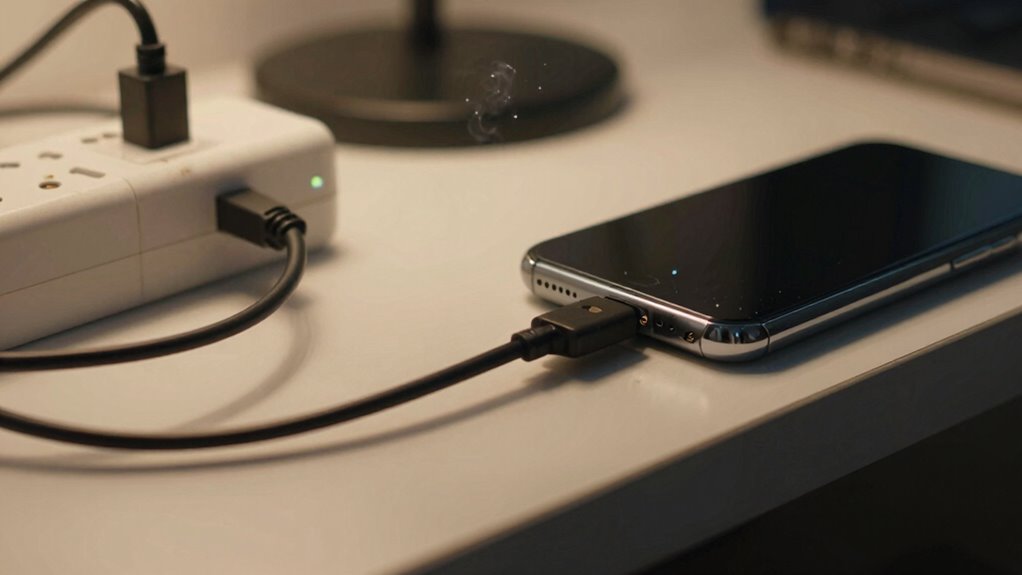

Poor charging strategies can secretly damage your device’s battery and shorten its lifespan. Constantly plugging in or leaving your device on charge overnight accelerates chemical wear, reducing capacity and efficiency. Fully draining the battery before recharging can also harm it. Keeping charge levels between 20% and 80% helps preserve long-term health. If you want to protect your device and save money, understanding these risks is key—stick around to find out more.
Key Takeaways
- Poor charging habits accelerate chemical wear, reducing battery capacity and device lifespan.
- Overcharging or frequent full discharges increase internal battery stress and degradation risks.
- Degraded batteries cause decreased device performance and higher energy consumption.
- Ignoring best practices leads to earlier device replacement and increased environmental waste.
- Proper charging strategies help maintain battery health, ensuring long-term device efficiency and cost savings.
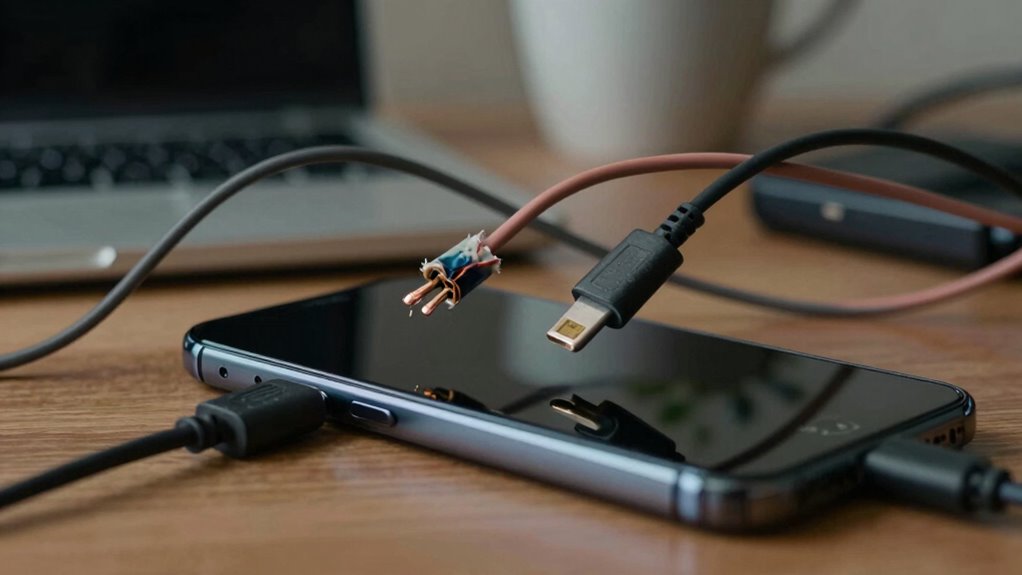
Many people overlook how their device charging habits can secretly damage their batteries over time. You might think plugging in your device whenever it’s convenient or leaving it on the charger overnight doesn’t have consequences, but these habits can accelerate battery degradation. Over time, this leads to a noticeable decrease in your device’s performance and battery life. When batteries degrade, they can’t hold as much charge, forcing you to recharge more frequently and reducing overall energy efficiency. This isn’t just about inconvenience; it’s about the long-term health of your device.
Poor charging strategies cause chemical wear inside your battery, which worsens with every cycle. Every time you charge your device to 100% and leave it plugged in, you expose the battery to unnecessary stress. Similarly, letting your battery drain completely before recharging can also harm it. Ideally, you want to keep your battery’s charge level between 20% and 80% to minimize wear. Ignoring these best practices accelerates battery degradation, meaning your device’s battery capacity shrinks faster than it should. As a result, you have to replace the battery sooner or buy a new device altogether, which isn’t just costly but also environmentally unfriendly. Maintaining optimal battery health is crucial for the longevity of your device.
Charging your device between 20% and 80% helps preserve battery health and prolong its lifespan.
Energy efficiency is another aspect often overlooked when discussing charging habits. A well-maintained battery performs more efficiently, consuming less power at higher capacity levels. Conversely, a degraded battery forces your device to work harder, draining power faster and wasting energy. This inefficiency can lead to increased electricity use, especially if you’re frequently charging or using your device while it’s plugged in. Over time, poor charging habits can turn what should be a straightforward process into a drain on your resources, both financially and environmentally. Additionally, battery management features available on many devices can help optimize charging and extend lifespan if used properly. Incorporating proper charging techniques can further help in preserving your battery health over the long term. Being aware of the chemical wear process inside batteries can also motivate you to adopt better habits for long-term device performance.
smartphone battery health charger
As an affiliate, we earn on qualifying purchases.
As an affiliate, we earn on qualifying purchases.
Frequently Asked Questions
Can Using Third-Party Chargers Damage My Device?
Yes, using third-party chargers can damage your device if your charging habits aren’t careful. Poor quality chargers may deliver inconsistent power, which can harm your device’s battery and affect power management over time. Always choose reputable chargers that meet safety standards. By maintaining good charging habits and using reliable chargers, you help protect your device’s battery health and guarantee the best power management, extending its lifespan and performance.
How Can I Identify a Faulty Charging Cable?
Like a vintage radio with static, a faulty charging cable often shows inconsistent performance. You can identify issues by checking cable durability—look for frayed wires, exposed inner cords, or bent connectors. Test the cable with different devices, and if it heats up or charges intermittently, replace it. Ensuring charging safety is essential, so avoid cables with damage to prevent potential short circuits or device harm.
What Are the Signs of Battery Degradation?
You’ll notice battery degradation when your device’s battery lifespan shortens, requiring more frequent charges. If your device drains quickly or takes longer to charge, it’s a sign your battery isn’t performing well. Poor charging habits, like overcharging or using faulty cables, can accelerate this process. Keep an eye on battery health in settings, and adopt good charging habits to extend your battery’s lifespan and maintain peak performance.
Is Wireless Charging Safer Than Wired Charging?
Wireless charging offers greater charging convenience, but its wireless safety isn’t always assured. You might find it easier to power up without tangled cords, yet it can generate more heat, potentially affecting your device’s health over time. Wired charging remains a safer option for preserving battery longevity, especially if you’re attentive to proper charging habits. Balancing convenience with mindful charging strategies helps protect your device’s lifespan and ensures peace of mind.
How Often Should I Replace My Device’s Battery?
You should replace your device’s battery when it no longer holds a charge or shows significant reduced capacity—usually after 300-500 full charge cycles. To maximize battery life, practice good charging habits and perform regular battery calibration by fully discharging and recharging it. These steps help identify the battery’s true health, ensuring you replace it only when necessary, preventing unexpected shutdowns and maintaining peak device performance.
battery management charging cable
As an affiliate, we earn on qualifying purchases.
As an affiliate, we earn on qualifying purchases.
Conclusion
Just like Icarus flying too close to the sun, neglecting proper charging habits can lead your device to a fiery demise. You might think a quick top-up here or there doesn’t matter, but over time, poor strategies can cause long-term damage, shortening your device’s lifespan. So, take care with your charging routine—your device’s future depends on it. Remember, even the best tech needs the right care to soar high and stay strong.
USB power bank with battery protection
As an affiliate, we earn on qualifying purchases.
As an affiliate, we earn on qualifying purchases.
As an affiliate, we earn on qualifying purchases.