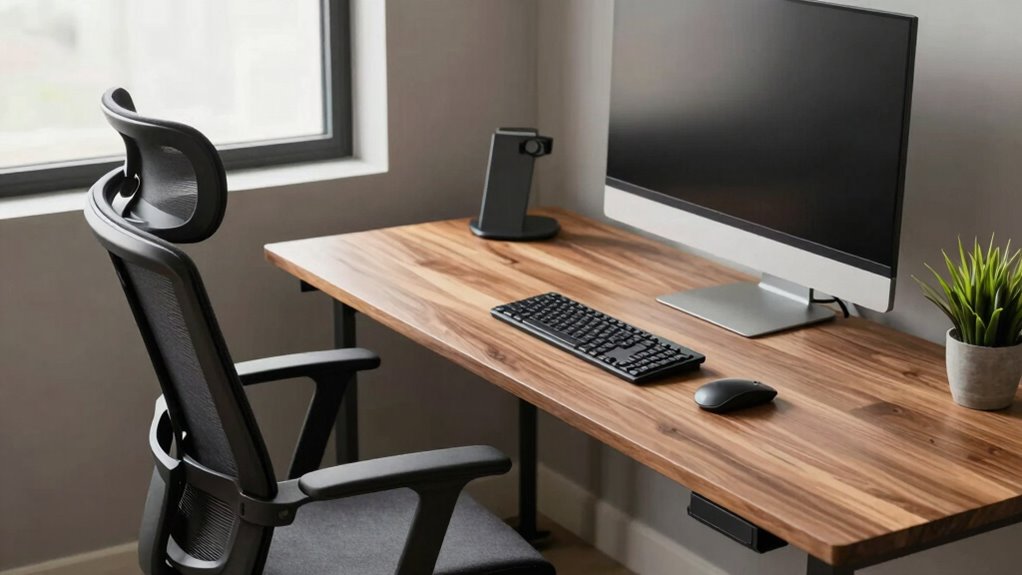

Your desk ergonomics greatly influence your focus and endurance. When you maintain proper posture, your body stays comfortable and less fatigued, helping you stay engaged longer. Correct monitor positioning reduces eye strain, preventing headaches and distraction. An ergonomic workspace supports your back, neck, and legs, minimizing discomfort that can break concentration. Small adjustments make a big difference in sustaining attention and productivity. Keep exploring to discover how optimizing your setup can boost your long-term performance.

Get business pricing on office and shipping supplies
- Business-only prices and quantity discounts
- Tax-exempt purchasing
- Multiple users, one account, clear invoices
Key Takeaways
- Proper desk ergonomics maintain good posture, reducing discomfort and enabling sustained focus over longer periods.
- Correct monitor placement minimizes eye strain, preventing fatigue and enhancing concentration.
- Ergonomic workspace setup supports natural body alignment, decreasing muscle fatigue and improving endurance.
- Adjustments like proper chair height and lumbar support help sustain attention without physical distraction.
- Small ergonomic improvements promote comfort, reducing fatigue and enabling longer, more productive work sessions.
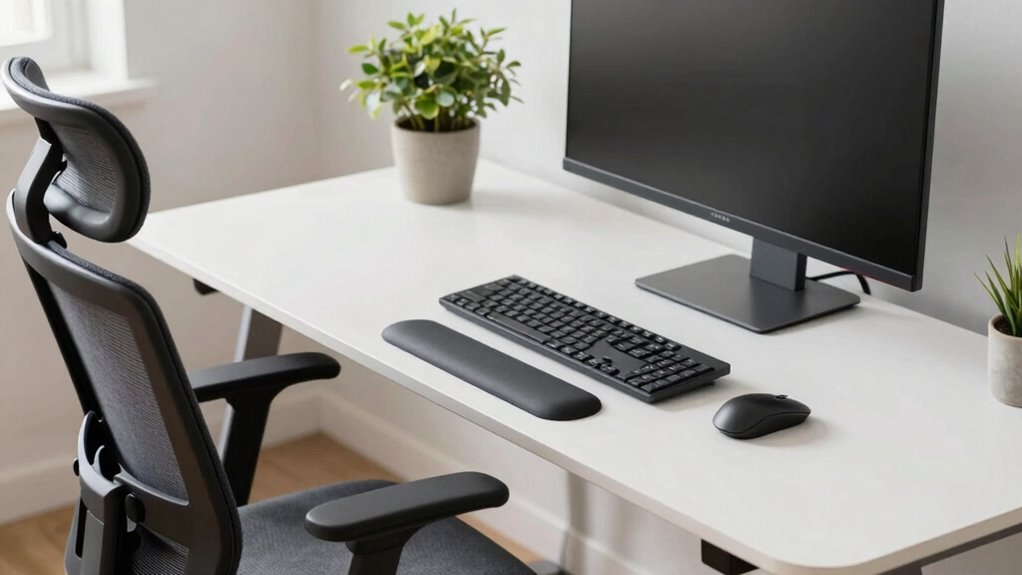
Have you ever noticed how your posture at your desk affects your ability to concentrate? When you slouch or lean forward, it might seem minor, but these habits can profoundly impact your focus and overall endurance. Proper posture alignment isn’t just about feeling comfortable; it’s about optimizing your body for sustained attention. When your spine is aligned correctly, your muscles don’t have to work overtime to keep you upright, reducing fatigue and allowing your mind to stay engaged longer. Conversely, poor posture often leads to discomfort, which distracts you from your tasks and diminishes productivity. Over time, misalignment can even cause musculoskeletal issues, making it harder to maintain focus as discomfort increases. Ensuring your workspace promotes Proper posture alignment can significantly improve your concentration and reduce fatigue.
Proper posture boosts focus, reduces fatigue, and prevents discomfort during long work sessions.
Eye strain also plays an essential role in how well you pay attention during long work sessions. When your monitor isn’t positioned at eye level or is too close or far away, your eyes have to work harder to focus. This extra effort results in fatigue, headaches, and blurred vision—all of which are major distractions. You might find yourself needing frequent breaks, which disrupt your workflow and decrease your endurance. Adjusting your monitor height and distance can make a noticeable difference. When your eyes are at ease, you’re less likely to experience strain, and your concentration remains sharper for longer periods. Additionally, incorporating ergonomic principles into your setup can help prevent discomfort and promote better overall health.
Your desk setup directly influences these factors. An ergonomic workspace encourages better posture alignment by ensuring your chair and desk height support a natural sitting position. Your feet should rest flat on the floor, knees at a 90-degree angle, and your back supported by the chair’s lumbar support. When these elements are in place, your body remains balanced, reducing the risk of fatigue and discomfort that can derail your attention. Proper workspace ergonomics also involves maintaining a neutral neck position and minimizing repetitive movements, which can contribute to long-term discomfort. In addition, using ergonomic accessories such as adjustable footrests or monitor stands can further enhance your setup and support sustained focus. Additionally, positioning your monitor directly in front of you, about an arm’s length away, helps minimize eye strain. Keep the top of the screen at or just below eye level to maintain a neutral neck position, preventing tension that can distract you from your work. Maintaining ergonomic habits throughout your workday can help prevent discomfort and improve your overall focus.
In essence, paying attention to your desk ergonomics isn’t just about comfort; it’s about creating the ideal environment for sustained focus and endurance. Proper posture alignment reduces physical discomfort, allowing your mind to stay engaged longer. Simultaneously, minimizing eye strain keeps your vision clear and your attention sharp. By making small adjustments to your workspace, you set yourself up for better concentration, increased productivity, and less fatigue throughout your day.
As an affiliate, we earn on qualifying purchases.
Frequently Asked Questions
How Often Should I Adjust My Desk Setup During the Day?
You should adjust your desk setup at least once every hour to maintain good posture awareness and prevent discomfort. Regular workspace customization helps you stay focused and reduces fatigue. Pay attention to how you feel; if you notice strain or stiffness, make quick adjustments. Small tweaks, like changing your chair height or repositioning your monitor, keep your body aligned and support sustained attention and endurance throughout your workday.
Do Specific Ergonomic Accessories Improve Attention Span?
Yes, specific ergonomic accessories can improve your attention span. Ergonomic accessories like adjustable laptop stands, ergonomic chairs, and wrist supports help maintain proper posture, reduce discomfort, and minimize distractions. By promoting comfort and reducing physical strain, these accessories enable you to focus longer and stay alert. When your body feels supported, your mind can concentrate better, enhancing your overall attention span and productivity throughout the day.
Can Poor Desk Ergonomics Cause Long-Term Health Issues?
Poor desk ergonomics can lead to long-term health issues like chronic back pain, neck strain, and repetitive stress injuries. By neglecting posture correction and skipping ergonomic assessments, you increase the risk of developing these problems over time. Investing in proper ergonomic setups and regularly evaluating your workspace helps prevent long-term health issues, ensuring comfort and reducing the likelihood of pain or injury caused by an ill-suited workspace.
What Are Signs My Desk Ergonomics Are Affecting My Focus?
You might notice your focus slipping, maybe feeling more distracted or fatigued than usual, which is a sign your desk ergonomics could be affecting you. Coincidence often reveals deeper truths—poor posture correction can lead to discomfort, while visual strain from improper screen height reduces concentration. If these signs occur, it’s time to adjust your workspace, ensuring your desk setup supports both your posture and eye health, boosting focus and endurance.
Are There Ergonomic Tips for Standing Desks to Boost Endurance?
To boost endurance at a standing desk, focus on maintaining a proper standing posture—keep your feet flat, knees slightly bent, and shoulders relaxed. Use desk accessories like anti-fatigue mats, adjustable monitor stands, and footrests to reduce strain. Regularly shift your weight and take short breaks to prevent fatigue. These ergonomic tips help you stay comfortable and alert longer, improving your overall focus and endurance throughout the day.
adjustable ergonomic office chair
As an affiliate, we earn on qualifying purchases.
As an affiliate, we earn on qualifying purchases.
Conclusion
Just like a well-tuned instrument produces beautiful music, a properly set-up desk keeps your focus sharp and your endurance high. When you prioritize good ergonomics, you’re not just preventing discomfort—you’re creating an environment that fuels your productivity. Remember, small adjustments can make a big difference, turning your workspace into a powerhouse of efficiency. So, don’t wait to optimize your setup—your attention and stamina will thank you, shining brighter than ever.
As an affiliate, we earn on qualifying purchases.
As an affiliate, we earn on qualifying purchases.
Fall Picks
fall essentials
As an affiliate, we earn on qualifying purchases.