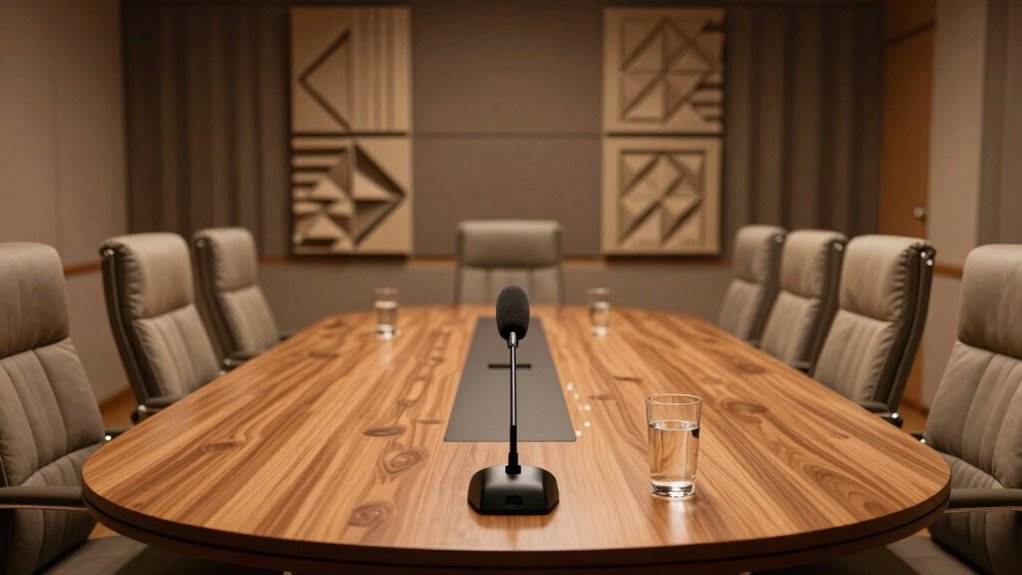

Your conference room acoustics directly impact decision quality by ensuring clear communication and minimizing misunderstandings. When sound echoes are reduced with proper absorption and layout, everyone can hear each other better, leading to more confident and faster decisions. Good acoustics also lessen voice strain and distractions, keeping focus sharp. If you want to understand how to optimize your space for better team outcomes, stick around—there’s more to discover.

Get business pricing on office and shipping supplies
- Business-only prices and quantity discounts
- Tax-exempt purchasing
- Multiple users, one account, clear invoices
Key Takeaways
- Clear acoustics ensure participants hear and understand discussions accurately, reducing misunderstandings and errors.
- Proper sound absorption minimizes echoes and background noise, enhancing speech clarity.
- Well-designed room layout promotes even sound distribution, facilitating better engagement and collaboration.
- Soundproofing prevents external noise disruptions, maintaining focus during critical decision-making.
- Optimal acoustic environment boosts confidence and speed in decision processes by enabling effective communication.
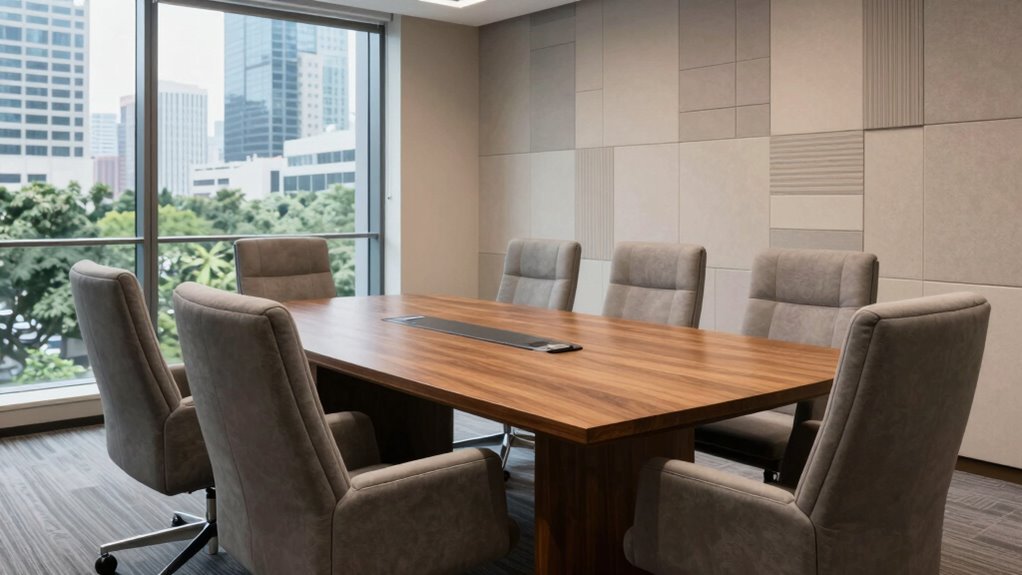
Good acoustics in a conference room can considerably influence the quality of decisions made during meetings. When the sound environment is clear and controlled, everyone’s voice is heard without strain, minimizing misunderstandings and miscommunications. Sound absorption plays a critical role here; it helps reduce echoes and background noise, so conversations remain crisp and intelligible. If your room has hard surfaces like glass or tile, sounds bounce around, creating a chaotic acoustic environment that hampers focus. Incorporating sound-absorbing materials—such as acoustic panels, carpets, or ceiling tiles—can dampen these reflections, making it easier for attendees to concentrate and contribute effectively.
Effective sound absorption reduces echoes and background noise, ensuring clear, focused conversations in conference rooms.
Beyond materials, your room layout directly impacts sound absorption and overall acoustics. Positioning the speaker and seating strategically ensures voices project clearly without causing feedback or dead zones. For example, placing the speaker at the front and seating participants in a semi-circle allows sound to disperse evenly, so everyone hears equally well. Avoid placing large reflective surfaces behind speakers or directly facing microphones, as these can cause sound to bounce unpredictably and interfere with clarity. Incorporating elements like movable partitions or bookcases can also help break up sound waves, further improving absorption and reducing unwanted reverberations. Additionally, understanding the importance of soundproofing techniques can prevent external noise from disrupting meetings and enhance overall acoustic quality. Proper soundproofing not only minimizes external disruptions but also helps contain sound within the room, promoting a more focused environment.
Implementing effective acoustic solutions requires a comprehensive approach that considers both the materials used and the room’s design and layout, ensuring an optimal balance between sound absorption and reflection. Your choice of room layout influences not only sound absorption but also how comfortably attendees can interact. A cluttered or overly spacious arrangement might cause sound to dissipate or echo, making it difficult to follow the discussion. Conversely, a well-thought-out layout with appropriate sound-absorbing furnishings fosters a more intimate and focused environment. It’s also beneficial to consider the acoustic design to optimize sound distribution and minimize dead spots. Encouraging participants to speak clearly and avoid unnecessary noise contributes to a more effective acoustic environment. It encourages participants to speak up comfortably and listen attentively, which leads to more informed decision-making. When properly integrated, these elements can significantly enhance the overall acoustic environment, promoting more effective communication. Keep in mind that good acoustics aren’t just about blocking noise; they’re about balancing sound absorption, reflection, and dispersion to create a setting where conversations flow naturally.
In essence, when you pay attention to sound absorption and room layout, you set the stage for more productive meetings. Clear sound reduces misunderstandings, keeps participants engaged, and allows ideas to be communicated without distortion. As a result, decisions are made faster and with greater confidence. Investing in proper acoustic treatments and thoughtful space arrangement isn’t just about comfort—it’s a strategic move to enhance the quality of every decision your team makes.
acoustic panels for conference rooms
As an affiliate, we earn on qualifying purchases.
As an affiliate, we earn on qualifying purchases.
Frequently Asked Questions
How Do Different Materials Impact Sound Absorption in Conference Rooms?
Different materials impact sound absorption based on their porosity and density. Soft materials like acoustic panels and carpets absorb sound effectively, reducing echoes, while harder surfaces like glass or metal reflect sound, increasing noise. When choosing materials, consider their durability for long-term use and guarantee they blend with your room’s aesthetic. Properly selected materials improve acoustics, creating a comfortable environment that supports clear communication and better decision-making.
What Technology Can Improve Acoustics in Existing Conference Spaces?
You can improve acoustics in existing conference spaces by installing acoustic panels to absorb sound and reduce echo. Additionally, implementing sound masking technology helps conceal distracting noises and enhances speech clarity. These solutions work together to create a more focused environment, allowing everyone to hear clearly and participate actively. Upgrading your space with acoustic panels and sound masking guarantees better communication, ultimately improving decision quality during meetings.
How Does Room Size Influence Decision-Making Effectiveness?
You’ll find that room size greatly influences decision-making effectiveness. Larger rooms may cause sound to echo, making it hard to hear clearly, so using soundproof barriers helps contain noise. Conversely, overly small rooms can feel cramped, hindering open discussion. Optimizing room dimensions guarantees a balanced environment, reducing distractions. Properly designed spaces support better communication, focus, and collaboration, ultimately leading to more effective and confident decisions during meetings.
Are There Specific Acoustic Design Tips for Virtual or Hybrid Meetings?
Did you know that 60% of virtual meeting participants find background noise distracting? For hybrid meetings, you should invest in good microphones and soundproofing to reduce virtual background noise. Use directional microphones and encourage participants to mute when not speaking. Position speakers carefully to prevent echo, and consider acoustic panels for hybrid spaces. These tips help improve clarity, focus, and decision-making quality during your meetings.
How Do Acoustics Affect Speaker Clarity and Audience Engagement?
Poor acoustics can make it hard for you to hear speakers clearly, leading to speaker fatigue and reduced audience engagement. When sound isn’t well-managed, you may strain to understand, which distracts from the meeting’s purpose. Effective sound masking and acoustic treatments help minimize background noise and echo, ensuring clarity. This keeps participants alert and engaged, making decision-making smoother and more effective.
soundproofing materials for meeting rooms
As an affiliate, we earn on qualifying purchases.
As an affiliate, we earn on qualifying purchases.
Conclusion
By understanding how conference room acoustics influence your decision-making, you can create environments that promote clarity, encourage participation, and reduce misunderstandings. Improving acoustics enhances focus, fosters collaboration, and boosts confidence. When your environment supports open communication, your decisions become more thoughtful, your team more engaged, and your outcomes more successful. In designing your conference space, prioritize sound quality, balance, and clarity—because a well-acousticed room leads to better decisions, stronger teamwork, and brighter results.
As an affiliate, we earn on qualifying purchases.
sound absorbing furniture for offices
As an affiliate, we earn on qualifying purchases.
As an affiliate, we earn on qualifying purchases.
Halloween Picks
halloween
As an affiliate, we earn on qualifying purchases.