
When choosing between ceiling mics and table mics, consider your room size, layout, and aesthetic priorities. Ceiling mics are great for open spaces, providing broad, natural sound with minimal visual impact but require complex installation. Table mics are easier to set up and focus on clear, direct audio from individual speakers, ideal for smaller or controlled environments. Understanding these differences helps you make the best choice for your needs—more details ahead can help refine your decision.

Get business pricing on office and shipping supplies
- Business-only prices and quantity discounts
- Tax-exempt purchasing
- Multiple users, one account, clear invoices
Key Takeaways
- Consider room size and layout to determine if broad coverage (ceiling mics) or focused pickup (table mics) is needed.
- Evaluate installation complexity and costs; ceiling mics require more infrastructure work than table mics.
- Prioritize aesthetics and space constraints; ceiling mics are unobtrusive, while table mics can clutter surfaces.
- Match microphone type to meeting purpose: large spaces benefit from ceiling mics, smaller focused meetings from table mics.
- Assess sound quality needs; ceiling mics provide natural ambiance, while table mics emphasize clarity for individual speakers.
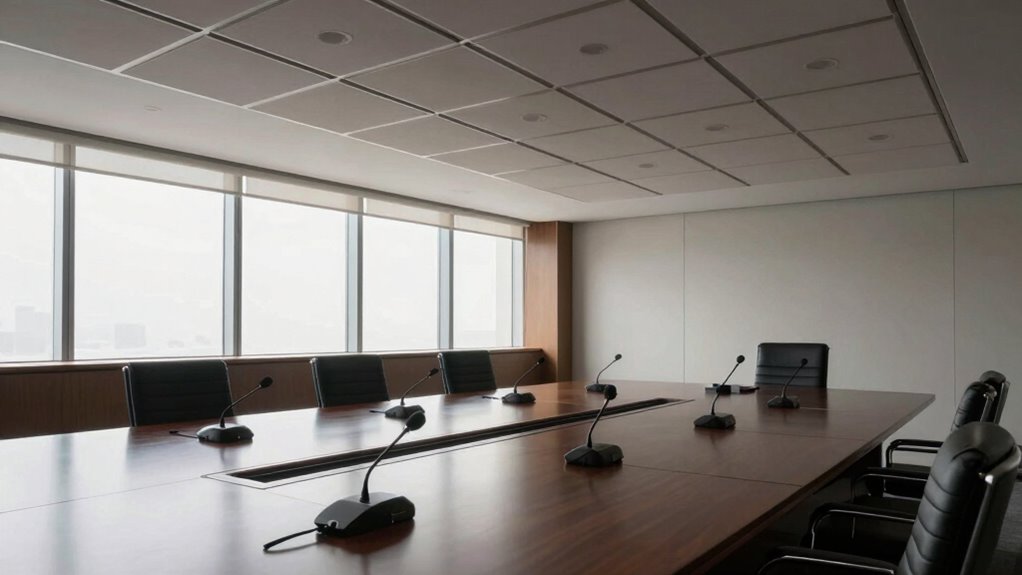
When choosing the right microphone for your conference room or event space, understanding the differences between ceiling mics and table mics is vital. Both options serve to capture audio, but they do so quite differently, impacting the overall sound quality and ease of setup. Ceiling microphones are often preferred for their clean aesthetic and ability to provide broad audio pickup without cluttering the table. They hang overhead, usually mounted in the ceiling grid, and use an array of sensitive elements to pick up voices from across the room. This design allows for a more natural sound environment, especially in larger spaces, by capturing audio from multiple directions. However, you need to contemplate the installation challenges—cabling, mounting, and potential interference—since ceiling mics require access to the ceiling infrastructure and may involve complex wiring setups. Ceiling microphone design can influence the overall effectiveness and placement considerations. Additionally, advancements in audio technology have improved the performance of ceiling mics, making them more reliable in diverse environments. Moreover, sound quality can vary significantly based on the microphone’s design and the room acoustics, which should be considered during selection.
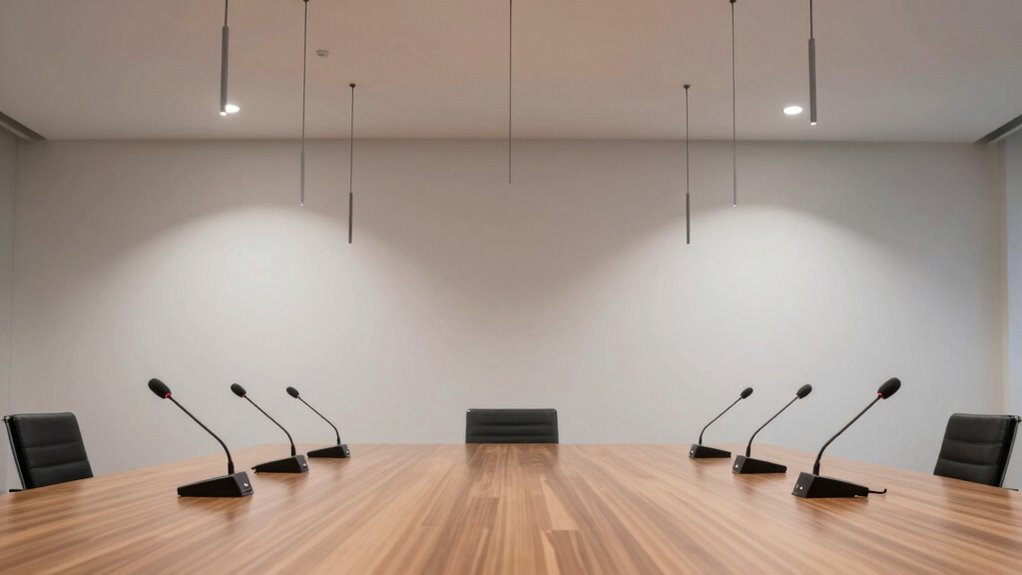
In contrast, table microphones sit directly on the conference table and are typically designed for clear, focused audio pickup from individual speakers. They’re ideal for smaller meetings or situations where you want to emphasize the voice of each participant. Their proximity to speakers ensures a strong, direct audio signal, which often results in better clarity and less ambient noise pickup. Still, table mics can be less discreet and may clutter the table, especially in formal settings. From an installation standpoint, they are usually easier to set up, as they don’t require ceiling access or extensive wiring. However, you might face challenges with placement—ensuring every speaker’s voice is captured equally can be tricky, especially if participants move around or if the room layout isn’t ideal.
When weighing your options, think about the room size, layout, and your priorities for audio pickup. Ceiling mics tend to be more unobtrusive and better for large, open spaces, but they come with installation challenges that can increase costs and complexity. Table mics are simpler to install and are often more reliable for smaller, more controlled environments but may interfere with table space and require careful placement to ensure consistent audio quality. Ultimately, your choice depends on balancing these factors: the aesthetic and coverage benefits of ceiling mics against the straightforward installation and focused pickup of table mics. By contemplating your room’s needs and technical constraints, you can select the microphone type that best enhances your conference or event experience.
ceiling microphone for conference rooms
As an affiliate, we earn on qualifying purchases.
As an affiliate, we earn on qualifying purchases.
Frequently Asked Questions
How Do Ceiling Mics Handle Background Noise Compared to Table Mics?
Ceiling mics typically handle background noise better than table mics because they focus on capturing sound from above, reducing unwanted noise. They provide better background noise reduction and maintain sound clarity even in noisy environments. Conversely, table mics pick up more ambient sound, which can lower clarity. So, if you want clearer audio with less background interference, ceiling mics are often the smarter choice.
Are Ceiling Mics Suitable for Small Conference Rooms?
Think of ceiling mics as silent observers floating above a small gathering, providing seamless audio coverage without clutter. They’re perfect for small conference rooms because they blend into the aesthetic, maintaining a clean look while capturing voices clearly. Ceiling mics handle background noise well and give you consistent sound, making them an excellent choice for those spaces where aesthetic integration and reliable audio are essential.
What Maintenance Is Required for Ceiling Versus Table Mics?
You need to regularly clean ceiling and table mics to maintain their performance. For ceiling mics, dust and debris can accumulate, so gentle cleaning with a soft cloth and compressed air is recommended, guaranteeing compatibility considerations with the microphone’s housing. Table mics require more frequent cleaning of the microphones and cords, using appropriate disinfectants. Always follow manufacturer guidelines to avoid damage and guarantee peak operation.
Can Ceiling Mics Pick up Individual Voices Clearly?
Think of ceiling mics as silent observers—they can pick up individual voices clearly, but it depends on their audio pickup range and microphone placement. Proper placement is essential; positioning them closer to speakers enhances clarity. While they excel at capturing overall sound, they might struggle with isolating one voice among many. For the best results, consider your room’s acoustics and use supplementary microphones if needed for pinpoint accuracy.
How Do Installation Costs Compare Between Ceiling and Table Mics?
The cost comparison shows that ceiling mics often cost more upfront than table mics due to their advanced technology and integration needs. Installation challenges also influence costs; ceiling mics require ceiling mounting, wiring, and sometimes structural modifications, making installation more complex and expensive. In contrast, table mics are simpler to set up, usually involving plug-and-play options that reduce installation time and costs.
As an affiliate, we earn on qualifying purchases.
Conclusion
Ultimately, choosing between ceiling mics and table mics depends on your space, your needs, and your preferences. Consider the reach, the visibility, and the sound quality, and weigh how each option fits into your environment. Think about ease of use, aesthetics, and the impact on your setup. By examining these factors carefully, you’ll make a decision that enhances your audio experience, ensuring clarity, minimizing distraction, and maximizing comfort in every conversation.
As an affiliate, we earn on qualifying purchases.
conference room table microphones
As an affiliate, we earn on qualifying purchases.
As an affiliate, we earn on qualifying purchases.
Halloween Picks
halloween
As an affiliate, we earn on qualifying purchases.