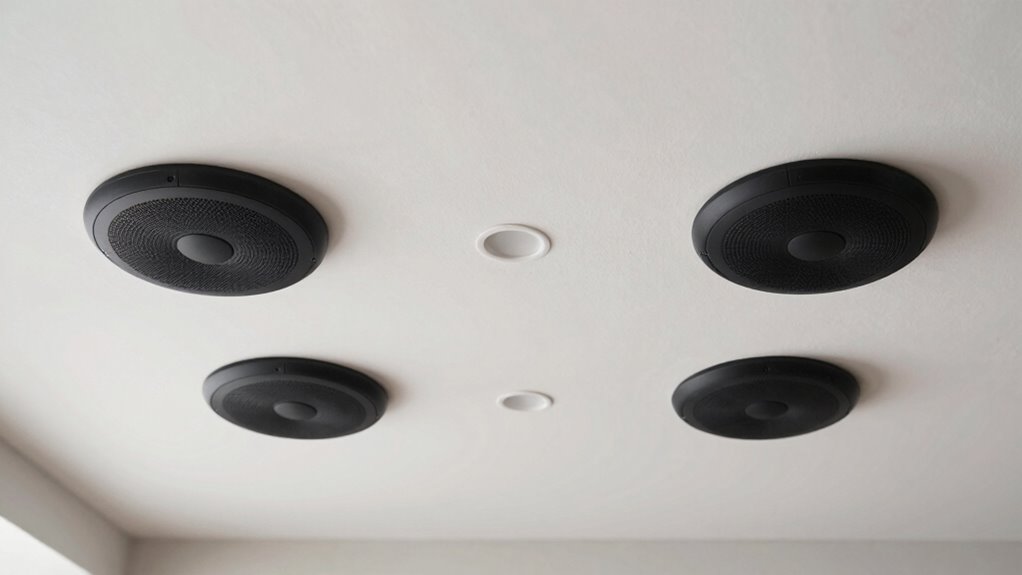

To choose better ceiling speakers for voice clarity, focus on models with high sensitivity and a broad frequency response, especially between 80Hz and 20kHz. Make certain proper installation and placement for maximum sound coverage, and consider room acoustics and soundproofing to reduce echoes and background noise. Look for durable, high-quality speakers with positive reviews, and select options suitable for your environment. Keep these tips in mind, and you’ll be on your way to clearer sound performance.

Get business pricing on office and shipping supplies
- Business-only prices and quantity discounts
- Tax-exempt purchasing
- Multiple users, one account, clear invoices
Key Takeaways
- Select speakers with high sensitivity ratings for clearer voice reproduction at lower volumes.
- Ensure a broad frequency response (80Hz–20kHz) to accurately reproduce speech.
- Properly install and position speakers to optimize sound coverage and minimize obstructions.
- Incorporate soundproofing and acoustic treatments to reduce echo and external noise interference.
- Choose durable, well-reviewed models with moisture resistance if needed for specific environments.
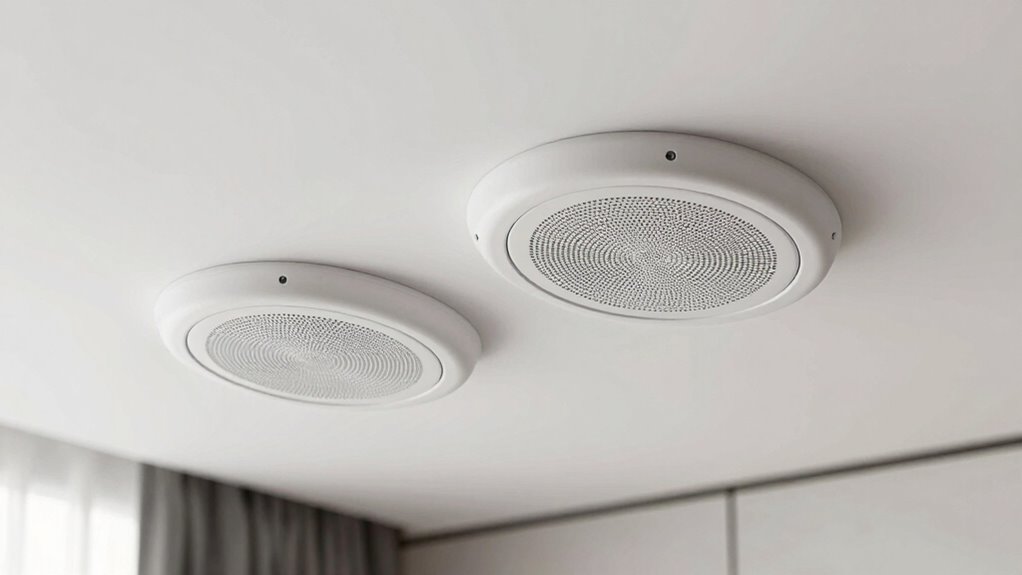
Are you unsure how to pick the best ceiling speakers for your space? When it comes to choosing speakers that deliver clear voice quality, several factors come into play. First, consider the soundproofing techniques of your room. Proper soundproofing reduces echo and background noise, making voice clarity much easier to achieve. Installing soundproofing materials like acoustic panels or insulation around your ceiling can help contain sound within the space, guaranteeing your speakers’ output isn’t drowned out by external noise. This way, you’ll notice a significant improvement in clarity, especially in open or noisy environments.
Next, focus on the technical specifications of the speakers themselves. Look for models with high sensitivity ratings, which determine how loudly the speakers will sound given a certain input power. High-sensitivity speakers produce clearer voices at lower volumes, reducing distortion and making speech more intelligible. Pay attention to frequency response, aiming for a range that emphasizes vocals—typically around 80Hz to 20kHz. This ensures the speakers can accurately reproduce speech without muddiness or tinny sounds. Additionally, consider the power handling capacity; choosing speakers that match the size of your room assures they can deliver adequate volume without distortion.
Choose speakers with high sensitivity, broad frequency response, and appropriate power capacity for clear, accurate voice reproduction.
Installation safety is another essential aspect. You want to make sure the speakers are installed securely and safely, avoiding any risk of falling or electrical issues. Use appropriate mounting hardware and follow manufacturer instructions carefully. If you’re not comfortable with electrical wiring, hire a professional to handle the installation. Proper installation not only safeguards safety but also optimizes sound quality by positioning the speakers correctly. Keep in mind that the placement of ceiling speakers impacts voice clarity—aim for even distribution across the room, avoiding obstructions that can block sound waves. Additionally, selecting soundproofing techniques can further enhance the clarity of voices by minimizing interference from external noise sources. Incorporating room acoustics considerations can also significantly improve overall sound quality and voice intelligibility, especially in complex spaces. Furthermore, understanding the speaker layout and how it influences sound coverage can help you achieve a more balanced audio experience. To further refine sound quality, consider the use of acoustic treatments, which can help manage reflections and echoes within the room.
Finally, consider the overall quality and durability of the speakers. Look for models with good reviews and reliable build quality, as cheaper options often compromise sound clarity and longevity. Some models come with features like moisture resistance if you’re installing in kitchens or bathrooms, which can be beneficial for long-term performance. Remember, investing in quality speakers and proper installation methods pays off by providing consistent, clear voice reproduction over time.
ceiling speakers for voice clarity
As an affiliate, we earn on qualifying purchases.
As an affiliate, we earn on qualifying purchases.
Frequently Asked Questions
How Do Ceiling Speakers Affect Room Acoustics?
Ceiling speakers influence room acoustics by affecting sound absorption and acoustic reflection. When installed properly, they help distribute sound evenly, reducing echo and dead spots. They can minimize sound reflections off ceilings and walls, creating clearer voice clarity. Poorly placed or low-quality speakers can cause unwanted reflections, muddling sound. To optimize acoustics, choose speakers that complement your room’s size and shape, ensuring balanced sound absorption and reflection for better clarity.
Can Ceiling Speakers Be Used Outdoors?
Yes, ceiling speakers can be used outdoors if you choose weatherproof models. To guarantee durability, focus on weatherproofing tips like sealing all connections and using protective covers. Consider outdoor installation considerations such as placement away from direct sunlight, rain, and snow. Properly installed, these speakers can deliver clear voice and sound quality, even in outdoor environments. Just make sure they’re rated for outdoor use to withstand the elements effectively.
What Is the Ideal Speaker Placement Height?
The ideal speaker placement height for ceiling speakers is typically around 8 to 10 feet, which balances acoustic optimization and voice clarity. You should aim for a height that guarantees even sound distribution without causing echoes or dead spots. Proper speaker height minimizes sound distortion, enhances voice clarity, and creates a more immersive experience. Adjusting the speaker height based on room size and shape can further improve overall sound quality.
Do Different Ceiling Materials Impact Sound Quality?
Yes, ceiling materials impact sound quality considerably. Different ceiling materials, like acoustic tiles or drywall, influence sound absorption, which affects clarity and overall audio performance. Materials with better sound absorption reduce echo and background noise, enhancing voice clarity. When choosing ceiling speakers, consider how your ceiling material interacts with sound; using materials that absorb sound can help you achieve clearer voice reproduction and a more immersive listening experience.
How Often Should Ceiling Speakers Be Maintained or Replaced?
You should perform regular speaker maintenance at least once a year to guarantee ideal voice clarity. Keep an eye on speaker performance, and if you notice distorted sound or reduced volume, it might be time for replacement. Generally, replacement frequency depends on usage and environmental factors, but a good rule is to think about replacing ceiling speakers every 5 to 10 years to maintain sound quality and avoid issues caused by wear and tear.
high sensitivity ceiling speakers
As an affiliate, we earn on qualifying purchases.
As an affiliate, we earn on qualifying purchases.
Conclusion
Now that you’ve navigated the world of ceiling speakers, remember, you’re the captain steering your soundscape. Picking the right speakers is like planting seeds for clarity and warmth to grow. Trust your ears, tune into the details, and let your choices harmonize with your space. With each selection, you’re weaving a tapestry of sound—rich, clear, and true—turning your room into a concert hall where every word resonates perfectly. Your perfect voice clarity awaits—go ahead and make it happen.
ceiling speakers with broad frequency response
As an affiliate, we earn on qualifying purchases.
As an affiliate, we earn on qualifying purchases.
soundproofing acoustic panels for ceiling
As an affiliate, we earn on qualifying purchases.
As an affiliate, we earn on qualifying purchases.
Halloween Picks
halloween
As an affiliate, we earn on qualifying purchases.