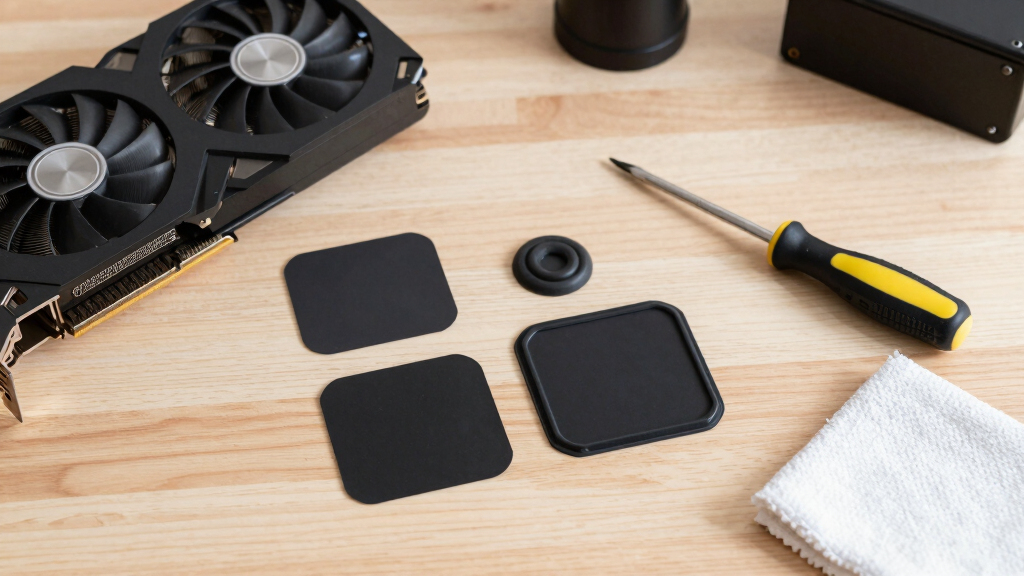

📊 Full opportunity report: Best Thermal Paste and Pads for High-TDP GPUs on ThorstenMeyerAI.com — validation score, market gap, and execution plan.

Get business pricing on office and shipping supplies
- Business-only prices and quantity discounts
- Tax-exempt purchasing
- Multiple users, one account, clear invoices
TL;DR
This article reviews the best thermal pastes and pads for high-TDP GPUs used in AI and continuous workloads. It highlights materials that resist pump-out and maintain stable temperatures over years. The focus is on long-term performance rather than initial cooling.
Honeywell PTM7950, a phase-change material, is identified as the best thermal interface material for high-TDP GPUs running continuously, due to its resistance to pump-out and long-term stability, according to recent testing and enthusiast reports.
Traditional thermal pastes often lose effectiveness over years under sustained GPU loads due to pump-out, a process where the paste degrades and air gaps form, increasing temperatures. For 24/7 AI workloads or mining rigs, materials that resist this degradation are essential. The Honeywell PTM7950, a phase-change material, is highlighted as the top choice because it maintains low thermal resistance over years of continuous operation. It is supplied as a thin sheet, requiring careful application, but offers durability unmatched by typical pastes. Arctic MX-6, a non-conductive traditional paste, remains a reliable, easy-to-apply alternative with a lifespan of 8–10 years, suitable for those who prefer simpler installation. Noctua NT-H2, a premium traditional paste, is trusted for its consistent performance and durability, making it suitable for users seeking a high-quality, easy-to-use option. Additionally, Thermal Grizzly Kryosheet, a graphene-based reusable thermal pad, provides a long-lasting, non-drying solution but requires precise handling due to its electrical conductivity. These materials are recommended for users who operate high-power GPUs continuously and need stable thermal performance over time.Best thermal paste
for a high-TDP GPU.
The standard “coldest on day one” advice is wrong for a 24/7 rig. Continuous heat slowly squeezes traditional paste out — a failure called pump-out — so the real question is what stays cold for years.
Why Long-Term Thermal Stability Matters for High-Power GPUs
Maintaining low GPU temperatures over years of continuous operation reduces thermal throttling, prolongs hardware lifespan, and ensures consistent performance. For AI inference, mining, or other sustained workloads, choosing materials resistant to pump-out prevents gradual temperature increases that can lead to hardware failure or reduced efficiency. Proper thermal interface materials can also lower noise levels and reduce energy consumption, making long-term investments in high-quality pastes or pads economically advantageous.
As an affiliate, we earn on qualifying purchases.
Thermal Interface Materials in High-TDP GPU Applications
Most guides focus on gaming GPUs, where initial thermal performance is critical. However, high-TDP GPUs used in AI or mining operate under continuous load, exposing traditional pastes like Kryonaut to pump-out and drying issues. The industry has responded with materials designed for durability, such as phase-change sheets and graphene pads. Enthusiast testing confirms that long-term stability is key for these applications, with PTM7950 emerging as a top choice for longevity. The market now offers a range of options, from traditional pastes to reusable pads, catering to different user needs and technical expertise.
"For continuous workloads, the long-term stability of the thermal interface material is more important than initial cooling performance. PTM7950 is the only material I've seen that reliably resists pump-out over years."
— Thorsten Meyer, Tech Enthusiast
As an affiliate, we earn on qualifying purchases.
Long-Term Performance Data for Phase-Change Materials
While early reports and testing suggest PTM7950 resists pump-out effectively, comprehensive long-term data over multiple years is limited. Variations in application technique, operating environment, and workload can influence performance. More extensive, real-world testing is needed to confirm its durability over extended periods.
phase-change thermal interface material
As an affiliate, we earn on qualifying purchases.
As an affiliate, we earn on qualifying purchases.
Monitoring and Testing of Long-Term Thermal Materials
Manufacturers and enthusiasts will continue long-term testing of these materials under various conditions. Future updates may include comparative studies, new formulations, and user reports. Users operating high-TDP GPUs should monitor temperature trends over time and consider re-evaluating their thermal interface choices as more data becomes available.
As an affiliate, we earn on qualifying purchases.
Key Questions
Is phase-change material better than traditional thermal paste?
For long-term, high-heat applications, phase-change materials like PTM7950 offer superior resistance to pump-out and degradation, making them better suited for continuous workloads.
Can I use a reusable thermal pad instead of paste?
Yes, graphene-based reusable pads like Kryosheet provide long-lasting thermal contact but require careful handling due to electrical conductivity. They are ideal for users seeking durability and reusability.
Does applying better thermal material improve GPU lifespan?
Maintaining lower, stable temperatures reduces thermal stress and can extend the lifespan of high-power GPUs operating continuously.
Are there risks in applying phase-change materials or reusable pads?
Application of phase-change sheets requires precision, and reusable pads are electrically conductive, so careful handling is essential to avoid shorts or improper contact.
Will traditional pastes suffice for AI workloads?
Traditional pastes may perform adequately initially but tend to degrade over years of continuous high heat, making specialized materials preferable for such use cases.
Source: ThorstenMeyerAI.com
Columbus Day / Indigenous Peoples' Day Picks
long weekend sales
As an affiliate, we earn on qualifying purchases.