

This guide explains how to design and organize a business planner notebook tailored for entrepreneurs and professionals. You will learn to choose materials, structure content, and set up sections that support your business goals. Suitable for users with basic organization skills looking to create a personalized planner for daily, weekly, and monthly management.

Get business pricing on office and shipping supplies
- Business-only prices and quantity discounts
- Tax-exempt purchasing
- Multiple users, one account, clear invoices

Planner 2026-2027, Leather Two-Tone Planner, 18-Month Weekly and Monthly Calendar, Large 8.5" x 11" Hardcover Spiral Agenda for H…
- ✔ Brand: CAGIE
- ✔ Model Year: 2027
- ✔ Size: 8.5" x 11"

SUNEE Half Meeting Half Note – 8.5×11 Professional Notebook for Work, 160 Pages, A4 Size Project Planner, Spiral Meeting Agenda/M…
- ✔ Size: 8.5 x 11 inches
- ✔ Pages: 160
- ✔ Binding: Spiral
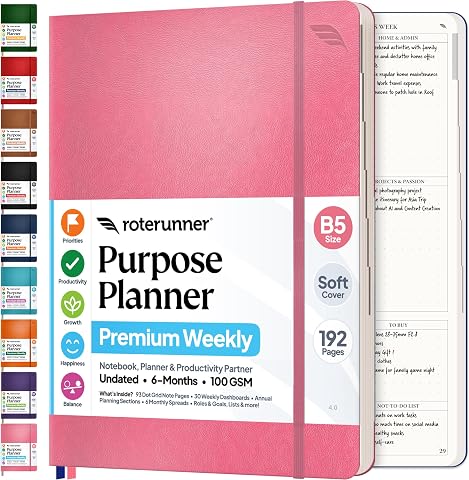
Roterunner Purpose Planner Notebook B5 7.5”x9.8” Undated 2026 Daily Weekly and Monthly Productivity Goal Setting Tool for Work Ho…
- ✔ Size: 7.5” x 9.8”
- ✔ Pages: 93 dotted note pages
- ✔ Binding: Stitch-bound
Difficulty: Intermediate | Time: 2-4 hours
What You’ll Need
Tools & Materials:
- Notebook or binder
- Pens and markers
- Ruler or straight edge
- Sticky notes or tabs
- Printer (optional)
Knowledge:
- Basic organization skills
- Understanding of your business goals
Planner 2026-2027, Leather Two-Tone Planner, 18-Month Weekly and Monthly Calendar, Large 8.5" x 11" Hardcover Spiral Agenda for H…
<p>The <strong>Planner 2026-2027</strong> stands out for its elegant two-tone PU leather cover and refined stitching, making it as stylish as it is durable. Its size—8.5" x 11"—offers ample space for detailed planning, ideal for users who prefer to keep everything in one place. It includes weekly, monthly, and yearly layouts, plus extra pages for contacts and holidays, which makes it a versatile choice for a broad range of users. Compared with smaller, more portable options, this planner prioritizes space and presentation, but its large size can limit portability. The high-quality 100 GSM paper reduces ink bleed-through, supporting smooth writing across busy schedules.</p>
Pros:
- Stylish two-tone PU leather cover with refined stitching
- Includes comprehensive weekly, monthly, and yearly layouts
- High-quality 100 GSM paper resists bleed-through
- Extra pages for contacts, notes, and holidays
Cons:
- Size (8.5" x 11") may be cumbersome for portability
- Spiral binding could wear out with heavy use
- Limited color options (only Rust Brown)
Best for: Professionals and students who want a sophisticated, all-in-one planning solution that stays on their desk or bookshelf.
Not ideal for: Users who need something compact or portable for frequent travel or commuting.
Bottom line: A luxurious, comprehensive planner ideal for desk-bound professionals or students who value style and detailed organization.
“A luxurious, comprehensive planner ideal for desk-bound professionals or students who value style and detailed organization.”
SUNEE Half Meeting Half Note – 8.5×11 Professional Notebook for Work, 160 Pages, A4 Size Project Planner, Spiral Meeting Agenda/M…
<p>The <strong>SUNEE Meeting Notebook</strong> is tailored for professionals needing a dedicated space for planning and documenting meetings. Its layout divides into sections for agendas, minutes, action items, and future meetings, streamlining the process of recording important discussions and follow-ups. Made with a water-resistant cover and sturdy spiral binding, this notebook is built to endure the demands of busy work environments. The 160 high GSM pages prevent ink bleed, supporting clear, legible notes. Compared to the larger, more comprehensive planners, this option focuses solely on meeting management, which can be a limitation for those seeking broader daily planning. Its size makes it less portable but more suitable for desk use or conference rooms.</p>
Pros:
- Dedicated sections for agendas, minutes, and action items
- Water-resistant cover and sturdy spiral binding
- High GSM paper prevents ink bleed and feathering
- Ample space with 160 pages for detailed notes
Cons:
- Size (8.5 x 11 inches) reduces portability
- Limited design options and aesthetics
- Focused solely on meetings, less suited for daily task planning
Best for: Business professionals and team leaders who need detailed meeting documentation and quick access to action points.
Not ideal for: Users seeking a general planner or those who prefer a more versatile, multi-purpose notebook.
Bottom line: A top choice for professionals who prioritize detailed, organized meeting records over general planning needs.
“A top choice for professionals who prioritize detailed, organized meeting records over general planning needs.”
Roterunner Purpose Planner Notebook B5 7.5”x9.8” Undated 2026 Daily Weekly and Monthly Productivity Goal Setting Tool for Work Ho…
<p>The <strong>Roterunner Purpose Planner</strong> offers a different approach, focusing on undated, flexible planning tailored for adults seeking productivity and self-care. Its B5 size makes it more portable than the previous options, yet still provides enough space for detailed planning. With pages dedicated to daily, weekly, and monthly layouts, along with goal-setting templates and habit trackers, it supports both work and personal development. This planner is particularly suited to users who want to adapt their planning anytime, thanks to its undated format. However, its detailed features may be overwhelming for minimalists, and the 6-month planning window limits long-term use without repurchasing or supplementing.</p>
Pros:
- Undated format allows flexible, anytime planning
- Includes goal-setting, habit trackers, and motivational tools
- High-quality no-bleed 100 GSM paper
- Durable features like elastic closure and back pocket
Cons:
- Limited to approximately 6 months of use
- No included pens or accessories
- May be too detailed for users seeking minimal planning
Best for: Adults with ADHD or those emphasizing flexible, goal-oriented planning and self-care routines.
Not ideal for: Minimalists or users who prefer a simple, minimalist planner with fewer features.
Bottom line: A versatile, goal-focused planner best suited for adults who need flexible, comprehensive planning tools and self-care tracking.
“A versatile, goal-focused planner best suited for adults who need flexible, comprehensive planning tools and self-care tracking.”
As an Amazon Associate we earn from qualifying purchases.
Before You Start
Review your business goals and key activities to determine what sections and pages your planner should include. Decide whether you prefer digital or paper formats, and gather any templates or printables if needed.Step-by-Step Instructions
Step 1: Define your planner’s purpose and scope
Write down the main functions your planner must serve, such as goal tracking, meeting notes, project management, and financial planning. Determine which sections are essential for your business needs.Tip: Focus on features that support your daily workflow to avoid clutter.
Check: You have a clear list of sections and specific goals for each part of your planner.
Step 2: Choose the right notebook or binder
Select a durable notebook or binder that fits your preferred size and style. Ensure it has enough pages or sections for your planned content.Tip: Opt for a notebook with dividers or a customizable binder for easy section addition.
Check: The notebook or binder is suitable for your planned sections and feels comfortable to use regularly.
Step 3: Design and label your sections
Create section dividers or tabs for each major part of your planner, such as Goals, Calendar, Projects, Finance, and Notes. Label each clearly with a permanent marker or printed labels.Tip: Use different colors for each section to enhance visual organization.
Check: All sections are clearly labeled and easily accessible within your planner.
Step 4: Create or gather templates for pages
Draft or print templates for recurring pages like weekly plans, project trackers, expense sheets, and meeting notes. Place these templates at the start of each section or keep them in a separate sheet for duplication.Tip: Use grid or lined paper for neatness; consider digital templates for easy printing.
Check: Templates are ready and correctly placed within the relevant sections for quick use.
Step 5: Organize your content and establish a routine
Populate your planner with initial entries, such as your current goals, upcoming meetings, and ongoing projects. Schedule daily or weekly review times to update and maintain the planner.Tip: Use color coding or symbols to prioritize tasks and identify urgent items.
Check: Your planner is filled with initial data, and you have a habit schedule for regular updates.
Common Mistakes to Avoid
- Overloading the planner with too many sections or pages. — Limit sections to those essential for your workflow; add more only if necessary.
- Using inconsistent labeling or disorganized tabs. — Label all sections clearly and uniformly, and keep tabs in order.
- Neglecting routine updates, making the planner cluttered or outdated. — Set a recurring schedule for reviewing and updating your planner, such as weekly reviews.
- Choosing a planner that is too small or too large for daily use. — Pick a size that comfortably fits your daily tasks without sacrificing space.
Troubleshooting
Problem: Planner pages are getting damaged or falling out.
Solution: Use sturdy binding or covers, and handle pages carefully when flipping.
Problem: Difficulty finding specific pages or sections.
Solution: Insert clear tab labels and create an index at the front of your planner for quick reference.
Problem: The planner feels too bulky or too sparse.
Solution: Adjust the number of pages or sections based on your usage patterns. Use a compact size if portability is needed.
What Success Looks Like
The completed planner is well-organized with clearly labeled sections, functional templates, and a routine in place for regular updates. You can quickly locate pages, track progress, and plan upcoming tasks effectively.
Next Steps
Review and refine your planner monthly, adding new sections or templates as your business evolves. Keep backup copies of digital templates if applicable. Use your planner consistently to stay on top of your business goals.
Frequently Asked Questions
How often should I update my planner?
Update your planner at least weekly to keep information current and relevant. Daily updates are ideal for busy schedules.
Can I use digital tools instead of a paper planner?
Yes. Choose digital apps that offer customizable templates and easy organization, but ensure they suit your workflow and preference for paper or digital planning.
What if I run out of space in my planner?
Switch to a larger notebook or add extra sections or pages. Using a binder allows easy addition of new content without replacing the entire planner.
How do I keep my planner from becoming cluttered?
Regularly review and purge outdated or completed items. Keep only active and relevant pages in your main planner, storing archives separately.
Fall Picks
fall essentials
As an affiliate, we earn on qualifying purchases.