
TL;DR

Get business pricing on office and shipping supplies
- Business-only prices and quantity discounts
- Tax-exempt purchasing
- Multiple users, one account, clear invoices
Costco is adopting a retail approach that contrasts sharply with Amazon’s model, emphasizing in-store bulk sales and low prices. This development highlights a strategic divergence in the retail industry, with potential implications for consumers and competitors.
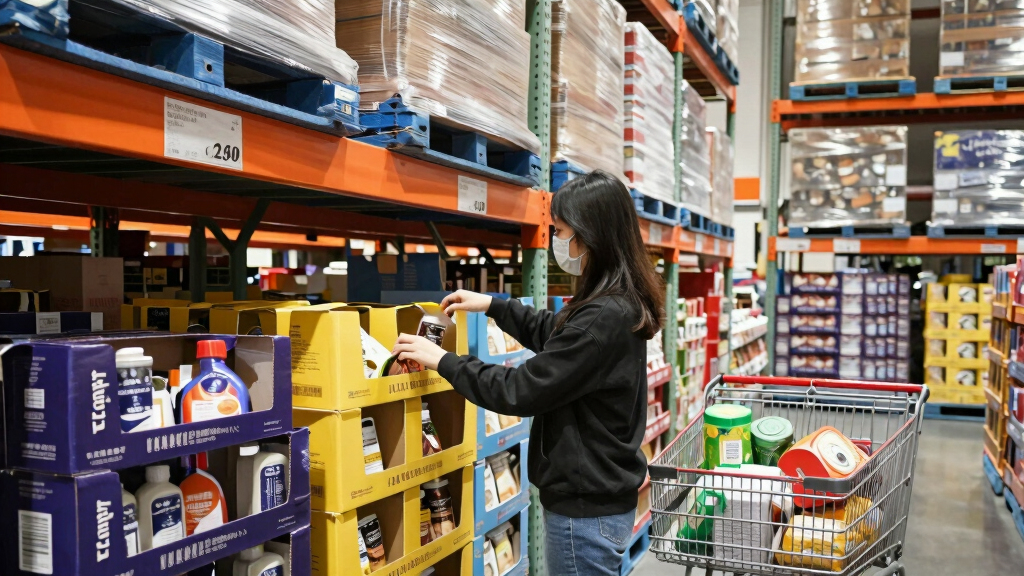
Costco has publicly positioned itself as the ‘anti-Amazon,’ emphasizing a retail model centered on in-store bulk sales, low prices, and limited online delivery options, contrasting sharply with Amazon’s fast, extensive e-commerce platform. This strategic stance underscores a fundamental difference in approach within the retail industry, with implications for consumer choice and competitive dynamics.
According to recent statements from Costco executives, the company is intentionally focusing on its warehouse club model, prioritizing physical stores and bulk purchasing over rapid online delivery. Unlike Amazon, which invests heavily in logistics and fast shipping, Costco maintains a minimal online presence, emphasizing in-store shopping as its core. Industry analysts note that this approach appeals to a different segment of consumers who value bulk buying and lower prices over convenience. This positioning has been reinforced by recent marketing campaigns and strategic communications from Costco leadership, highlighting their commitment to physical retail and a no-frills shopping experience. While Amazon continues to expand its online offerings and logistics network, Costco’s strategy appears to be a deliberate divergence aimed at strengthening its traditional retail base.Why Costco’s Anti-Amazon Strategy Matters for Retail Competition
This strategic positioning by Costco signals a significant shift in retail dynamics, emphasizing that a successful business model can focus on brick-and-mortar stores and bulk sales without relying on rapid online delivery. It challenges the notion that e-commerce dominance is the only path forward and may influence how other retailers approach their own strategies. For consumers, this means more options tailored to different shopping preferences—whether convenience or value-driven bulk shopping. For competitors, Costco’s stance underscores the importance of diverse retail models and could impact industry investments in logistics and store formats. Overall, this divergence may lead to increased competition and innovation in the retail space, with different brands catering to different consumer needs.As an affiliate, we earn on qualifying purchases.
Costco’s Traditional Retail Focus Compared to Amazon’s E-Commerce Expansion
Costco has long relied on its warehouse club model, emphasizing in-store bulk sales, low prices, and membership-based shopping. In contrast, Amazon has prioritized rapid online delivery, extensive product offerings, and logistics infrastructure. Recent public comments from Costco executives reaffirm their commitment to physical stores, even as Amazon continues to expand its logistics capabilities and online presence. The retail industry has seen a growing debate over the future of shopping—whether convenience and speed or value and in-store experience will dominate. Costco’s positioning as the ‘anti-Amazon’ reflects a broader trend of diverse retail strategies coexisting, with some companies doubling down on brick-and-mortar, and others focusing on e-commerce.“We believe in the value of in-store shopping, where customers can buy in bulk and save. Our focus remains on providing the best prices in our stores, not just fast delivery.”
— Craig Jelinek, CEO of Costco
large pack household cleaning supplies
As an affiliate, we earn on qualifying purchases.
As an affiliate, we earn on qualifying purchases.
Unclear How Consumers Will Respond to Costco’s Positioning
It is not yet clear how consumers who prefer online shopping and fast delivery will respond to Costco’s emphasis on in-store bulk buying. The long-term impact on Costco’s market share and profitability remains uncertain, especially as e-commerce continues to grow and evolve.As an affiliate, we earn on qualifying purchases.
Expected Developments in Costco’s Retail Strategy and Industry Response
Costco is likely to continue emphasizing its brick-and-mortar strengths while possibly expanding online offerings modestly. Industry observers will watch whether other retailers adopt similar strategies or double down on e-commerce. Additionally, consumer response and market share shifts over the coming quarters will reveal how effective Costco’s anti-Amazon positioning proves in a rapidly changing retail landscape.As an affiliate, we earn on qualifying purchases.
Key Questions
Why does Costco call itself the ‘anti-Amazon’?
Costco emphasizes in-store bulk sales, low prices, and a focus on physical retail over rapid online delivery, positioning itself as a contrast to Amazon’s e-commerce model.
Will Costco expand its online presence to compete with Amazon?
While Costco may enhance its online offerings, current statements suggest it will continue prioritizing its traditional warehouse store model rather than fully competing with Amazon’s logistics and quick delivery services.
How might this strategy affect Costco’s customer base?
It could strengthen loyalty among customers who value bulk buying and in-store shopping but may alienate those who prefer the convenience of online shopping and fast delivery.
Could other retailers adopt a similar approach?
It’s possible that some retailers will emphasize physical stores and bulk sales as a niche strategy, but the success of Costco’s approach depends on consumer preferences and market conditions.
Source: hn
Fall Picks
fall essentials
As an affiliate, we earn on qualifying purchases.