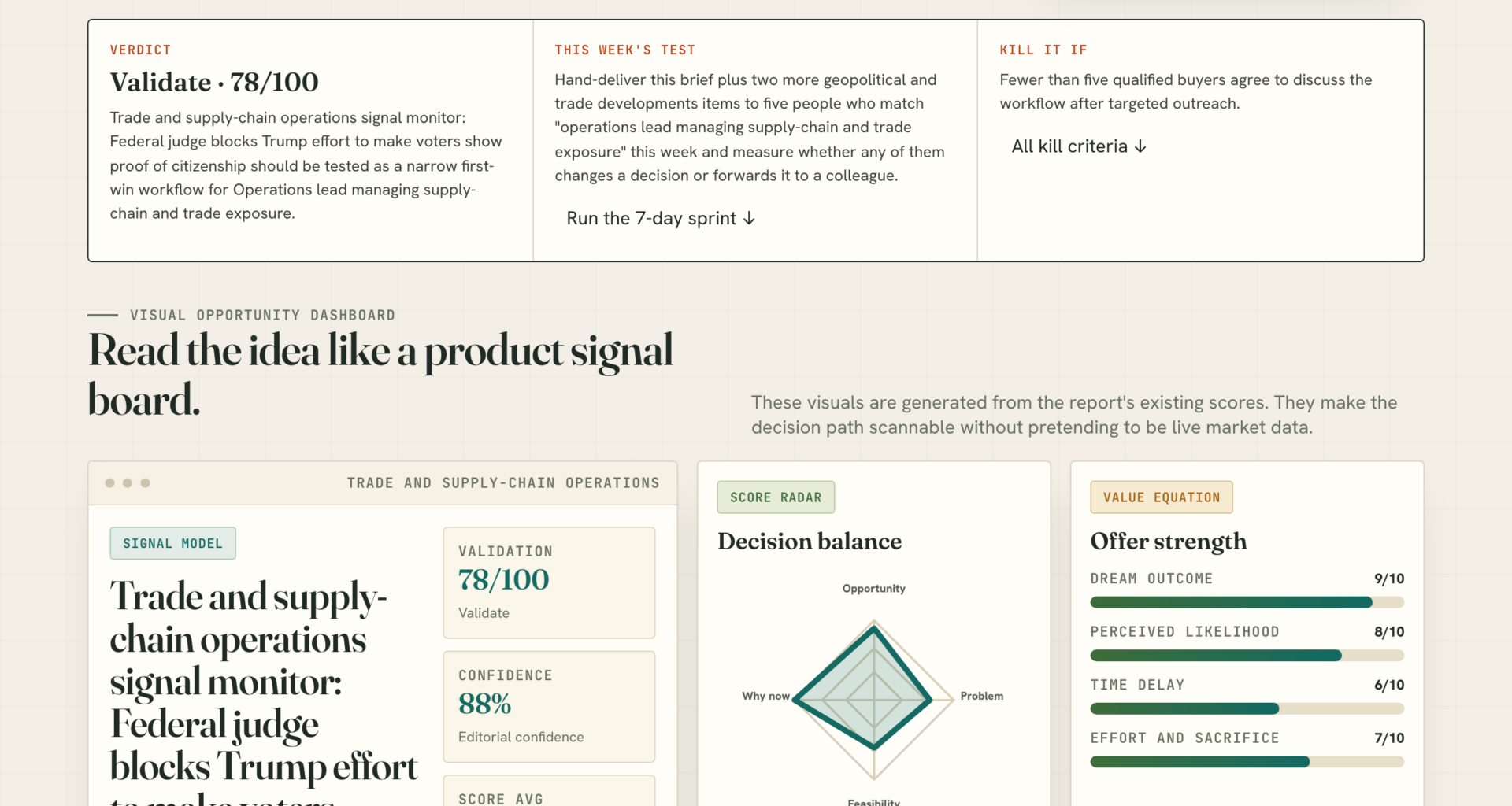

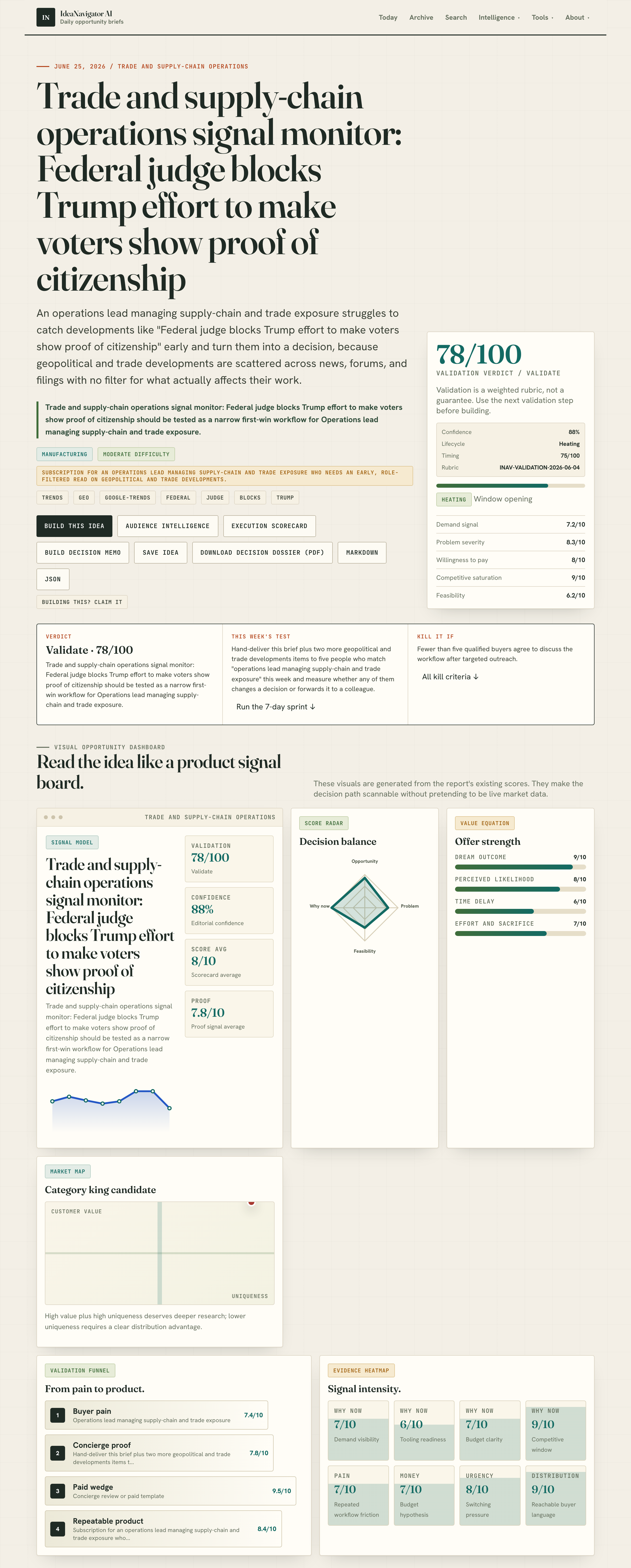
📊 Full opportunity report: Trade and supply-chain operations signal monitor: Federal judge blocks Trump effort to make voters show proof of citizenship on IdeaNavigator AI — validation score, market gap, and execution plan.

Get business pricing on office and shipping supplies
- Business-only prices and quantity discounts
- Tax-exempt purchasing
- Multiple users, one account, clear invoices
TL;DR
A federal judge has blocked Donald Trump’s effort to require voters to show proof of citizenship. This decision affects election procedures and may influence related trade and supply-chain policies. The ruling is confirmed and currently stands as the legal position.
A federal judge has blocked former President Donald Trump’s effort to require voters to show proof of citizenship, a move that could have broader implications for election procedures and trade-related policies. The ruling, issued this week, marks a legal setback for Trump’s election-related initiatives and is significant for election administration and trade operations managing geopolitical risks.
The judge’s decision was made in response to a legal challenge against Trump’s proposed rule, which aimed to tighten voter identification requirements nationwide. The ruling prevents the implementation of the proof-of-citizenship requirement, which critics argued could disenfranchise voters and complicate election logistics.
According to court documents, the judge found that the rule exceeded the authority granted by existing federal laws and violated constitutional protections. The ruling is a preliminary injunction, meaning the rule is temporarily blocked while legal proceedings continue.
This development comes amid heightened scrutiny of election laws and their intersection with trade and supply-chain policies, as geopolitical tensions influence regulatory environments. While the ruling directly pertains to voting procedures, it signals ongoing legal battles that could impact broader administrative and trade-related policies in the future.
Implications for Election and Trade Policy
This ruling matters because it reinforces legal limits on election-related rule changes proposed by political figures, including former President Trump. It also highlights the ongoing intersection between election law and trade operations, especially as geopolitical tensions influence regulatory decisions. For supply-chain managers and trade operators, the decision underscores the importance of monitoring legal developments that could indirectly affect trade policies, border controls, and export-import regulations.
Products Worth Considering

Samsung 27-Inch Odyssey G5 QHD Gaming Monitor (G51F)

Brother HL-L6210DW Monochrome Duplex Wireless Laser Printer

FLEXISPOT WoodiX 55 x 28-Inch Solid Wood Executive Standing Desk, Walnut
As an affiliate, we earn on qualifying purchases.
Legal Challenges to Election Rule Changes
The effort to require proof of citizenship for voters was part of a broader push by Trump and allies to tighten election security, especially following claims of widespread voter fraud in 2020. The rule was proposed by the Department of Homeland Security and faced multiple legal challenges before the recent court ruling.
This legal battle is part of a series of disputes over election laws, with courts increasingly scrutinizing the scope of federal agencies’ authority to implement such rules. The decision reflects ongoing judicial resistance to certain election security measures, which are often intertwined with broader political and trade considerations.
“Legal challenges like this highlight how election policies are increasingly subject to judicial review, which can influence broader trade and border policies indirectly.”
— an election law expert
Legal and Political Repercussions Still Unclear
It is not yet clear whether the ruling will be appealed or if similar efforts will be renewed under different legal strategies. The broader impact on future election laws and related trade policies remains uncertain, as legal processes and political responses evolve.
Next Steps in Legal and Policy Battles
The Department of Homeland Security and allied parties are expected to evaluate the ruling and consider whether to appeal. Meanwhile, legal challenges to similar election security measures are likely to continue, potentially shaping future policy and regulatory environments affecting trade and border operations. Monitoring court decisions and legislative responses will be crucial for stakeholders managing supply-chain and geopolitical risks.
Key Questions
What was the Trump effort that was blocked?
The effort was to require voters to show proof of citizenship at the polls, a move aimed at tightening election security.
Why does this ruling matter for trade and supply chains?
While directly related to voting, the ruling signals judicial limits on election-related policies, which can influence broader regulatory and border policies affecting trade and supply chains.
Could this ruling be challenged or overturned?
Yes, the ruling could be appealed, and future legal battles may alter its impact. The legal process remains ongoing.
What are the potential impacts on future election laws?
The decision may curtail similar efforts to impose stricter voter identification requirements, shaping future election policy debates and legal challenges.
How does this relate to geopolitical tensions?
Election law disputes often intersect with geopolitical issues, especially around border security and trade policies, which makes this ruling relevant beyond voting procedures.
Source: IdeaNavigator AI