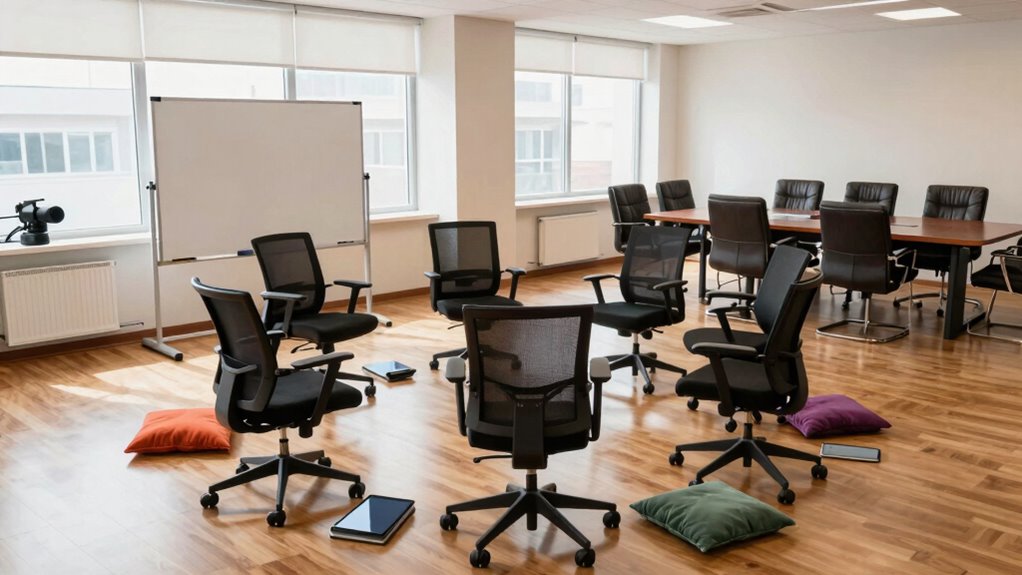

Training spaces need a different budget because they involve advanced technology like virtual reality, ergonomic furniture, and adaptable layouts that go beyond basic meeting room needs. You’ll also want to account for ongoing costs such as updates, maintenance, and staff training. These investments guarantee the space stays effective and future-proof. If you keep exploring, you’ll discover how strategic planning can help you maximize your training environment’s value and longevity.

Get business pricing on office and shipping supplies
- Business-only prices and quantity discounts
- Tax-exempt purchasing
- Multiple users, one account, clear invoices
Key Takeaways
- Training spaces require advanced, scalable technology like VR, leading to higher initial and ongoing costs compared to traditional meeting rooms.
- Ergonomic and environmental features in training spaces demand specialized investment for prolonged comfort and effective learning.
- Flexibility and modularity in training spaces involve higher upfront costs to support diverse training methods and future growth.
- Long-term ROI from training spaces justifies investments in technology updates, ergonomic design, and environment optimization.
- Budgeting for training spaces must account for continuous updates, maintenance, and staff training, unlike standard meeting rooms.
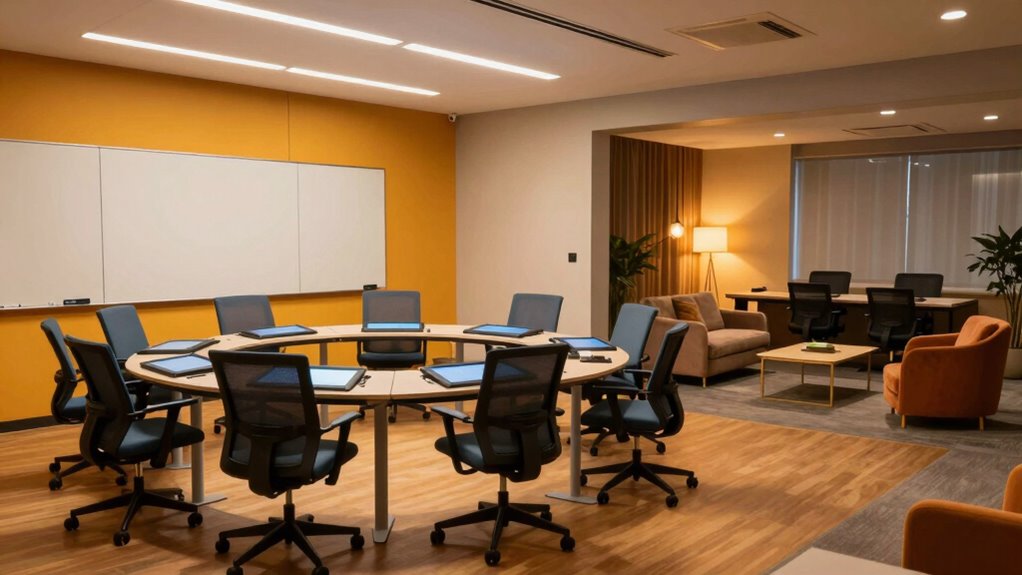
Have you ever wondered how organizations decide what to spend on training spaces? It’s not just about finding a quiet room with a table and chairs; these spaces require a different approach to budgeting because their purpose goes beyond simple meetings. Training spaces are designed to foster learning, engagement, and skill development, which means they often need specialized features that traditional meeting rooms don’t require. One major factor influencing this is the integration of cutting-edge technology like virtual reality, which can immerse trainees in realistic scenarios for hands-on experience. Virtual reality equipment demands significant investment, not only in the hardware itself but also in software, maintenance, and updates. Because of this, the budget for training spaces must account for these technological needs, making it more complex than a typical meeting room budget. Additionally, the ongoing costs associated with technology updates and staff training should be factored into the long-term financial planning.
Another essential aspect is ergonomic design. Unlike typical meeting rooms, training spaces are meant to be comfortable and conducive to prolonged focus. You want trainees to feel at ease, reducing fatigue and discomfort to maximize learning outcomes. Ergonomic furniture, adjustable lighting, and soundproofing all add to the costs but are fundamental for creating an environment that supports concentration and physical well-being. When planning the budget, you need to think about these long-term benefits—investing in ergonomic design can improve engagement, reduce health issues, and increase the overall effectiveness of training sessions. Additionally, incorporating smart home technology into the space can enhance convenience and control over the environment, further supporting effective learning. These considerations make it clear that training spaces are not just about size or basic amenities but about creating an environment that optimizes learning experiences. Incorporating innovative features such as adaptable layouts and scalable technology can help future-proof the space and ensure it remains relevant as training needs evolve. Recognizing the importance of technological adaptability is key to maintaining a versatile and effective training environment over time. Moreover, understanding the importance of cost management strategies can help organizations balance initial investments with ongoing expenses, ensuring sustainable development of training facilities. In addition, assessing the long-term return on investment can justify higher initial costs by highlighting the benefits of advanced features for ongoing training success.
Furthermore, the scope of training spaces often includes flexible layouts that can adapt to various training styles, from collaborative workshops to individual practice. This flexibility requires modular furniture and adaptable technology setups, which tend to be more costly upfront but pay off over time through increased versatility. Budgeting for these features involves evaluating the potential for future upgrades and the need for scalable technology, such as virtual reality systems that can be expanded or reconfigured as training needs evolve. This forward-thinking approach helps justify higher initial investments, knowing that the space can grow with your organization’s training demands.
virtual reality training equipment
As an affiliate, we earn on qualifying purchases.
As an affiliate, we earn on qualifying purchases.
Frequently Asked Questions
How Do Training Space Needs Differ Across Industries?
You’ll find that training space needs differ across industries because of industry-specific customization and training goals. For example, tech companies prioritize flexible layouts for collaboration, while manufacturing firms focus on ergonomic designs to guarantee safety and comfort. Understanding these differences helps you allocate budgets effectively, emphasizing industry-specific customization and training space ergonomics. This tailored approach ensures your training environments support employee development and operational efficiency, regardless of your industry.
What Are the Long-Term Cost Benefits of Investing in Training Spaces?
Investing in training spaces can revolutionize your company’s future, leading to unparalleled cost reduction and employee development. Over the long term, these spaces foster a culture of continuous learning, boosting productivity and innovation. As your staff grows more skilled and engaged, you’ll see reduced turnover and fewer onboarding costs. The return on investment is staggering—training spaces pay for themselves many times over, securing your organization’s competitive edge for years to come.
How Can Training Spaces Be Designed for Maximum Flexibility?
You can design training spaces for maximum flexibility by incorporating interactive layouts that easily adapt to different training styles. Use adaptable furnishings like movable desks, stackable chairs, and modular partitions, allowing you to reconfigure the space quickly. Incorporate technology that supports various activities, and create zones for collaboration and individual work. This approach guarantees your training environment remains versatile, engaging, and capable of meeting diverse learning needs effectively.
What Technologies Are Essential for Modern Training Spaces?
Ever wonder what makes a training space truly effective? You need interactive technology like smart boards and wireless presentation tools to engage learners, along with ergonomic furniture that supports comfort during long sessions. These essential technologies foster collaboration and focus, making training more impactful. By investing in them, you create a dynamic environment that adapts to various learning styles, ensuring your training space remains modern and effective.
How Does User Feedback Influence Training Space Budgeting?
You see, user feedback plays a vital role in shaping your training space budget. By actively listening to user engagement, you can identify areas needing improvement or new technology investments. Incorporating feedback integration guarantees that your training environment remains effective and engaging. This approach helps you allocate funds more wisely, focusing on features that genuinely enhance learning experiences, rather than simply following traditional budgeting methods for meeting rooms.
ergonomic training room furniture
As an affiliate, we earn on qualifying purchases.
As an affiliate, we earn on qualifying purchases.
Conclusion
So, next time you’re allocating budgets, remember that training spaces aren’t just fancy meeting rooms with extra chairs. They deserve their own logic—designed for learning, growth, and maybe a few more coffee breaks. Ironically, by treating them like standard meeting rooms, you might be stifling innovation before it even begins. So, give training spaces the love (and budget) they truly need—after all, they’re the real classrooms of tomorrow.
As an affiliate, we earn on qualifying purchases.
smart lighting for training spaces
As an affiliate, we earn on qualifying purchases.
As an affiliate, we earn on qualifying purchases.
Fall Picks
fall essentials
As an affiliate, we earn on qualifying purchases.