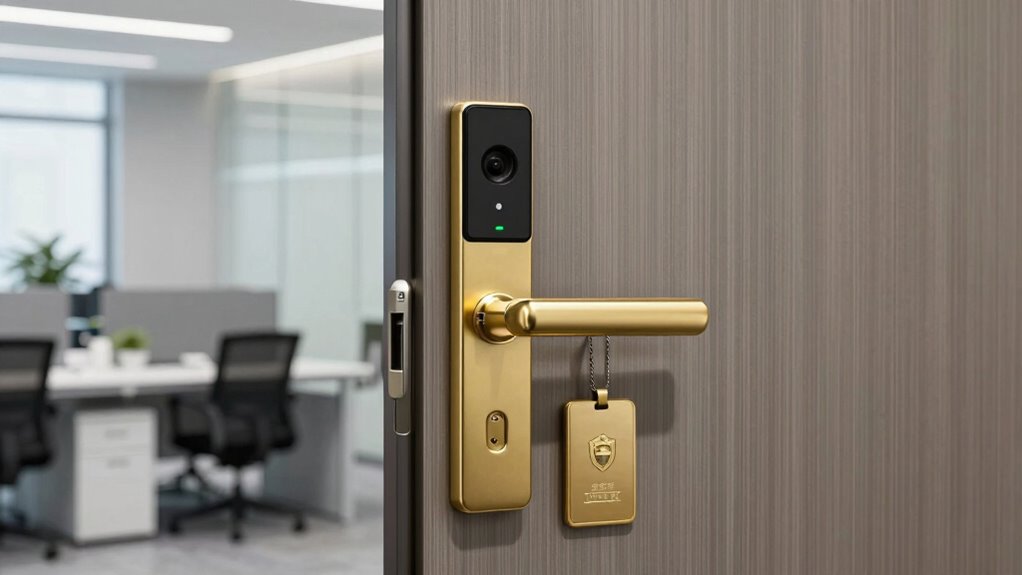

Having clear ownership of your office security hardware guarantees you stay on top of maintenance, updates, and troubleshooting. It helps prevent neglect that could create vulnerabilities or system failures. When responsibilities are defined, you can manage access rights effectively and respond quickly to issues. This clarity boosts security, compliance, and accountability across your organization. Staying organized around ownership keeps your security systems resilient and ready for any situation. Keep exploring to discover how proper ownership further strengthens your security infrastructure.
Open a free Amazon Business account
Business pricing, bulk buying and tax-exempt orders.
As an affiliate, we earn on qualifying purchases.
Key Takeaways
- Ensures accountability for hardware maintenance, updates, and troubleshooting.
- Prevents security vulnerabilities caused by neglect or outdated equipment.
- Clarifies access control management, reducing internal security risks.
- Facilitates compliance with security standards and audit requirements.
- Maintains system effectiveness and responsiveness during emergencies or incidents.
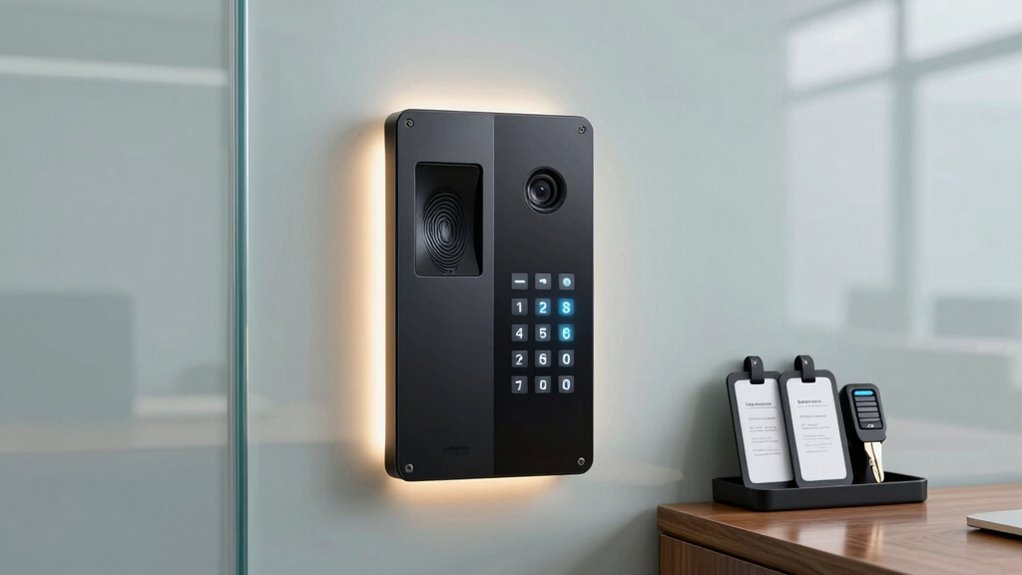
Owning office security hardware is a pivotal step in protecting your workplace, but it also requires understanding who holds responsibility for its management and maintenance. Clear ownership ensures that access control systems, surveillance cameras, and other security devices are properly monitored, updated, and functioning correctly. Without defined accountability, these essential components can become neglected, leaving your office vulnerable to security breaches. Knowing who is responsible helps streamline communication, guarantees timely repairs, and keeps security measures effective.
When you assign ownership of security hardware, you establish a point of contact who oversees hardware maintenance. This person or team is charged with regular inspections, troubleshooting issues, and coordinating repairs with vendors or technicians. Hardware maintenance is imperative because outdated or malfunctioning equipment can compromise your security system. For example, an access control system that isn’t regularly updated or maintained might allow unauthorized personnel entry or fail during an emergency. Clear ownership helps prevent such failures by ensuring ongoing upkeep.
Additionally, defining responsibility clarifies who manages access control. This involves granting, revoking, and monitoring employee access rights to sensitive areas. When ownership is ambiguous, access control can become inconsistent, increasing the risk of internal threats or accidental breaches. By designating a specific person or department for access management, you guarantee that access permissions are current, appropriate, and securely controlled. They can also oversee audit logs and respond promptly to suspicious activity, maintaining the integrity of your security protocols.
Having clear ownership also simplifies compliance with security standards and privacy laws. Regulatory requirements often demand documented procedures for managing security hardware and access control. When responsibilities are well-defined, it’s easier to demonstrate that your office adheres to these standards during audits. Moreover, accountability fosters proactive security practices, prompting regular reviews and updates to hardware and access policies. Proper documentation is essential to support these efforts and ensure transparency. Furthermore, assigning ownership encourages security awareness among staff, which is vital for preventing human error and maintaining overall security integrity.
Furthermore, with explicit ownership, you diminish the risk of security hardware becoming outdated or neglected due to confusion or turnover. When someone is responsible, they’re more likely to stay informed about new threats, technological updates, and best practices. This proactive approach keeps your security infrastructure resilient and aligned with current standards. Incorporating regular staff training ensures that team members remain aware of evolving security protocols and responsibilities. Establishing a clear ownership structure also helps in efficiently implementing new security technologies as they become available. Staying informed about technological advancements is crucial for maintaining an effective security system.
office security hardware management software
As an affiliate, we earn on qualifying purchases.
As an affiliate, we earn on qualifying purchases.
Frequently Asked Questions
How Often Should Security Hardware Ownership Be Reviewed?
You should review security hardware ownership at least annually, aligning with the asset lifecycle to guarantee accountability and security. Regular reviews help you verify vendor accountability, address outdated equipment, and adapt to new security threats. By maintaining clear ownership, you ensure that assets are properly managed, replaced when necessary, and that vendors stay responsible for their hardware, keeping your office secure and compliant with policies.
What Are the Risks of Unclear Hardware Ownership?
Imagine security hardware as a lighthouse guiding safety; if ownership is unclear, it’s like the lighthouse’s light flickering unpredictably. You risk asset accountability slipping through cracks, making it harder to track and maintain equipment. Without responsibility clarity, issues go unresolved, vulnerabilities increase, and security falters. Clear ownership guarantees someone’s always watching, maintaining the integrity of your security infrastructure and safeguarding your office environment effectively.
Who Is Responsible for Maintaining Security Hardware?
You are responsible for maintaining security hardware, including access control devices. It’s essential that maintenance responsibilities are clearly assigned so you can promptly address any issues, keep systems up-to-date, and guarantee security measures stay effective. When ownership is clear, you avoid vulnerabilities and ensure that access control remains reliable. Regular upkeep, timely updates, and proper oversight depend on your understanding of your maintenance responsibilities.
How Does Ownership Affect Hardware Upgrade Decisions?
Ownership directly impacts your hardware upgrade decisions by defining who manages the hardware lifecycle and schedules upgrades. When ownership is clear, you can plan timely upgrades, ensuring security remains robust. Without clear ownership, upgrade scheduling becomes chaotic, risking outdated hardware and vulnerabilities. You’ll find it easier to budget and prioritize upgrades, maintaining office security standards and avoiding disruptions caused by neglected hardware. Clear ownership streamlines upgrade processes and enhances overall security.
Can Multiple Departments Share Security Hardware Ownership?
Think of security hardware ownership as a well-orchestrated symphony—multiple departments can share responsibility, but harmony depends on clear roles. You need department collaboration to guarantee smooth operation, with each team knowing their part. Without defined hardware accountability, the melody falters—maintenance slips, security gaps emerge. Sharing ownership works best when responsibilities are transparent, fostering cooperation, accountability, and ultimately, a secure office environment where everyone plays their part perfectly.
As an affiliate, we earn on qualifying purchases.
Conclusion
Just as a captain needs a clear map to steer through uncertain waters, knowing who owns your office security hardware keeps your organization steady and secure. Without clear ownership, you’re adrift—vulnerable to lapses, confusion, and risks. When everyone understands their role, your security becomes a well-orchestrated symphony, not a discordant noise. So, define your ownership, and let your office stand resilient—ready to face whatever storms may come.
surveillance camera maintenance kit
As an affiliate, we earn on qualifying purchases.
As an affiliate, we earn on qualifying purchases.
As an affiliate, we earn on qualifying purchases.
Evergreen bestsellers Picks
bestsellers
As an affiliate, we earn on qualifying purchases.