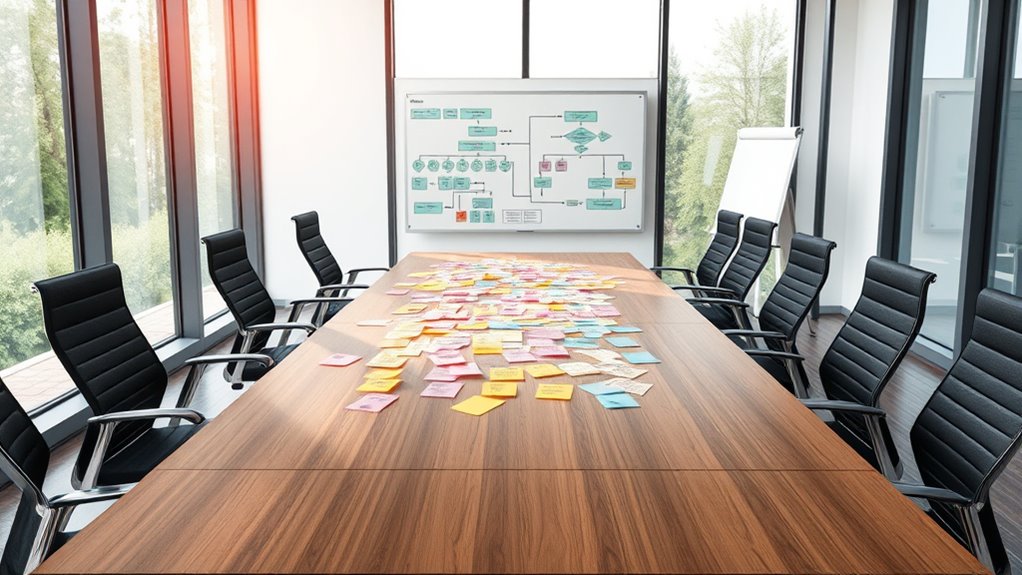

Organization design principles focus on creating clear structures that align teams, define responsibilities, and support strategic agility. You should establish hierarchical layers that promote clarity while avoiding unnecessary bureaucracy. Effective design encourages open communication, cross-functional collaboration, and continuous refinement to keep teams motivated and responsive. When you embrace these principles, your organization becomes more efficient and adaptable. Keep exploring these ideas further to discover how to implement them successfully in your own setup.

Get business pricing on office and shipping supplies
- Business-only prices and quantity discounts
- Tax-exempt purchasing
- Multiple users, one account, clear invoices
Key Takeaways
- Establish clear reporting relationships to define authority and responsibility levels.
- Balance hierarchy to ensure control while allowing flexibility and adaptability.
- Promote team alignment through transparent communication of roles and shared goals.
- Design workflows that facilitate collaboration and reduce siloed efforts.
- Continuously review and refine organizational structure to support strategic priorities and responsiveness.

Have you ever wondered what makes some organizations more effective than others? The answer often lies in how their structures are designed. Organization design principles focus on creating frameworks that enable smooth operations, clear communication, and strategic agility. One fundamental aspect is understanding the role of hierarchical structures. These structures establish levels of authority and responsibility, helping you define who reports to whom and ensuring that tasks flow efficiently. When you implement a well-structured hierarchy, it provides clarity, reduces confusion, and streamlines decision-making. But, it’s not just about stacking layers; it’s about designing a hierarchy that supports your organization’s goals without creating unnecessary bureaucracy. You want a structure that balances control with flexibility, allowing teams to adapt quickly to changes while maintaining accountability.
Team alignment is equally essential. When your organizational design fosters strong alignment, everyone understands their roles and how their work contributes to broader objectives. You can achieve this by clearly communicating expectations, establishing shared goals, and ensuring that different teams coordinate effectively. When team members are aligned, they work with purpose, reducing duplicated efforts and minimizing conflicts. This harmony boosts productivity and morale, as everyone feels connected to the organization’s mission. To enhance team alignment, consider implementing cross-functional teams or regular communication channels that promote transparency. Aligning teams around common goals also involves designing workflows that facilitate collaboration rather than siloed efforts. When the structure encourages interaction across departments, it fosters innovation and agility. Additionally, understanding the influence of Eye Patch Benefits can be an analogy for how a well-designed structure supports the organization’s overall health and resilience.
Moreover, an effective organization design considers how hierarchical structures can support or hinder team alignment. Traditional hierarchies can sometimes create barriers to communication and slow down decision-making, so you might need to adjust them for greater responsiveness. Flattened structures, for instance, can promote faster information flow and empower employees at all levels. Regardless of the chosen design, it’s essential that your structure supports the organization’s strategic priorities while enabling teams to work cohesively. When hierarchical layers are too rigid or misaligned with team goals, it can cause frustration, delays, and a disconnect between leadership and staff. By continuously reviewing and refining your organizational design, you ensure that your hierarchy facilitates effective team alignment, fostering a culture where everyone understands their role and feels motivated to contribute.
organizational hierarchy chart software
As an affiliate, we earn on qualifying purchases.
As an affiliate, we earn on qualifying purchases.
Frequently Asked Questions
How Do Organizational Design Principles Vary Across Industries?
You’ll find that industry-specific structures shape how organizations are designed, reflecting unique operational needs. For example, tech companies prioritize innovation and agility, while manufacturing firms focus on efficiency and stability. Regulatory influences also play a role, requiring compliance and safety measures that impact design choices. These factors mean that organizational principles adapt to industry demands, ensuring you create a structure that supports your industry’s goals and constraints effectively.
What Role Does Company Culture Play in Design Choices?
Company culture profoundly influences your design choices by shaping how you foster employee engagement and support leadership influence. When your culture values collaboration, you’ll create structures that encourage teamwork and open communication. Conversely, if innovation is key, you’ll design flexible, agile setups that empower leadership to drive change. Ultimately, your culture guides how you align organizational design with your values, ensuring that your structure promotes engagement and effective leadership.
How Can Organizations Measure the Success of Their Design?
Like using a crystal ball in a medieval fair, measuring your organization’s success is about tracking performance metrics and employee engagement. You can do this through surveys, productivity data, and turnover rates. Regular feedback sessions help you gauge if your design fosters collaboration and innovation. If these indicators improve over time, your design is working. Keep analyzing and adjusting to make sure your organization stays agile and aligned with your goals.
What Are Common Pitfalls in Implementing Design Principles?
You might face misalignment risks and implementation challenges when putting design principles into practice. To avoid these pitfalls, guarantee clear communication and involve stakeholders early on. Resist rushing the process, as rushing can cause misalignment with your organizational goals. Regularly review progress, adapt strategies, and stay flexible. Being aware of these common pitfalls helps you create a smoother implementation, leading to a more effective and aligned organization.
How Often Should an Organization Revisit Its Design Principles?
You should revisit your organization’s design principles regularly, ideally through continuous review. As your business evolves, so must your principles, allowing for adaptive updates that keep your organization agile and aligned with new challenges. Don’t wait for a crisis—stay proactive. This ongoing process guarantees your structure remains effective, relevant, and ready for growth. Regularly check in, adapt, and refine to stay ahead of the curve and secure long-term success.
team collaboration workflow tools
As an affiliate, we earn on qualifying purchases.
As an affiliate, we earn on qualifying purchases.
Conclusion
By applying these organization design principles, you’re laying a sturdy foundation for your company’s success. Think of your organization as a finely tuned orchestra—each part must play in harmony to create beautiful music. When you align structure, culture, and processes, you’re not just building an organization; you’re crafting a symphony that resonates through every challenge. Embrace these principles, and watch your organization flourish like a garden blooming in perfect rhythm with nature’s timing.
organizational structure templates
As an affiliate, we earn on qualifying purchases.
As an affiliate, we earn on qualifying purchases.
communication and collaboration tools for teams
As an affiliate, we earn on qualifying purchases.
As an affiliate, we earn on qualifying purchases.
Fall Picks
fall essentials
As an affiliate, we earn on qualifying purchases.