
Understanding the difference between fixed and variable costs is key to effective budgeting. Fixed costs stay steady regardless of your sales or production levels, helping you set a stable financial baseline. Variable costs change directly with activity, allowing quick adjustments based on demand. Recognizing these cost behaviors helps you accurately forecast expenses and make smarter decisions. To learn how to classify costs correctly and optimize your budget, keep exploring these strategies.
Key Takeaways
- Fixed costs remain constant regardless of activity levels, providing stability for budgeting and cost control.
- Variable costs fluctuate directly with production volume, enabling flexible budgeting and quick adjustments.
- Correctly classifying costs helps managers predict expenses accurately at different sales or output levels.
- Understanding cost behavior informs strategic decisions, such as pricing, cost reduction, and resource allocation.
- Combining fixed and variable cost insights allows for precise break-even analysis and improved financial planning.
What Are Fixed Costs and Why Are They Important?

Fixed costs are expenses that stay the same regardless of how much you produce or sell. Understanding cost behavior is vital because it helps you predict expenses and plan your budget effectively. Fixed costs include rent, salaries, and insurance, which don’t fluctuate with production levels. These costs are important for cost control because they provide a predictable baseline, allowing you to focus on managing variable costs more efficiently. Knowing your fixed costs helps you determine your break-even point and assess profitability accurately. By monitoring fixed costs closely, you can identify areas to optimize spending, improve financial stability, and make informed decisions. Recognizing the nature of fixed costs gives you better control over your business’s financial health, especially during fluctuations in sales or production. Additionally, understanding the contrast ratio of your projectors can help you optimize your setup for consistent performance.
How Do Variable Costs Change With Business Activity?
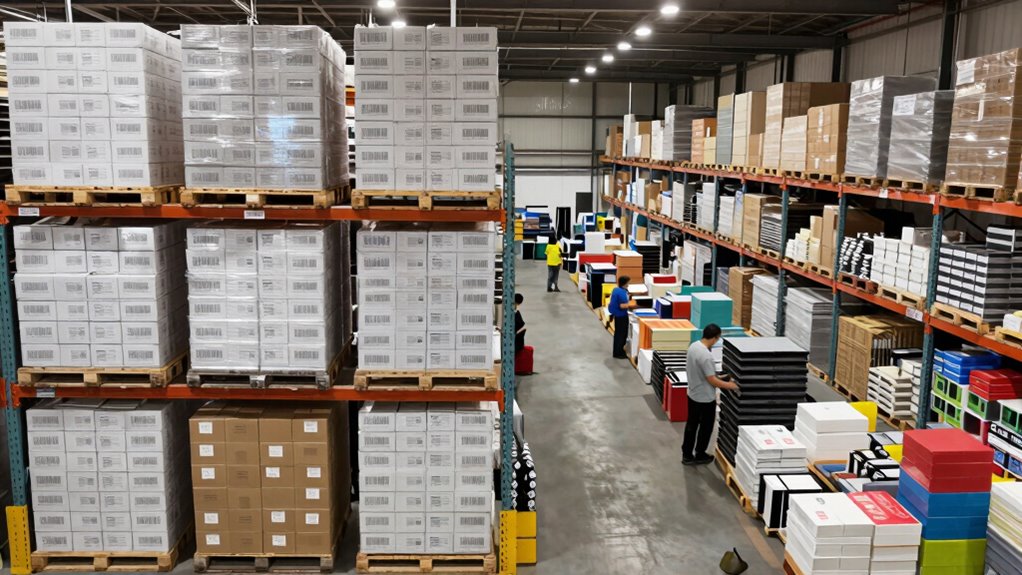
Variable costs fluctuate directly in response to changes in your business activity. Their cost behavior is closely tied to activity levels, meaning as you produce more or sell more, these costs increase proportionally. For example, raw materials or direct labor expenses rise with higher sales volume. When activity levels go down, variable costs decrease accordingly, making them flexible and predictable based on your output. Additionally, understanding cost behavior enables you to adjust your budget quickly and accurately, since variable costs mirror your business operations. Recognizing the relationship between costs and activity helps you forecast expenses more precisely and manage cash flow effectively. Since variable costs are directly linked to production levels, they serve as a useful indicator for cost management and operational efficiency. Moreover, tracking these costs can help identify areas where efficiency could be improved, leading to better cost control strategies. Being aware of cost variability allows managers to adapt quickly to market changes and optimize resource allocation. Unlike fixed costs, variable costs provide a clear link between your operational decisions and your expenses, giving you a valuable tool for strategic planning.
Fixed vs. Variable Costs: Key Differences and Examples

Understanding the key differences between fixed and variable costs is essential for effective financial management. Fixed costs remain constant regardless of your business activity, like rent or salaries. They don’t fluctuate with production levels, making your cost analysis straightforward. Variable costs, on the other hand, change directly with your output—think raw materials or commissions. When you analyze costs, recognizing these behaviors helps you predict how expenses will respond to sales changes. For example, monthly rent is a fixed cost, while materials used in manufacturing are variable. Knowing these distinctions enables better budgeting and decision-making, especially when planning for growth or downturns. Additionally, understanding cost behavior** allows managers to develop more accurate financial forecasts. By understanding cost behavior, you can allocate resources more accurately and maintain better control over your business’s financial health. Recognizing the impact on profitability of fixed versus variable costs is crucial for strategic planning and pricing decisions. This knowledge also helps in understanding how different costs influence your overall cost structure, which is vital for long-term financial planning. Moreover, being aware of cost fluctuations can assist managers in preparing for unexpected financial challenges and maintaining stability. Being mindful of cost variability** also supports more flexible and responsive budgeting processes.
How to Classify Costs Correctly for Accurate Forecasting?

Accurately classifying costs is essential for reliable financial forecasts and informed decision-making. To improve forecasting accuracy, you must distinguish between fixed and variable costs correctly. Start by analyzing each expense: is it consistent regardless of output, or does it fluctuate with activity levels? Use this table to guide your classification:
| Cost Type | Characteristics | Examples | Impact on Forecasting | Key Tip |
|---|---|---|---|---|
| Fixed | Remains steady | Rent, salaries | Predictable, stable | Confirm with historical data |
| Variable | Changes with activity | Materials, commissions | More flexible | Track costs across different volumes |
Proper cost classification helps you build accurate budgets, ensuring better financial planning and resource allocation. Incorporating comparative advantage principles can further optimize resource allocation by highlighting areas where efficiency gains are possible. Additionally, understanding the cost behavior of different expenses allows managers to anticipate how changes in activity levels will influence overall costs and profitability. Recognizing cost variability patterns is crucial for adjusting forecasts in response to market fluctuations and operational changes. Furthermore, analyzing cost trends over time can reveal underlying patterns that improve forecasting precision and strategic planning.
Applying Fixed and Variable Costs to Build Better Budgets

Have you ever wondered how to create a budget that truly reflects your business’s financial reality? Understanding cost behavior is key. By distinguishing fixed from variable costs, you can allocate resources more accurately and forecast profits more reliably. Use fixed costs to set a stable baseline, covering expenses that stay consistent regardless of sales volume. Variable costs, on the other hand, fluctuate with production or sales levels, helping you adjust your budget dynamically. Incorporating herbal remedies into your planning can help prevent unexpected expenses and keep your operations running smoothly. Recognizing the difference between fixed and variable costs enables more precise financial planning and resource allocation. Applying these principles guarantees your budget isn’t just a guess but a precise tool for making smarter financial decisions and optimizing your business’s growth.
Common Mistakes When Differentiating Cost Types

One common mistake is confusing fixed costs with variable costs, which can lead to flawed budgeting and pricing decisions. Accurate cost classification is essential for effective budgeting errors prevention. When you misclassify costs, you may allocate expenses improperly, causing your budgets to be unrealistic. For example, treating fixed costs as variable can make it seem like expenses fluctuate with sales, leading to over- or underestimating profits. Conversely, misidentifying variable costs as fixed can result in underestimating how operational changes impact expenses. These errors distort your understanding of your cost structure, making it harder to plan effectively. To avoid these budgeting errors, clearly analyze and categorize costs based on their behavior over different activity levels. Proper cost classification ensures your budgets reflect reality, supporting smarter decision-making. Recognizing the cost behavior of each expense is fundamental to maintaining accurate financial planning, and understanding the cost structure helps in identifying how different costs respond to changes in activity levels. Additionally, incorporating auditory processing insights can help managers better interpret financial data and identify patterns in cost behavior.
Practical Tips to Manage Costs and Boost Profitability

Managing costs effectively is key to increasing your profitability, and implementing practical strategies can make a significant difference. To achieve this, focus on cost reduction by analyzing your expenses regularly and identifying areas where you can cut unnecessary spending. Keep expense control a priority by setting clear budgets and monitoring actual costs against them. Negotiate better deals with suppliers and consider alternative vendors to lower variable costs. Streamlining operations and automating repetitive tasks can also reduce overhead and improve efficiency. Avoid impulsive spending and review your fixed and variable costs periodically to ensure they align with your business goals. By actively managing your expenses, you’ll create a leaner operation that maximizes profit margins and sustains long-term growth.
How Understanding Cost Types Improves Business Strategy?

Understanding the different types of costs—fixed and variable—empowers you to craft more effective business strategies. By analyzing cost behavior, you can predict how expenses change with sales volume, helping you make informed decisions. Knowing which costs are fixed allows you to set realistic pricing strategies that cover baseline expenses regardless of sales fluctuations. Conversely, understanding variable costs helps you identify opportunities to adjust pricing or control costs during periods of change. This insight enables you to optimize profit margins and manage risks more effectively. When you grasp how each cost type impacts your business, you can develop strategies that balance growth with cost control, ensuring long-term sustainability. Ultimately, understanding cost behavior enhances your ability to adapt and thrive in competitive markets.
Frequently Asked Questions
How Can I Identify Hidden Fixed Costs in My Business?
To identify hidden fixed costs, analyze your expense categorization and observe cost behavior over time. Look for costs that stay constant regardless of sales volume, such as insurance or salaries. Review financial statements and track expenses across periods to spot recurring costs that don’t fluctuate with activity levels. This process helps uncover hidden fixed costs, enabling better budgeting and more accurate financial planning.
What Tools Are Best for Tracking Variable Costs Accurately?
You should use cost tracking tools like spreadsheets, expense management software, or dedicated apps to accurately monitor your variable costs. These tools help you record and analyze expenses in real-time, giving you clear insights into spending patterns. By consistently tracking your variable costs, you can make informed decisions, control expenses better, and optimize your budgeting process effectively. Regular updates guarantee you stay on top of fluctuating costs and improve financial management.
How Do Seasonal Fluctuations Affect Cost Classification?
Seasonal fluctuations can blur the line between fixed and variable costs, making seasonal budgeting essential. You’ll notice fluctuating expenses like utilities or staffing costs that vary with seasons. To manage this, adjust your cost classification based on expected patterns, ensuring you allocate fluctuating expenses appropriately. This proactive approach helps you prepare for peak seasons and slow periods, maintaining accurate budgets despite fluctuating expenses.
Can Costs Switch Between Fixed and Variable Over Time?
Yes, costs can switch between fixed and variable over time due to changes in cost behavior and cost flexibility. For example, a cost initially considered fixed might become more variable if production scales down or changes in supplier agreements occur. Similarly, flexible costs can become more fixed with long-term contracts. Monitoring these shifts helps you adapt your budgeting strategies and accurately predict expenses in different business conditions.
How Do Cost Classifications Impact Pricing Strategies?
Your understanding of cost behavior directly impacts your pricing flexibility. If costs are mostly fixed, you can set higher prices since your expenses remain stable regardless of sales volume. Conversely, if your costs are variable, you might need to adopt more flexible pricing to cover fluctuating expenses. Recognizing how costs behave helps you develop strategies that optimize profit margins while responding to market changes effectively.
Conclusion
By mastering the dance between fixed and variable costs, you hold the keys to a well-choreographed budget. Think of it as tuning your financial instrument—when you understand each note, your business can sing in perfect harmony. Keep honing this skill, avoid common pitfalls, and watch your profitability grow like a well-watered garden. With this knowledge, you’ll turn budgeting from a maze into a clear, open highway to success.