

An acceptable use policy (AUP) clearly outlines how you should responsibly access and utilize your organization’s technology resources, like the internet, email, and software. It helps safeguard security, ensures legal compliance, and sets clear expectations for behavior. Your AUP should include rules, responsibilities, enforcement procedures, and examples to avoid confusion. To keep it effective, review and update it regularly. If you’re interested, there’s more to learn about creating and maintaining a solid AUP that works.
Key Takeaways
- An AUP defines acceptable and prohibited uses of organizational technology resources like internet and email.
- It must include clear rules, user responsibilities, and consequences for violations to ensure compliance.
- The policy should address security measures, privacy concerns, legal standards, and ethical behavior.
- Effective communication, training, and accessible documentation are essential for promoting understanding and adherence.
- Regular reviews and updates help ensure the AUP remains relevant with evolving threats and organizational changes.
What Is an Acceptable Use Policy and Why Is It Important?

An Acceptable Use Policy (AUP) is a set of rules that outlines how you can use a company’s or organization’s technology resources, such as internet access, email, and software. It’s crucial for maintaining network security by preventing misuse that could introduce threats or vulnerabilities. By following the AUP, you help ensure the organization’s systems stay protected from malware, hacking, and data breaches. Additionally, the policy guides you to adhere to legal compliance standards, reducing the risk of legal issues arising from inappropriate or illegal activities online. An effective AUP clarifies expectations, promotes responsible behavior, and safeguards both the organization and its users. Properly defining security protocols within the policy further enhances overall protection and user awareness. Incorporating best practices in security helps organizations adapt to evolving threats and maintain robust defenses. Clear communication of acceptable behaviors ensures that all users understand their responsibilities and the consequences of violations, fostering a culture of security awareness. Understanding user responsibilities is essential in fostering a secure and compliant environment, especially when addressing cybersecurity risks and ensuring ongoing vigilance.
How to Write Clear and User-Friendly AUP Terms?

To make your AUP easy to understand, use simple language that everyone can grasp. Clearly highlight key restrictions so users know what’s not allowed from the start. This approach helps prevent confusion and encourages compliance with your policy. Incorporating clear, room-by-room solutions can also make expectations more straightforward and manageable for users. Additionally, providing well-explained reasons for restrictions can foster better understanding and acceptance among users.
Use Simple Language
Using simple language is essential for creating a clear and user-friendly Acceptable Use Policy (AUP). When you use straightforward terms, your users can easily understand their responsibilities and restrictions. Avoid technical jargon or complex sentences that might confuse or intimidate your audience. Instead, opt for plain language that clearly explains what is acceptable and what isn’t. This helps improve user understanding and reduces the chance of misunderstandings or accidental violations. Remember, your goal is to communicate rules effectively, so focus on clarity and simplicity. By using simple language, you make your AUP accessible to everyone, ensuring users know what’s expected without feeling overwhelmed or lost. Clear, easy-to-understand policies foster better compliance and trust. Additionally, understanding the importance of sleep comfort and how clear communication influences user behavior can improve overall effectiveness of your policies.
Highlight Key Restrictions
Highlighting key restrictions clearly is essential because it helps users understand exactly what behaviors are unacceptable. You should explicitly state that malicious activities, like hacking, spreading malware, or phishing, are strictly prohibited. Clearly define prohibited conduct to prevent ambiguity, such as unauthorized access, data theft, or distributing harmful content. Use straightforward language to specify actions that violate your policy, so users know what’s off-limits. Including concrete examples can further clarify these restrictions. Additionally, emphasizing these key points can reduce the likelihood of misunderstandings about acceptable use and ensure users are aware of what constitutes unacceptable behavior. Clear, specific restrictions also protect your organization from legal issues and security threats, making your AUP more effective and user-friendly. Furthermore, highlighting restrictions related to security best practices helps foster a safer online environment for all users. Implementing these clear guidelines can also support compliance with content safety standards, ensuring that your platform remains a trustworthy space for users. Recognizing the importance of trusted network infrastructure can help prevent common issues related to insecure configurations and vulnerabilities.
What Are the Essential Components of an AUP?
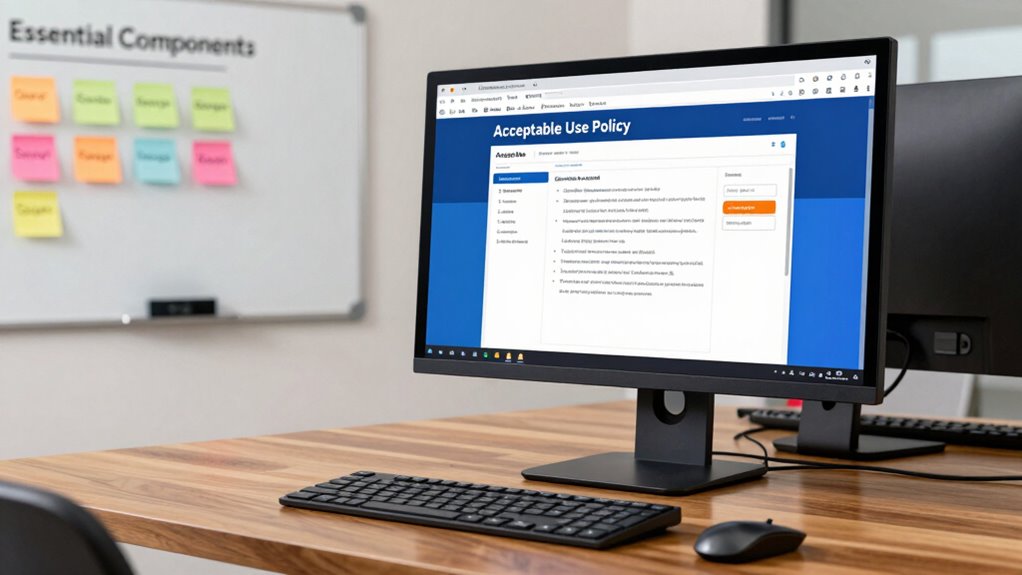
To develop an effective AUP, you need clear policy language that leaves no room for confusion. You should also define user responsibilities so everyone understands what’s expected of them. Finally, outlining enforcement procedures guarantees there are consistent consequences for violations.
Clear Policy Language
A clear and precise policy language is essential for an effective Acceptable Use Policy (AUP). Your policy should avoid ambiguity to ensure users understand their responsibilities and restrictions. Focus on incorporating legal considerations to protect your organization from liability and ensure compliance. Clarify technical specifications, such as acceptable devices and network usage parameters, to prevent misuse. Use straightforward language, avoid jargon, and define key terms to promote understanding. This clarity helps reduce misinterpretation and enforcement issues. Also, include specific examples where necessary to illustrate acceptable and unacceptable behaviors. By doing so, you make your policy accessible and enforceable, reducing risks and promoting responsible use.
- Use simple, direct language for clarity
- Address legal and technical details explicitly
- Provide concrete examples to guide users
Defined User Responsibilities
Clear policy language sets the foundation for understanding what users can and cannot do, but defining user responsibilities guarantees everyone knows their specific duties. When you clearly outline user responsibilities, you promote greater user engagement and foster a culture of policy compliance. Your responsibilities should include safeguarding login credentials, avoiding malicious activities, and respecting privacy and intellectual property rights. Additionally, establishing AI ethics guidelines helps users understand the importance of responsible AI usage and decision-making. By explicitly stating these duties, you help users understand their role in maintaining a secure and ethical environment. When everyone is aware of what they must do, compliance becomes natural rather than forced. This clarity encourages responsible behavior, minimizes misunderstandings, and supports your organization’s overall security posture. Well-defined user responsibilities are essential for ensuring that policies are followed effectively. Additionally, emphasizing electric bikes’ safety requirements can help prevent accidents and promote responsible usage. Implementing risk management strategies related to technology use can further enhance safety and compliance. Clearly communicating these expectations ensures that users remain aware of their responsibilities and the importance of adhering to established policies. Moreover, providing ongoing education about technology safety practices can reinforce responsible behavior and adapt to evolving risks.
Enforcement Procedures
Effective enforcement procedures are essential to guarantee that an Acceptable Use Policy (AUP) is upheld consistently across your organization. Clear procedures help address violations and ensure fair handling of disputes. You should establish steps for dispute resolution, so users know how to challenge or clarify concerns. Additionally, define breach consequences upfront to communicate the seriousness of violations and deter misconduct. Proper enforcement involves monitoring, documentation, and prompt response to issues. Consistent application of these procedures reinforces your policy’s authority and promotes accountability. To strengthen enforcement, consider including:
- Clear steps for dispute resolution
- Defined breach consequences
- Procedures for monitoring and reporting violations
How to Enforce and Communicate Your AUP Effectively?

To make certain your Acceptable Use Policy (AUP) is followed, you need to communicate it clearly and enforce it consistently. Start by providing user education, so everyone understands what’s expected and why it matters. Regular training sessions or easy-to-access resources help reinforce policy compliance. Make sure your AUP is easily accessible and written in plain language, avoiding jargon. When violations occur, address them promptly and fairly to maintain credibility. Consistent enforcement shows your team that policies are serious and non-negotiable. Open communication about expectations and consequences helps foster a culture of accountability. Additionally, understanding cookie categories and their implications can support your organization’s data privacy efforts. Being aware of how security policies influence user behavior can further strengthen your enforcement strategies. Incorporating clear guidelines for appropriate online conduct ensures everyone is on the same page. Recognizing the importance of training and awareness can significantly improve policy adherence. By combining clear messaging with ongoing education, you ensure your AUP remains effective and respected across your organization. For example, aligning your enforcement strategies with deep-sky imaging best practices can serve as an analogy for clear, consistent procedures in policy management.
Common Mistakes to Avoid When Creating an AUP?

When creating an AUP, one common mistake is making the policy too vague or overly broad, which can lead to confusion and inconsistent enforcement. This ambiguity may also raise privacy concerns and make it harder to guarantee legal compliance. To avoid this, be specific about prohibited behaviors, acceptable use, and consequences. Clearly outline what users can and cannot do, so there’s no room for misunderstanding. Also, consider how your policies address privacy concerns and adhere to relevant laws to prevent legal issues. Incorporating clear performance standards helps ensure that expectations are well-defined and enforceable. Additionally, defining measurable criteria supports consistent enforcement and helps prevent disputes.
When and How to Review Your Acceptable Use Policy?

Regularly reviewing your Acceptable Use Policy guarantees it stays clear, relevant, and enforceable as technology and organizational needs evolve. A periodic review helps you identify outdated provisions and adapt to new risks or compliance requirements. Schedule formal reviews at least once a year, or more frequently if your organization undergoes significant changes. During these reviews, assess whether your current policy reflects current technology, user behavior, and legal obligations. Incorporate necessary policy updates to address emerging threats or new tools. Engage stakeholders across departments to ensure practicality and buy-in. By staying proactive with regular evaluations, you ensure your AUP remains effective, clear, and aligned with your organization’s evolving landscape.
Frequently Asked Questions
How Often Should an AUP Be Updated?
You should update your user policies regularly, at least once a year, to guarantee compliance standards are met. Keep an eye on regulatory changes and emerging threats, and revise your acceptable use policy accordingly. Frequent updates help you address new security risks, technological changes, and legal requirements, maintaining strong compliance standards. Regular reviews also keep your staff informed, reducing the likelihood of violations and ensuring everyone understands current expectations.
Who Should Approve the AUP Before Implementation?
You might think it’s just a formality, but getting executive approval and legal review is vital before you roll out your AUP. Imagine your company’s top brass and legal team as the gatekeepers, ensuring your policy doesn’t accidentally open a floodgate of legal trouble. Their approval safeguards your organization, clarifies responsibilities, and keeps everyone on the same page, making sure your policy is both effective and compliant before it hits the ground running.
What Are Consequences for Violating the AUP?
If you violate the AUP, you face consequences like employee accountability measures and violation penalties. These can include warnings, suspension, or termination, depending on the severity of the breach. It’s your responsibility to comprehend and follow the policy to avoid these penalties. Staying compliant ensures you maintain trust and avoid disciplinary actions, protecting both your position and the organization’s security.
How Can Employees Be Effectively Trained on AUP Policies?
Think of employee awareness as a map guiding safe online behavior. To train effectively, use interactive methods like workshops, e-learning, and real-life scenarios that engage employees. Regular refresher sessions reinforce understanding, much like revisiting a map ensures you stay on course. Incorporate quizzes and feedback to measure comprehension. This approach guarantees your staff internalizes AUP policies, reducing violations and fostering a security-conscious culture.
How Does an AUP Differ Across Industries?
You’ll find that AUPs differ across industries because they align with industry standards and sector-specific requirements. For example, healthcare policies emphasize patient confidentiality, while financial sectors focus on data security and compliance. You should tailor your AUP to meet these unique needs, ensuring it addresses the specific risks and regulations relevant to your industry. This customization helps protect your organization and promotes responsible technology use among employees.
Conclusion
So, now that you know what an AUP is and how to craft one, don’t forget—your users are just itching to break every rule you set. Keep it clear, enforce it consistently, and review it regularly, or risk chaos. After all, who doesn’t love a good digital disaster? Stay vigilant, communicate openly, and remember: your AUP isn’t just a document—it’s your shield against the inevitable chaos of cyberspace. Good luck!