
A one-page project plan acts as a clear, concise blueprint that helps you align your team quickly and effectively. It highlights goals, roles, milestones, and risks, enabling seamless communication and accountability. Using visuals and streamlined structure, it keeps everyone on the same page and adaptable to change. By focusing on simplicity and clarity, this shortcut boosts focus and stakeholder trust. Keep exploring to discover how to create and maintain an impactful plan that drives success.
Key Takeaways
- A one-page project plan consolidates key goals, milestones, roles, and risks for quick reference and alignment.
- It promotes clear communication, setting shared expectations among stakeholders.
- Visual elements and simple language enhance understanding and project visibility.
- Regular reviews and updates keep the plan relevant and maintain team focus.
- Using templates and collaboration tools streamlines creation and fosters stakeholder engagement.

FLEXISPOT ErgoX Premium Ergonomic Office Chair with Footrest- Adjustable 3D Armrests, Dynamic Lumbar Support, Recline & Tilt Function, Mesh Seat, for Home & Office Use,Light Grey Foam
Customizable Comfort: Featuring adjustable seat depth (17"-20"), height (20.1"-22.4"), and tilt functions to ensure a perfect fit for...
As an affiliate, we earn on qualifying purchases.
What Is a One-Page Project Plan and Why Use It?
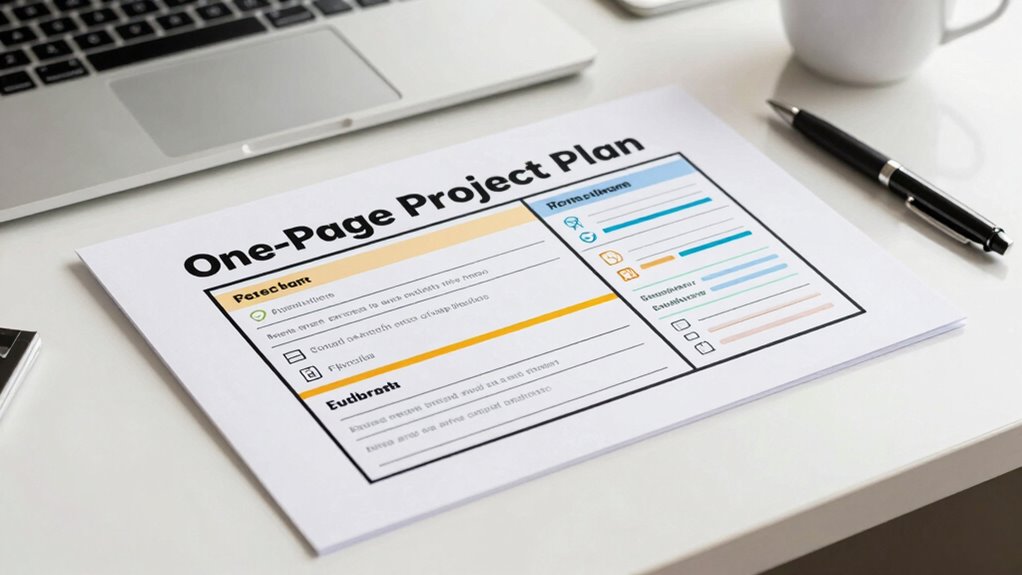
Have you ever struggled to keep track of all the details in a complex project? That’s where a one-page project plan can make a difference. It streamlines project management by condensing key information onto a single sheet, making it easier to stay aligned. This plan acts as a strategic planning tool, helping you clarify goals, identify critical tasks, and assign responsibilities clearly. Incorporating project management principles ensures your plan is practical, efficient, and tailored to your specific project needs. Additionally, emphasizing clear communication helps prevent misunderstandings and keeps all stakeholders informed. Instead of juggling multiple documents, you have a quick reference that keeps everyone on the same page. It promotes focus, accountability, and agility. A one-page project plan isn’t about oversimplification; it’s about distilling essential elements into a manageable, accessible format. This approach guarantees you stay organized and make informed decisions throughout your project’s lifecycle, especially when integrating cloud solutions that require precise coordination.

Ergonomic Office Chair with Footrest - Adjustable Lumbar Support & Headrest, 90-160° Reclining Mesh Back Computer Chair - Home Office/Gaming, 350lbs Capacity
This is more than a chair; it's a personalized comfort zone for work, rest, and play. We've meticulously...
As an affiliate, we earn on qualifying purchases.
What Are the Essential Elements of a One-Page Project Plan?

To create an effective one-page project plan, you need clear goals and objectives that guide your team. You also must define roles and responsibilities so everyone knows what they’re accountable for. These essential elements keep your project focused and make sure smooth execution. Incorporating team dynamics can even help in understanding team dynamics and enhancing collaboration. Additionally, understanding investment principles can improve resource allocation and prioritize tasks effectively. Recognizing the importance of quality assurance practices ensures that the project meets high standards and reduces risks. Paying attention to water management strategies can also optimize resource use and sustainability in project execution.
Clear Goals and Objectives
What makes a one-page project plan effective are clear goals and well-defined objectives. These elements ensure you attain vision alignment, keeping everyone focused and moving in the same direction. When your goals are specific and measurable, it’s easier to track progress and identify success. Goal clarity eliminates ambiguity, so team members understand exactly what’s expected. Clear goals also motivate your team, providing a sense of purpose and direction. Without them, efforts become scattered, and progress stalls. Focus on defining concise, actionable objectives that support your overarching vision. This clarity helps prioritize tasks, allocate resources effectively, and maintain momentum. In short, clear goals and objectives are the foundation that transforms a simple plan into a powerful tool for execution and alignment.
Defined Roles and Responsibilities
Clearly defined roles and responsibilities are essential to guarantee everyone knows their specific tasks and contributions. When roles are clear, team collaboration improves, and role clarity becomes a natural outcome. This role clarity prevents overlaps, gaps, and confusion, ensuring smooth progress. To clarify roles, assign responsibilities explicitly and communicate them effectively. Use the table below to outline key roles and their responsibilities:
| Role | Responsibilities | Key Outcomes |
|---|---|---|
| Project Manager | Oversee project, coordinate tasks | On-time delivery |
| Team Member A | Complete assigned tasks efficiently | Quality work |
| Stakeholder | Provide feedback, approve milestones | Stakeholder satisfaction |
| Sponsor | Support project, allocate resources | Project success |
| Facilitator | Foster team collaboration, resolve issues | Cohesion and progress |
Effective role definition also supports data control and helps organizations better understand and manage their responsibilities within the cloud environment. Properly defining roles enhances responsibility allocation, leading to more efficient project execution and accountability. Additionally, clear communication of roles ensures all team members are aligned and aware of their specific duties.

COLAMY Office Ergonomic Desk High Back Executive Chair with Pop-Out Lumbar Support, Upgraded Casters, Adjustable Headrest, Flip-Up Arms, Leather Home with Thick Cushion for Comfort - Black
ERGONOMIC OFFICE CHAIR WITH POP-OUT LUMBAR SUPPORT: Experience our high-end leather office chair, equipped with a pop-up lumbar...
As an affiliate, we earn on qualifying purchases.
How to Build Your One-Page Project Plan Step by Step
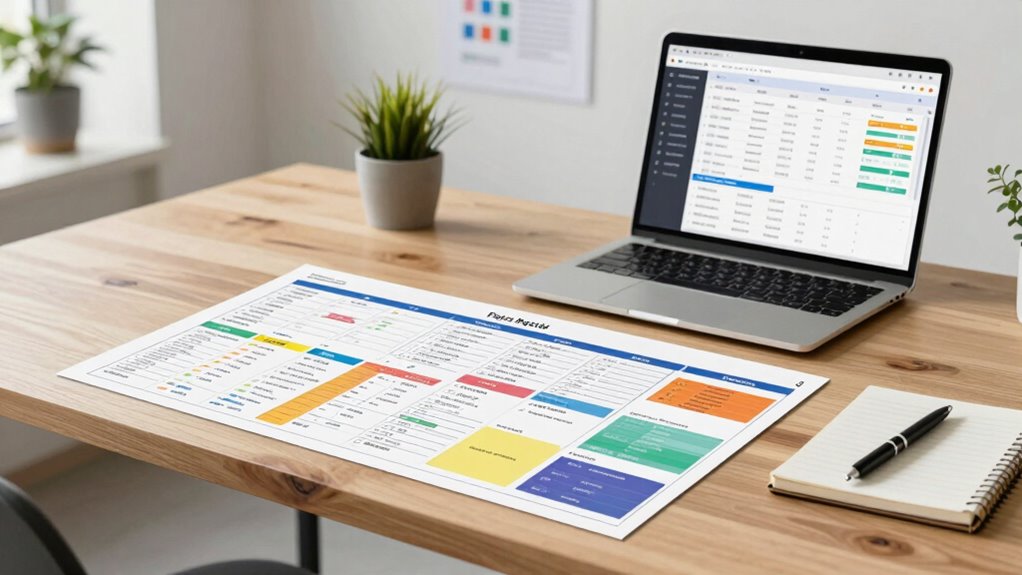
Building your one-page project plan begins with identifying your project’s core goal and ensuring everyone involved understands it. Start by clearly defining this goal, then engage stakeholders to gather input and foster buy-in. Next, outline key milestones and deliverables, keeping them specific and achievable. Incorporate risk management by identifying potential obstacles upfront and planning mitigation strategies. Use simple language and visuals to keep the plan clear and accessible, which enhances project visibility and understanding. Including stakeholder engagement early on helps ensure alignment and support for your plan. Assign responsibilities to team members, ensuring accountability. Regularly review progress and adjust the plan as needed to stay aligned. Effective communication is essential to keep all parties informed and engaged throughout the project lifecycle. Keep your workspace organized and clutter-free to support focus and clarity throughout the project. This step-by-step approach also emphasizes the importance of clear documentation, which ensures that everyone has access to the same information and reduces misunderstandings.

Humanscale Freedom Office Chair with Headrest - Ergonomic Work Chair with Standard Height Adjustable Duron Arms - Wheels for Carpet - Graphite Frame with Granite Fourtis Fabric
Humanscale Freedom Chair with Headrest - Standard Height Adjustable Duron Arms
As an affiliate, we earn on qualifying purchases.
Common Mistakes to Avoid When Using Your Plan
Even the best plans can falter if you overlook common mistakes during implementation. One major pitfall is misaligned expectations, which can cause confusion and frustration. Another is missing overlooked details that seem small but are vital to success. To avoid these pitfalls, stay vigilant and regularly review your plan. Communicate clearly to guarantee everyone shares the same understanding. Use the table below to spot potential errors and keep your team aligned: Design principles can serve as a helpful foundation to guide your adjustments and ensure your plan remains effective. Additionally, paying attention to attention to detail helps prevent overlooked elements that could derail progress. Regular maintenance and testing of appliances, such as appliance testing, are also crucial to maintaining overall safety and functionality. Being aware of essential oils for specific health issues can help you incorporate holistic solutions into your planning process, enhancing overall well-being and effectiveness. When implementing your plan, consider incorporating sunscreen use strategies to protect skin and maintain long-term health during project activities.
Best Tools and Templates to Create Your Plan

To create an effective one-page project plan, leveraging the right tools and templates can make the process much smoother. Using visual brainstorming tools helps clarify ideas quickly and keeps everyone aligned. Templates designed for stakeholder engagement ensure your plan covers key interests and promotes collaboration. Consider these options:
- Digital whiteboards for visual brainstorming sessions
- Pre-designed one-page plan templates for quick setup
- Collaboration platforms with real-time editing
- Stakeholder mapping tools to identify key players
- Visual project timeline templates for clarity
- Incorporating virtual reality elements can enhance remote collaboration and engagement.
These tools streamline your planning process, enhance communication, and ensure your plan remains concise and focused. By integrating visual brainstorming and stakeholder engagement tools, you’ll develop a clear, compelling plan that drives alignment and project success.
Real-Life Success Stories With One-Page Plans

Many organizations have seen remarkable results with one-page plans, like startups that quickly accelerate growth or nonprofits that gain clearer mission focus. These simple tools keep teams aligned and actions targeted, even amid complexity. How could adopting a one-page plan transform your project’s success?
Startup Growth Accelerated
Real-life success stories show how startups have accelerated their growth by using one-page project plans. These plans streamline priorities, making it easier to align teams and attract investors. For example, a startup improved fundraising strategies by clearly defining milestones and targeted donor engagement activities. This clarity helped secure funding faster and build stronger relationships. By focusing on essentials, they avoided distractions and kept everyone accountable.
Key ways startups have benefited include:
- Clarifying growth objectives for investors and teams
- Prioritizing fundraising activities for maximum impact
- Tracking progress with simple, visual updates
- Streamlining donor engagement strategies
- Maintaining focus on core goals without unnecessary complexity
Nonprofit Mission Clarity
When nonprofit organizations adopt a one-page project plan, they often find their mission becomes much clearer and more focused. This clarity helps you align fundraising strategies and volunteer engagement efforts effectively. For example, organizations can prioritize initiatives that directly support their core purpose, avoiding distraction. Here’s a quick look at how clarity impacts success:
| Aspect | Benefit | Result |
|---|---|---|
| Clear Mission | Focused campaigns | Increased donor trust |
| Defined Goals | Precise fundraising strategies | Higher donation rates |
| Volunteer Engagement | Targeted outreach | Stronger community support |
| Resource Allocation | Efficient use of funds | Better program outcomes |
| Stakeholder Alignment | Unified vision across teams | Enhanced collaboration |
A well-crafted one-page plan sharpened their mission, boosting overall impact.
How to Keep Your Plan Updated and Keep Your Team Aligned

Ever wondered how to make certain your project plan remains current and your team stays on the same page? Regular updates and open team communication are key. Keep your plan flexible enough to adapt to changes, but structured enough to maintain clarity. To stay aligned, consider these strategies:
- Schedule brief, regular check-ins to review progress
- Encourage team members to share feedback openly
- Adjust your plan promptly when priorities shift
- Use visual tools to track updates easily
- Reinforce the importance of plan flexibility during discussions
Frequently Asked Questions
How Does a One-Page Plan Improve Team Communication?
A one-page plan enhances your team communication by providing visual clarity, so everyone quickly understands goals and responsibilities. It clearly outlines accountability metrics, making it easy to track progress and identify issues. This concise format reduces confusion, encourages transparency, and keeps team members aligned. With everyone on the same page, you foster better collaboration and ensure that objectives stay focused and achievable.
Can Small Businesses Benefit From a One-Page Project Plan?
Absolutely, small businesses can totally thrive with a one-page project plan! It offers instant project clarity, making sure everyone understands goals, roles, and deadlines effortlessly. Plus, it skyrockets resource allocation accuracy, preventing waste and confusion. This simple tool keeps your team laser-focused, boosts efficiency, and ensures everyone stays on the same page, no matter how tiny or busy your business gets. It’s a game-changer for small business success!
What Industries Most Effectively Use One-Page Project Plans?
You’ll find that industries like construction management and those embracing Agile methodologies benefit most from one-page project plans. These plans streamline complex projects, making them easier to manage and adapt quickly. In construction, they clarify scope and timelines, while in Agile environments, they support rapid iterations and team alignment. By keeping everything concise and visible, you guarantee everyone stays on the same page and responds swiftly to changes.
How Often Should I Revisit and Update My Plan?
You should revisit and update your plan weekly or whenever significant changes occur. For example, a marketing team launching a new campaign might revise their plan after each milestone to stay aligned. Frequent plan revision guarantees your update frequency matches project dynamics, helping you adapt quickly. Regular updates keep everyone on the same page, improve decision-making, and maintain momentum, especially in fast-paced industries or projects with shifting priorities.
Are There Any Drawbacks to Using a One-Page Project Plan?
Yes, using a one-page project plan can lead to over simplification, which might cause you to overlook important details or complexities. While it helps keep things clear and focused, it may not capture every nuance or potential risk. This could result in missing critical steps or assumptions, so it is crucial to review and update your plan regularly and supplement it with more detailed documentation when necessary.
Conclusion
Think of your one-page project plan as a clear window into your project’s soul, offering transparency and focus at a glance. When you keep it updated, it becomes a living map guiding your team through every twist and turn. Embrace this tool, and watch your project sail smoothly—like a well-charted course on calm waters—ensuring everyone stays aligned and focused on your shared destination.