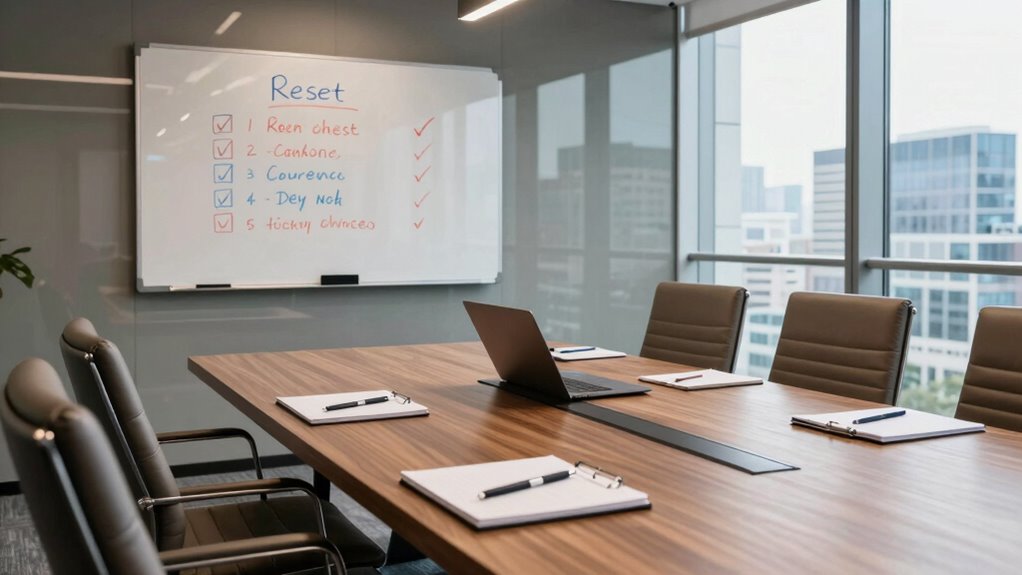

When you prepare a meeting room, start by clearing clutter and cleaning surfaces to keep the space professional and welcoming. Check all equipment—laptops, projectors, microphones—and troubleshoot any issues. Adjust lighting and room temperature for comfort, and update schedules or displays for upcoming meetings. Don’t forget to disinfect shared surfaces to guarantee hygiene. Following this routine helps create a seamless, productive environment—stick with it, and you’ll discover even more tips to keep your space optimized.

Get business pricing on office and shipping supplies
- Business-only prices and quantity discounts
- Tax-exempt purchasing
- Multiple users, one account, clear invoices
Key Takeaways
- Clear and organize the workspace to prevent clutter and promote professionalism before each meeting.
- Verify and maintain equipment to ensure all devices are functioning properly and troubleshoot issues proactively.
- Disinfect surfaces and shared equipment to uphold hygiene standards and create a welcoming environment.
- Check camera, microphone, and connection setups to avoid technical disruptions during video conferences.
- Adjust room lighting, temperature, and update scheduling displays for optimal comfort and accurate booking information.
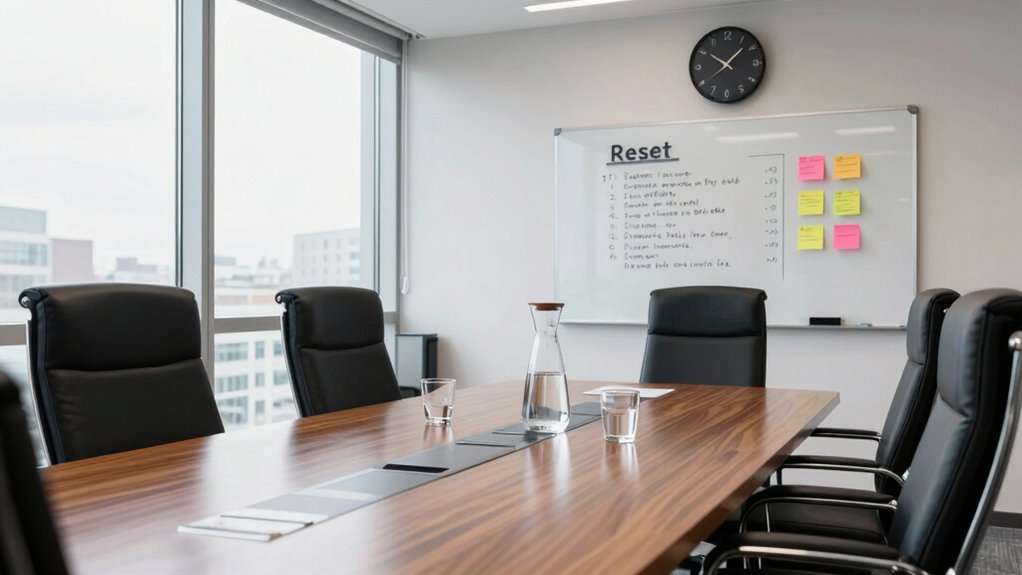
When a meeting ends, the last thing you want is a cluttered, disorganized room that slows down the next team’s productivity. A well-structured reset routine helps keep the space efficient and ready for the next session. The key is having a clear checklist that everyone follows, ensuring nothing gets overlooked. This is especially important in environments that rely on virtual collaboration, where smooth tech operation is critical. Proper equipment maintenance prevents technical issues, minimizes downtime, and keeps everyone connected without frustration. Incorporating biodiversity principles into your workspace can also promote a healthier environment and boost overall well-being.
Start by clearing the table or workspace of any papers, pens, or personal items left behind. This quick step creates a clean canvas for the next meeting and prevents clutter from piling up. Next, check all the technological equipment—projectors, screens, microphones, and laptops—to make sure they’re powered off or reset as needed. Regular equipment maintenance is essential here; if devices have been used extensively, they may need updates, cleaning, or troubleshooting to stay in top shape. This proactive approach reduces the chance of technical glitches during future meetings, which can disrupt virtual collaboration and waste valuable time. Including equipment maintenance in your routine can also extend the lifespan of your devices and improve overall performance. Additionally, understanding personality assessments can help tailor your team’s communication style to enhance collaboration during these resets.
After turning off and inspecting devices, wipe down surfaces with disinfectant, especially in shared spaces. This not only promotes hygiene but also maintains a professional, welcoming environment. For rooms equipped with video conferencing tools, double-check that cameras and microphones are positioned correctly and functioning. Test the connection briefly to confirm everything is working smoothly for the next session. Ensuring all technology is operational is critical for seamless virtual collaboration, where even minor issues can derail productivity. Being aware of technological troubleshooting techniques can further streamline this process and quickly resolve common problems. Regularly updating your knowledge on troubleshooting methods can help prevent delays and keep meetings running smoothly.
Finally, verify the room’s lighting and temperature settings. Adjust lighting to appropriate levels for visibility and note room temperature to ensure comfort for the next users. If the space has digital displays or scheduled booking systems, update or reset these to reflect the upcoming schedule. Keeping these details in mind helps maintain a professional atmosphere and minimizes disruptions.
conference room equipment maintenance kit
As an affiliate, we earn on qualifying purchases.
As an affiliate, we earn on qualifying purchases.
Frequently Asked Questions
How Often Should the Meeting Room Reset Checklist Be Updated?
You should update the meeting room reset checklist at least quarterly, or whenever there’s a change in meeting etiquette or space usage. Regular updates help guarantee space optimization and that your team follows current protocols. Pay attention to feedback from users and any new tools or policies. Keeping the checklist current promotes efficient meetings, maintains cleanliness, and assures everyone follows best practices, creating a more productive and respectful environment.
Who Is Responsible for Conducting the Room Reset?
You’re responsible for conducting the room reset, but don’t assume it’s a solo task. Responsibility assignment varies, often falling on the last person to leave or designated team members. Keep accountability tracking in mind—who’s up next? This ensures the checklist is completed consistently and efficiently. If you’re unsure, clarify roles ahead of time. Staying proactive guarantees the space’s readiness, no surprises, just a smooth reset every time.
What Tools Are Recommended for Tracking Reset Completion?
You should use digital tools like checklists or task management apps to track reset completion. These tools help streamline room maintenance and guarantee each task is completed on time. Customize your checklist to fit your team’s needs, making it easy to monitor progress and identify issues quickly. By integrating these tools, you keep everyone accountable, maintain consistency, and make the reset process more efficient and organized.
How Can Teams Ensure Consistent Adherence to the Checklist?
Think of your meeting room like a well-tuned orchestra; everyone must follow the same sheet music—your reset checklist. To guarantee consistent adherence, set clear expectations around meeting etiquette and room aesthetics. Regular reminders, visual cues, or quick check-ins help reinforce habits. When everyone understands their role in maintaining a tidy, professional space, it becomes second nature, much like a harmonious symphony where each instrument plays its part flawlessly.
Are There Digital Alternatives to the Physical Reset Checklist?
Yes, you can use digital checklists and virtual reminders as alternatives to physical reset checklists. These tools help you stay organized and guarantee consistency by providing real-time updates and automatic prompts. You simply create a digital checklist tailored to your needs and set virtual reminders to alert you when tasks are due. This way, you streamline the process, reduce errors, and make sure every meeting space gets properly reset.
wireless microphone for meetings
As an affiliate, we earn on qualifying purchases.
As an affiliate, we earn on qualifying purchases.
Conclusion
By mastering this manageable meeting-room reset, you’ll maintain momentum, minimize mess, and maximize efficiency. With a simple, systematic script, you’re set to streamline setups, clear clutter, and start fresh every time. Keep the checklist close, and watch your workspace work wonders. A tidy, tuned-up table transforms your team’s time, turning chaos into clarity and chaos into cohesion. Now, go get your game face on and generate greatness in every meeting!
video conferencing camera with microphone
As an affiliate, we earn on qualifying purchases.
As an affiliate, we earn on qualifying purchases.
disinfectant wipes for office surfaces
As an affiliate, we earn on qualifying purchases.
As an affiliate, we earn on qualifying purchases.
Halloween Picks
halloween
As an affiliate, we earn on qualifying purchases.