
To plan a successful team offsite that delivers outcomes, select a venue that’s accessible, comfortable, and supports your planned activities. Incorporate bonding exercises that promote open communication and trust, like group challenges or casual social time. Match the environment to your goals—whether relaxed or structured—to foster engagement. Thoughtfully combining the right space with meaningful activities sets the stage for stronger relationships and clearer results, and there’s more to how you can make it truly impactful.

Get business pricing on office and shipping supplies
- Business-only prices and quantity discounts
- Tax-exempt purchasing
- Multiple users, one account, clear invoices
Key Takeaways
- Clearly define objectives and desired outcomes to tailor activities and venue choices effectively.
- Select an accessible, comfortable venue that supports both structured sessions and informal bonding.
- Incorporate team-building activities that promote open communication, trust, and collaboration.
- Ensure the environment fosters engagement through inviting spaces, shared meals, and breakout areas.
- Plan strategically by aligning activities, venue, and atmosphere to maximize participation and achieve goals.

Planning a successful team offsite requires careful preparation and clear objectives. You need to think beyond just booking a location—you’re shaping an experience that fosters collaboration, boosts morale, and strengthens relationships. One of the most essential steps in this process is team bonding. When planning your offsite, focus on activities that encourage open communication and trust among team members. Whether it’s problem-solving exercises, group challenges, or informal social events, these activities help break down barriers and create a sense of camaraderie. Remember, the goal is to foster a collaborative environment where everyone feels valued and connected.
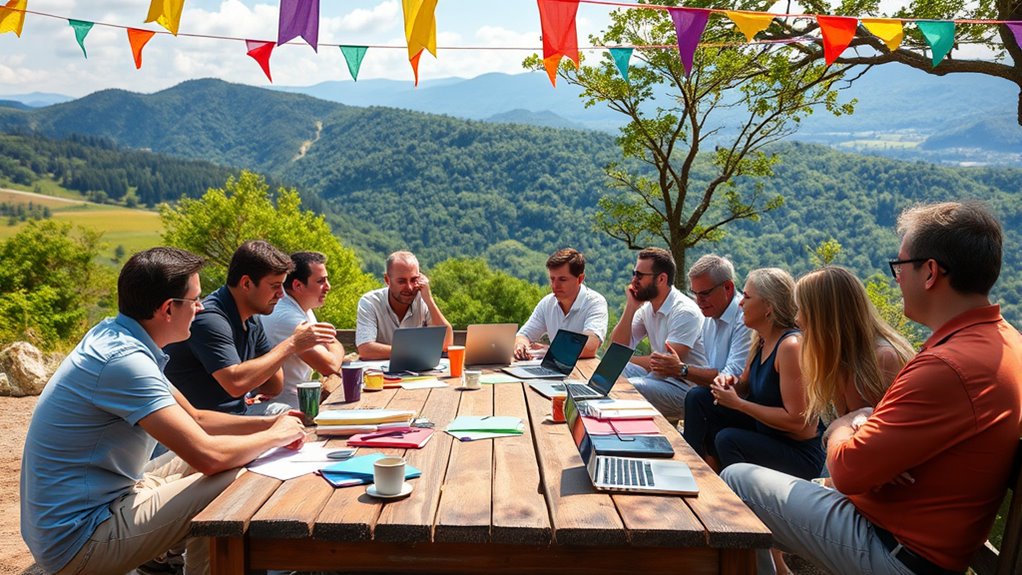
Equally important is venue selection. Choosing the right venue sets the tone for the entire event. You want a space that’s accessible and comfortable, yet inspiring enough to energize your team. Consider the size of your group—an overcrowded or too spacious venue can hinder interaction. The venue should also support your planned activities, so check for amenities like breakout rooms, outdoor spaces, or team-building facilities. Location matters too; pick a spot that minimizes travel time and stress, so your team can focus on the purpose of the offsite rather than logistics. Think about whether a hotel conference center, a rural retreat, or an urban coworking space best aligns with your goals.
When selecting a venue, don’t just focus on aesthetics—evaluate the environment for its potential to encourage team bonding. An open, inviting atmosphere can facilitate spontaneous conversations and networking. Ensure the venue offers options for meals and breaks that fit your team’s dietary needs and preferences, as shared meals often serve as valuable bonding moments. If possible, visit the location beforehand to assess its suitability and chat with staff about your plans. This proactive step helps you identify any limitations or special requirements early on, avoiding surprises during the event. Additionally, consider how a Gold IRA or other investment strategies could serve as a metaphor for building a resilient and diversified team foundation, emphasizing the importance of strategic planning.
Ultimately, your venue choice should reflect your objectives. Whether you want a relaxed setting that promotes informal interactions or a more structured environment for workshops, pick a space that aligns with your vision. Combining thoughtful venue selection with activities that promote team bonding will set a strong foundation for a productive and memorable offsite. When your team feels comfortable and engaged in the right environment, they’re more likely to participate actively, share ideas freely, and build stronger connections—key ingredients for achieving your desired outcomes.
team building activity kits for office
As an affiliate, we earn on qualifying purchases.
As an affiliate, we earn on qualifying purchases.
Frequently Asked Questions
How Do I Measure the Success of an Offsite?
You measure the success of an offsite by evaluating how well your team bonds and the impact of your activity selection. Look for improved communication, collaboration, and morale afterward. Gather feedback through surveys or discussions to see if goals were met. Track tangible outcomes like increased productivity or project progress. When your team feels more connected and motivated, you know the offsite achieved its purpose.
What Budget Considerations Should I Keep in Mind?
You should consider your venue selection and catering options when planning your budget. Research venues that fit your team size and desired atmosphere to avoid overspending. Factor in catering costs, choosing options that align with your budget while still satisfying your team’s preferences. Be sure to account for additional expenses like transportation, equipment, and activities, ensuring you stay within your overall financial plan.
How Can I Ensure Team Engagement Throughout the Event?
You can guarantee team engagement by incorporating interactive activities that keep everyone involved and energized. Encourage open communication and create opportunities for feedback collection throughout the event to make team members feel heard and valued. Keep activities dynamic and relevant to your goals, and regularly check in on participation levels. This approach fosters collaboration, enhances morale, and ensures your offsite delivers meaningful outcomes.
What Are Common Mistakes to Avoid in Planning?
Like a dial-up connection slowing your progress, common mistakes can hinder your offsite. Avoid rushing venue selection, as a poor choice can dampen energy; neglecting activity planning leaves attendees disengaged. Don’t overlook logistical details or over-schedule, which can cause burnout. Instead, focus on seamless organization and meaningful activities. Keep your goals clear, and remember to incorporate variety—this ensures your event stays impactful and engaging from start to finish.
How Do I Accommodate Remote Team Members?
To accommodate remote team members, guarantee seamless virtual participation by investing in reliable technology integration like high-quality video conferencing tools. Schedule activities that encourage interaction between in-person and remote attendees, and provide clear instructions beforehand. Use chat features or collaborative platforms to foster engagement. By prioritizing accessibility and connectivity, you make everyone feel included, which boosts overall team cohesion and ensures your offsite delivers meaningful outcomes for all participants.
conference room breakout furniture
As an affiliate, we earn on qualifying purchases.
As an affiliate, we earn on qualifying purchases.
Conclusion
So, there you have it—plan a team offsite that actually delivers results, not just another excuse to escape the office. With a little prep, clear goals, and some well-placed fun, you’ll turn your team’s getaway into a productivity powerhouse. Who knew that mixing work and play could be so effective? Just remember, if your plans flop, at least you’ll have a great story for next year’s “what went wrong” session. Cheers to successful offsites!
As an affiliate, we earn on qualifying purchases.
event planning supplies for corporate retreats
As an affiliate, we earn on qualifying purchases.
As an affiliate, we earn on qualifying purchases.
Fall Picks
fall essentials
As an affiliate, we earn on qualifying purchases.