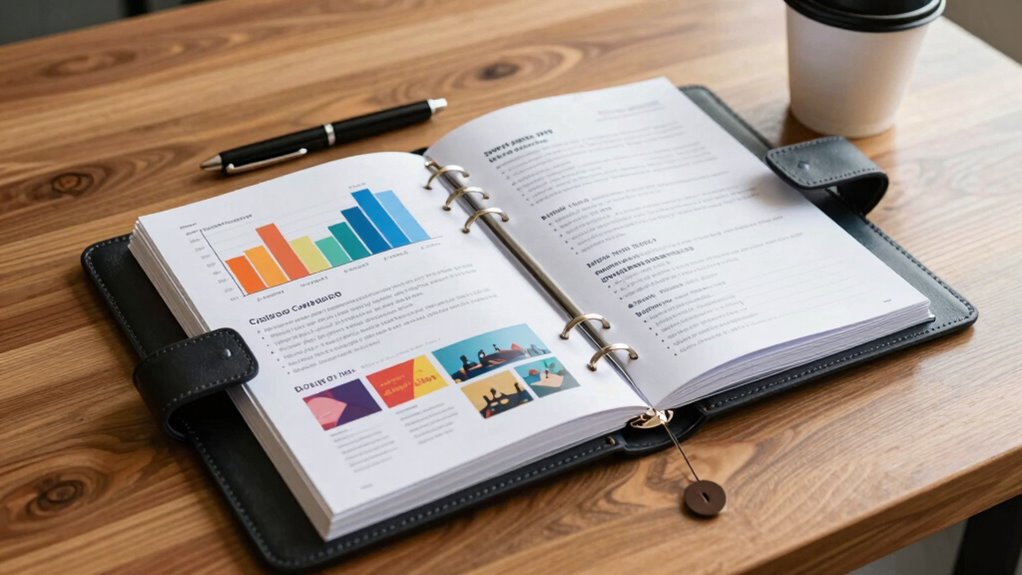

Many people overlook career portfolios, yet they can dramatically boost your job prospects and professional reputation. Unlike resumes, portfolios showcase your work, skills, and achievements through visuals, case studies, and personalized branding. They give you greater control over your career story and help you stand out in competitive markets. If you want to learn how to craft an effective portfolio that highlights your strengths and sets you apart, keep exploring these strategies.
Key Takeaways
- Most people overlook creating a comprehensive, personalized portfolio that showcases their unique skills and accomplishments beyond a resume.
- Developing a digital career portfolio enhances visibility, credibility, and personal branding in a competitive job market.
- Curating high-quality, strategic work samples demonstrates expertise and differentiates candidates effectively.
- Regularly updating and organizing the portfolio ensures relevance and reinforces a professional, cohesive brand identity.
- Utilizing visual storytelling and advanced digital tools makes portfolios more engaging and memorable to potential employers.
Why Resumes Aren’t Enough and Why You Need a Portfolio

While a resume provides a snapshot of your skills and experience, it often falls short in showcasing your full potential. A portfolio, on the other hand, highlights your digital presence and demonstrates your abilities more effectively. It allows you to present projects, accomplishments, and creative work that a resume can’t fully capture. Relying solely on a resume limits your ability to stand out and connect with others. Building a strong digital presence through a portfolio enhances your visibility and credibility. Additionally, it supports your networking strategies by giving contacts tangible evidence of your expertise. A well-crafted portfolio shows you’re proactive and committed, making it easier for potential employers or collaborators to see your value beyond a one-page document. Incorporating elements like high-quality visuals and detailed case studies can further showcase your skills and differentiate you from others in your field. Embracing a comprehensive digital showcase can significantly boost your career prospects and professional reputation.
What Is a Career Portfolio and Why Does It Matter?

A career portfolio is a curated collection of your work, achievements, and skills that showcases your professional journey in an all-encompassing way. It goes beyond a resume by highlighting your personal branding and demonstrating your unique value. Having a strong online presence through your portfolio helps you stand out to potential employers or clients, providing tangible proof of your capabilities. It allows you to control your narrative, emphasizing your strengths and expertise in your chosen field. A well-crafted portfolio not only showcases your work but also reinforces your professional identity. In today’s competitive job market, it’s an essential tool for establishing credibility, building your personal brand, and making a memorable impression. It matters because it truly reflects who you are and what you bring to the table. Additionally, integrating performance cookies ensures your site runs smoothly and provides visitors with a seamless experience, which can further enhance your professional presentation. Understanding the importance of content transparency helps you create an authentic and trustworthy portfolio that resonates with viewers. Recognizing market trends and insights can help you tailor your portfolio to highlight the most relevant and in-demand skills or accomplishments. Incorporating knowledge about exfoliation and skin renewal from glycolic acid benefits can add a unique dimension to your professional narrative if relevant to your field. Including proper maintenance routines in your portfolio can demonstrate your commitment to quality and efficiency in your work.
What Are the Key Elements to Include in Your Portfolio?

What are the key elements to include in your portfolio? Your digital showcase should feature your best work, demonstrating your skills and accomplishments clearly. Highlight your skill set with specific examples that showcase your expertise and growth. Include a professional summary or introduction that briefly explains your career goals and strengths. Add sections for your education, certifications, and relevant experience, emphasizing achievements over duties. Incorporate recent projects, awards, or recognitions that reinforce your capabilities. Guarantee your portfolio is organized, easy to navigate, and visually appealing. Remember, this collection isn’t just about what you’ve done but also about showcasing your potential. By focusing on skill highlights and a polished presentation, you make your portfolio a powerful tool for career advancement. Ensuring your portfolio remains organized and user-friendly can help you present your accomplishments effectively and confidently. Additionally, consider integrating navigation and mapping explainers to enhance user experience and demonstrate your adaptability to smart solutions, such as digital organization tools that can streamline your portfolio’s structure. To further optimize your presentation, incorporate visual aids and layouts that improve clarity and engagement for viewers. Incorporating visual storytelling techniques can also make your portfolio more compelling and memorable.
How Can You Build and Organize Your Career Portfolio Effectively?

To build and organize your career portfolio effectively, start by defining clear goals for what you want to showcase and achieve. Focus on visual storytelling to highlight your skills and experiences compellingly. Use digital organization tools like folders, tags, and labels to keep your materials accessible and up-to-date. A well-structured portfolio balances content with clarity. Consider this layout:
| Section | Content |
|---|---|
| Goals | What you aim to demonstrate and attain |
| Core Skills | Key abilities and accomplishments |
| Supporting Evidence | Projects, certifications, testimonials |
This structure helps you present your career story logically and professionally, ensuring your portfolio is both attractive and easy to navigate. Effective digital organization enables you to quickly update and customize your portfolio for different opportunities.
What Common Challenges Might You Face When Creating Your Portfolio?

As you create your portfolio, you might struggle with gathering the right work samples that truly showcase your skills. Finding the right balance between quality and quantity can also be tricky, so your portfolio feels impressive without being overwhelming. Additionally, maintaining consistent branding across all your materials helps present a professional image, but it can be challenging to achieve. Incorporating elements of Fin and Forage, such as hydrotherapy concepts or aquatic exercise, can inspire creative ways to demonstrate versatility and adaptability in your work. Embracing innovative approaches like digital revolutions can also help set your portfolio apart in a competitive landscape. Utilizing advanced technology like smart features and remote access options can further enhance the presentation of your skills and projects.
Gathering Relevant Work Samples
Have you ever struggled to choose the right work samples for your portfolio? It can be challenging to select pieces that best showcase your skills and experience. Digital artifacts like project summaries help provide context, but deciding which ones are most relevant isn’t easy. You might face common challenges such as balancing variety with focus or avoiding redundant examples. To clarify your choices, consider this table:
| Challenge | Solution | Example |
|---|---|---|
| Overloading with samples | Focus on quality, not quantity | Select 3-5 strong projects |
| Lack of context | Add clear project summaries | Briefly explain your role |
| Outdated work | Update regularly | Remove obsolete artifacts |
Choosing the right work samples requires intentional curation to highlight your strengths effectively. Incorporating best practices from Free Floating can help ensure your portfolio remains current and impactful.
Balancing Quality and Quantity
Balancing quality and quantity in your portfolio can be a tricky task. You want enough content to showcase your skills and versatility, but not so much that it overwhelms or dilutes your message. Achieving a quality balance means selecting only your strongest work, ensuring each piece demonstrates your expertise. On the other hand, focusing solely on content quantity might lead you to include weaker samples just to fill space, which can harm your credibility. The challenge is to present enough variety to highlight your capabilities without sacrificing the excellence of individual pieces. Keep in mind that quality always trumps quantity; a concise, well-curated portfolio leaves a stronger impression than a lengthy collection of mediocre work. Aim for a thoughtful balance that reflects your professionalism and growth.
Presenting Consistent Branding
Creating a portfolio that showcases your skills effectively also means maintaining consistent branding across all your work. One common challenge is aligning your personal branding so it reflects your unique identity clearly. Inconsistent visual elements, like fonts, colors, or layouts, can confuse viewers and weaken your message. It’s tempting to showcase a variety of styles, but this can dilute your brand’s strength. To avoid this, establish a cohesive visual identity early on and apply it uniformly throughout your portfolio. This consistency not only reinforces your professionalism but also makes your work instantly recognizable. Staying true to your personal branding helps potential employers or clients understand what you stand for, making your portfolio more compelling and memorable.
How Can You Use Your Portfolio to Stand Out in Job Applications?

To stand out in job applications, your portfolio should highlight your most impressive and relevant work upfront. Use unique storytelling to craft a compelling narrative around each project, demonstrating not just what you did, but how you approached challenges and delivered results. Incorporate visual storytelling through high-quality images, infographics, or videos that showcase your skills dynamically. This visual element makes your portfolio memorable and easy to navigate. Keep your content focused on achievements that align with the role you’re applying for, emphasizing your strengths. By blending engaging storytelling with striking visuals, you create a powerful impression that sets you apart from other candidates—showing employers not only what you’ve done but how you think and work creatively. Understanding how to craft a career portfolio can significantly boost your chances of landing your desired role. Additionally, emphasizing visual storytelling can help your work stand out in a competitive job market, especially when paired with digital presentation techniques that enhance engagement. Incorporating passive voice detection into your review process can further improve the clarity and impact of your portfolio content. Incorporating elements of high-heat outdoor cooking techniques, such as precise temperature control and effective fire management, can also help demonstrate your ability to master complex tasks under pressure.
Frequently Asked Questions
How Often Should I Update My Career Portfolio?
You should update your career portfolio regularly, ideally every few months or after completing significant projects. Ongoing updates guarantee your portfolio accurately reflects your latest skills, achievements, and experiences. Consistent portfolio maintenance keeps you prepared for new opportunities and demonstrates your growth. Don’t wait for a job change—make updating a routine part of your professional development, so your portfolio stays current and compelling at all times.
Can a Career Portfolio Replace a Traditional Resume Entirely?
A career portfolio can sometimes replace a traditional resume, especially if it highlights your digital branding and visual storytelling skills. Imagine a graphic designer showcasing a dynamic portfolio online, demonstrating creativity and project impact directly. While a portfolio offers depth, it’s best used alongside a resume for broader appeal. It emphasizes your unique strengths, making you stand out in competitive fields where visual storytelling truly shines.
What Digital Tools Are Best for Creating Portfolios?
You should consider using visual portfolio tools like Canva or Adobe Spark, which make creating eye-catching layouts easy. Multimedia presentation platforms such as Prezi or Google Slides are also excellent for integrating images, videos, and interactive content. These digital tools help you showcase your skills dynamically, making your portfolio stand out to potential employers. They’re user-friendly and versatile, perfect for building a compelling digital presence that complements your career goals.
How Do I Tailor My Portfolio for Different Industries?
Think of your portfolio as a chameleon, blending seamlessly with each industry’s landscape. To tailor it, highlight industry-specific examples that resonate with potential employers, showcasing relevant skills and projects. Use tailoring strategies like customizing your language, emphasizing different achievements, and selecting visuals that speak to each field. This approach makes your portfolio a bespoke masterpiece, capturing attention and demonstrating you’re the perfect fit for every industry you pursue.
Is There a Standard Format or Template for Career Portfolios?
There isn’t a strict standard format for career portfolios, but you should focus on effective portfolio design and template customization. Choose a clean, professional layout that highlights your skills and achievements clearly. Tailor your template to fit the industry you’re targeting by emphasizing relevant work samples and experiences. Remember, a well-structured, personalized portfolio makes a strong impression, helping you stand out and showcase your unique value.
Conclusion
So, while everyone rushes to polish their resumes, you’ll be the one showing a vibrant portfolio instead—like a colorful gallery in a sea of black-and-white headshots. Ironically, this eye-catching display might just be what finally gets you noticed. Instead of blending in with standard applications, you’ll stand out as the candidate with depth, skills, and stories to tell—proving that sometimes, the most overlooked strategy is the most unforgettable one.