
TL;DR

Get business pricing on office and shipping supplies
- Business-only prices and quantity discounts
- Tax-exempt purchasing
- Multiple users, one account, clear invoices
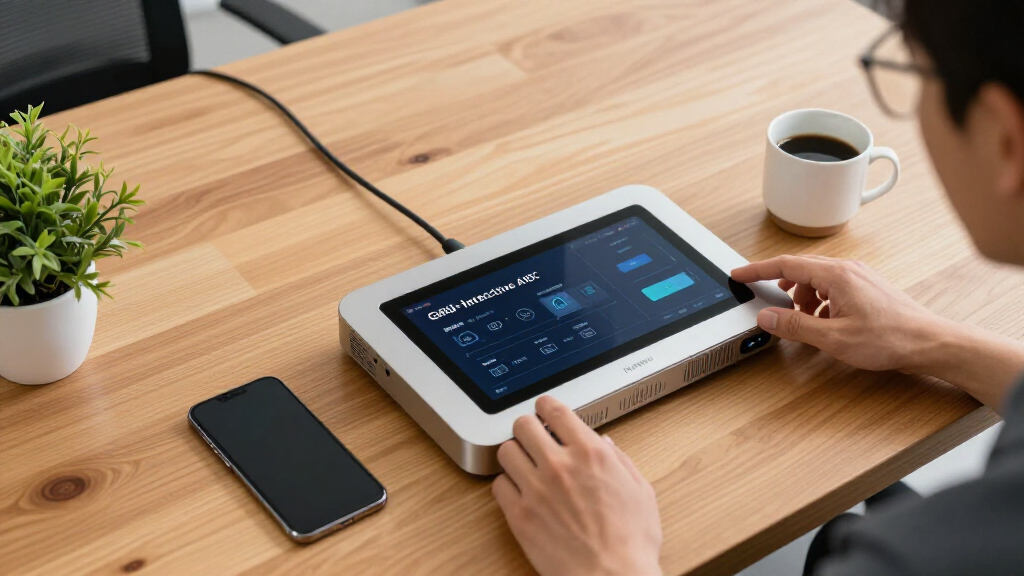
Huawei has announced its new Grid-Interactive AIDC solution, designed to revolutionize AI infrastructure by integrating energy management and data center intelligence. The development signals a shift toward more sustainable and efficient AI deployment.
Huawei has officially announced its new Grid-Interactive AIDC (Artificial Intelligence Data Center) solution, a comprehensive platform designed to transform AI infrastructure through advanced energy management and intelligent data processing capabilities. This development positions Huawei as a key player in the evolving landscape of smart data centers, with potential implications for sustainability and operational efficiency in AI deployments worldwide.
The Grid-Interactive AIDC solution integrates energy management systems with AI data center operations, enabling real-time monitoring, adaptive power distribution, and predictive maintenance. Huawei claims that this approach can significantly reduce energy consumption and operational costs while enhancing reliability. The company states that the platform leverages its existing AI and cloud technologies to create a more sustainable and intelligent infrastructure for data centers supporting AI workloads.
According to Huawei, the solution features a modular architecture that allows for scalable deployment across various data center sizes and configurations. It incorporates advanced sensors, IoT devices, and AI algorithms to optimize power usage and cooling, adapt to workload fluctuations, and improve overall system resilience. Huawei emphasizes that this innovation aligns with global trends toward green data centers and energy-efficient AI infrastructure, responding to increasing demand for sustainable technology solutions.
While Huawei has shared technical details about the platform’s capabilities, it has not yet disclosed specific deployment metrics or client case studies. Industry analysts note that the announcement indicates Huawei’s strategic focus on integrating AI with energy management, but real-world performance data remains to be seen as deployment progresses.
Potential Impact on AI Data Center Sustainability
The Grid-Interactive AIDC platform could mark a significant step forward in making AI infrastructure more sustainable, addressing the high energy demands of large-scale AI models. By enabling smarter energy use and reducing operational costs, Huawei’s solution may influence industry standards and accelerate the adoption of green data centers globally. This development is particularly relevant as data center energy consumption continues to rise, contributing to environmental concerns and operational expenses for AI providers.
Furthermore, the integration of energy management with AI data center operations could enhance system resilience and reliability, critical factors for industries relying on AI for real-time decision-making, such as finance, healthcare, and autonomous systems. If successful, Huawei’s approach might set a new benchmark for how AI infrastructure is designed, operated, and scaled in the future.
AI data center energy management systems
As an affiliate, we earn on qualifying purchases.
As an affiliate, we earn on qualifying purchases.
Growing Interest in Sustainable AI Infrastructure
The announcement of Huawei’s Grid-Interactive AIDC solution comes amid increasing global focus on sustainable technology and energy-efficient data centers. Industry reports indicate that search interest in AI infrastructure solutions, green data centers, and energy management systems has spiked over recent months, driven by rising operational costs and environmental regulations. Huawei’s move aligns with broader industry trends toward integrating AI with IoT and smart energy solutions to reduce carbon footprints and improve efficiency.
Historically, data centers have been significant energy consumers, with large-scale AI models exacerbating this trend. Leading cloud providers and hardware manufacturers are investing in innovative cooling, power management, and AI-driven optimization to address these challenges. Huawei’s new platform appears to be a strategic response to these market pressures, although detailed performance data and customer adoption figures are still emerging.
smart cooling systems for data centers
As an affiliate, we earn on qualifying purchases.
As an affiliate, we earn on qualifying purchases.
Unconfirmed Deployment Metrics and Industry Adoption
Details about specific deployment metrics, client case studies, and performance results are not yet available. It remains unclear how quickly and broadly Huawei’s Grid-Interactive AIDC platform will be adopted across different sectors and regions. Additionally, the extent to which competitors will develop similar solutions is still uncertain, as the market for AI infrastructure innovation continues to evolve.
IoT sensors for data center monitoring
As an affiliate, we earn on qualifying purchases.
As an affiliate, we earn on qualifying purchases.
Next Steps in Deployment and Industry Evaluation
Huawei is expected to initiate pilot projects and early deployments in select data centers over the coming months. Industry observers will be watching for performance data, energy savings, and operational improvements, which will inform broader adoption. Huawei may also participate in industry forums and collaborations to demonstrate the platform’s capabilities and establish standards for sustainable AI infrastructure.
modular AI infrastructure hardware
As an affiliate, we earn on qualifying purchases.
As an affiliate, we earn on qualifying purchases.
Key Questions
What is the main purpose of Huawei’s Grid-Interactive AIDC solution?
The platform aims to integrate energy management with AI data center operations to improve efficiency, reduce energy consumption, and enhance system resilience.
When will Huawei start deploying this solution at scale?
Huawei has announced the solution in March 2024, with initial pilot projects expected in the coming months. Full-scale deployment timelines are still unconfirmed.
How does this solution compare to existing data center energy management systems?
Huawei’s platform emphasizes AI-driven real-time optimization and modular scalability, potentially offering more adaptive and efficient management than traditional systems. However, comparative performance data is not yet available.
What industries might benefit most from this technology?
Industries with high AI workloads and energy demands, such as cloud providers, autonomous vehicle developers, healthcare, and finance, are likely to benefit most from the platform’s capabilities.
Are other companies developing similar solutions?
Yes, several industry players are working on integrating AI with energy management, but Huawei’s specific approach and technological features are distinct. Market adoption and technological maturity are still developing.
Source: primary
Halloween Picks
halloween
As an affiliate, we earn on qualifying purchases.