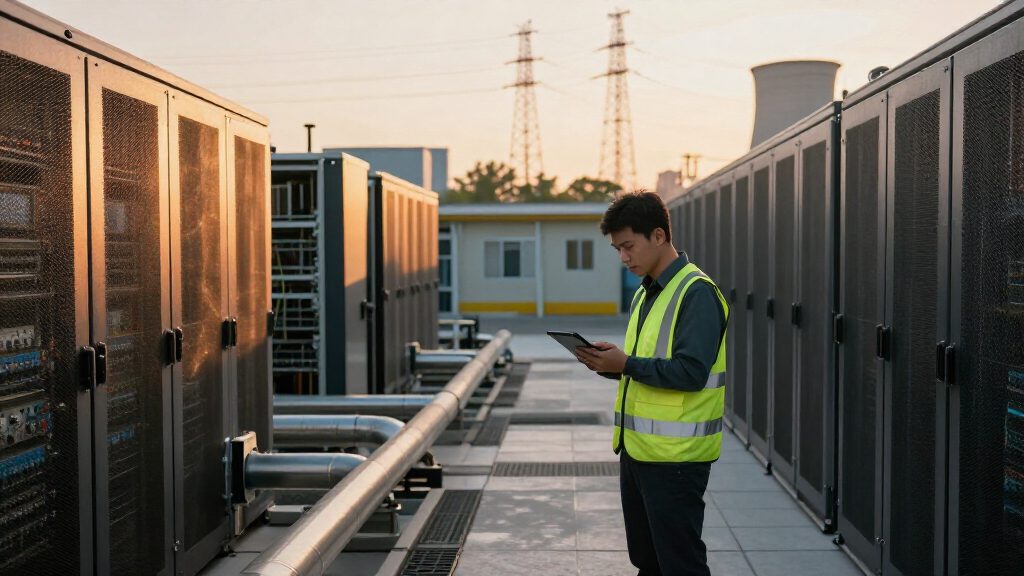

🔍 Read the full analysis: OpenAI’s Compute Campus Plans Put Energy And Water Use In Question on ThorstenMeyerAI.com

Get business pricing on office and shipping supplies
- Business-only prices and quantity discounts
- Tax-exempt purchasing
- Multiple users, one account, clear invoices
TL;DR
OpenAI confirmed it is adopting the term “compute campuses” for the large-scale infrastructure it is building for AI. The broader public-relations campaign behind the wording was reported by Axios and relayed by TechCrunch, while questions about electricity costs, grid upgrades and water use remain open. Industry pledges to pay for energy infrastructure are voluntary, with limited public detail on enforcement.
OpenAI has confirmed it is adopting the term “compute campuses” for the large facilities it is building to support artificial intelligence, as questions persist over who will pay for their electricity, grid connections and water. The naming change was confirmed to Business Insider; a reported broader public-relations campaign planned for after the U.S. midterm elections has not been independently confirmed by OpenAI.
TechCrunch reported November 1, citing Axios, that OpenAI was preparing a post-election public-relations push and that “compute campuses” was among the proposed terms. The account described comments by Chris Lehane, OpenAI’s chief global affairs officer. The source material says it relies on TechCrunch’s account of Axios because the Axios report itself was not available to the author. OpenAI separately confirmed the terminology to Business Insider, saying it better describes the infrastructure’s scale and role.
The company has also described its community commitments in broader terms. In its January 2026 Stargate Community plan, OpenAI said it would “pay our own way on energy,” according to wording quoted by Bisnow. In March, OpenAI joined six other companies in signing a White House Ratepayer Protection Pledge. The White House fact sheet says signatories will provide or buy new power resources and cover required power-delivery upgrades for their data centers.
Those commitments do not settle how costs will be allocated in practice. The fact sheet specifies no penalty, enforcement body, monitoring process or reporting requirement. The International Energy Agency said in an April 2026 report that recent measures shift some financial risk away from utilities, but that the extent of consumer protection is less clear. It also noted that few U.S. states have legislated full cost recovery from data-center operators.
Who Pays for AI Infrastructure
The issue reaches beyond the companies building AI systems. Large facilities can require power generation and transmission upgrades, and the way those costs are assigned can affect utilities, other businesses and household ratepayers. A company pledge to cover infrastructure costs may reassure host communities, but without public reporting and enforcement details, residents have limited means to check whether the commitments are being met.
Some grid pressures are already measurable, though their causes should not be overstated. PJM, which serves more than 67 million people across 13 states and the District of Columbia, reported a capacity auction for the 2028–29 delivery year that cleared at its $325 per megawatt-day price cap and fell 6,831 megawatts short. The independent market monitor attributed $6.3 billion of a $16.4 billion total to data centers. That attribution concerns the auction cost; it does not establish that data centers alone caused household electricity-price increases.
Water is another local concern, particularly where facilities are planned in areas with limited supplies or competing uses. At OpenAI’s planned site in Pike County, Ohio, the company expects water use to be comparable to an office building, but says it will publish projections after the design is final. Until those figures are available, the claim cannot be checked against a disclosed site-specific estimate.
Products Worth Considering

LG UltraGear 27GX704A-B 27-inch QHD OLED Gaming Monitor, 240Hz

Dell UltraSharp U2424H 24-Inch FHD Monitor

Dell 27 Plus 4K USB-C Monitor (S2725QC), 27-inch IPS, 120Hz
As an affiliate, we earn on qualifying purchases.
From Stargate to the Ratepayer Pledge
OpenAI’s terminology arrives as public views of data centers have become more negative, according to a Pew Research Center survey of 10,548 U.S. adults interviewed from July 20 to August 9, 2026. Half said data centers were mostly bad for home energy costs, compared with 38% in January; 54% said they were mostly bad for the environment, up from 39%. Sixty percent said they would be not too or not at all comfortable with a new data center in their area. These are survey responses, not measurements of the effects of any one facility.
OpenAI’s January community plan and the White House pledge followed growing attention to the infrastructure needed for AI. Amazon, Google, Meta, Microsoft, OpenAI, Oracle and xAI signed the pledge announced March 4, 2026. Separately, the energy-price picture is contested: the source material reports year-over-year residential price increases of 11.3% in Virginia and 10.4% in Ohio, but says the IEA found no simple state-level relationship between data centers and prices. The Energy Information Administration attributed a 41% wholesale-price jump in PJM to weather, rather than data centers.
Unanswered Questions on Costs and Water
OpenAI has confirmed the new term, but the reported post-midterm campaign remains based on Axios reporting relayed by TechCrunch. The source material says no official OpenAI publication launching the terminology had been found as of November 3. It is not clear whether the company will formally roll out the phrase or publish a detailed plan explaining how its commitments will be measured.
At the planned Pike County site, final water-use projections are not yet public; OpenAI says it will release them when the design is final. The available material also does not establish the precise schedule or scale of construction there. Across the industry, the pledge does not specify how companies’ energy and grid-cost promises will be independently checked or what consequences would follow if a signatory did not meet them.
The source material also describes OpenAI as owning no data centers, with partners carrying debt, and says a reported reduction in its funding target has not been confirmed by OpenAI. Those financing details do not answer who ultimately bears project costs, and the funding change should not be treated as established fact.
Details Needed Before Construction
The next concrete information to watch for is OpenAI’s final design and water-use projections for its Pike County, Ohio, site, along with any public explanation of how the company will document its “paying our own way” commitment. Those disclosures would allow residents and local officials to compare promises with projected resource needs.
For the broader campaign, OpenAI has not confirmed a launch date or published a formal rollout in the source material. The White House pledge’s practical effect will depend on how utilities, regulators and participating companies apply it to power supply and delivery upgrades. Future reporting on compliance, local permits and grid costs will help clarify whether the commitments translate into protections for ratepayers.
Key Questions
What does OpenAI mean by “compute campuses”?
OpenAI said the term describes the scale and role of the infrastructure it is building for AI. The wording does not itself change a facility’s electricity, grid or water requirements.
Has OpenAI launched the reported public-relations campaign?
Not according to the source material available as of November 3, 2026. TechCrunch relayed Axios reporting about a planned post-midterm campaign, but OpenAI’s confirmed action is the terminology it gave to Business Insider.
Will data centers make household electricity more expensive?
The effects vary by location and are disputed. The IEA has said the state-level relationship is not simple, while PJM’s market monitor attributed part of a reported capacity-auction cost to data centers. That figure does not by itself show how much household bills will change.
What is known about water use at OpenAI’s Pike County site?
OpenAI expects water use to be comparable to an office building, but has not yet published site-specific projections. The company says it will release them once the design is final.
Are companies legally required to meet the White House pledge?
The pledge was signed by seven companies, including OpenAI. The cited White House fact sheet describes commitments but does not name a penalty, enforcement body, monitoring process or reporting requirement.
Source: ThorstenMeyerAI.com