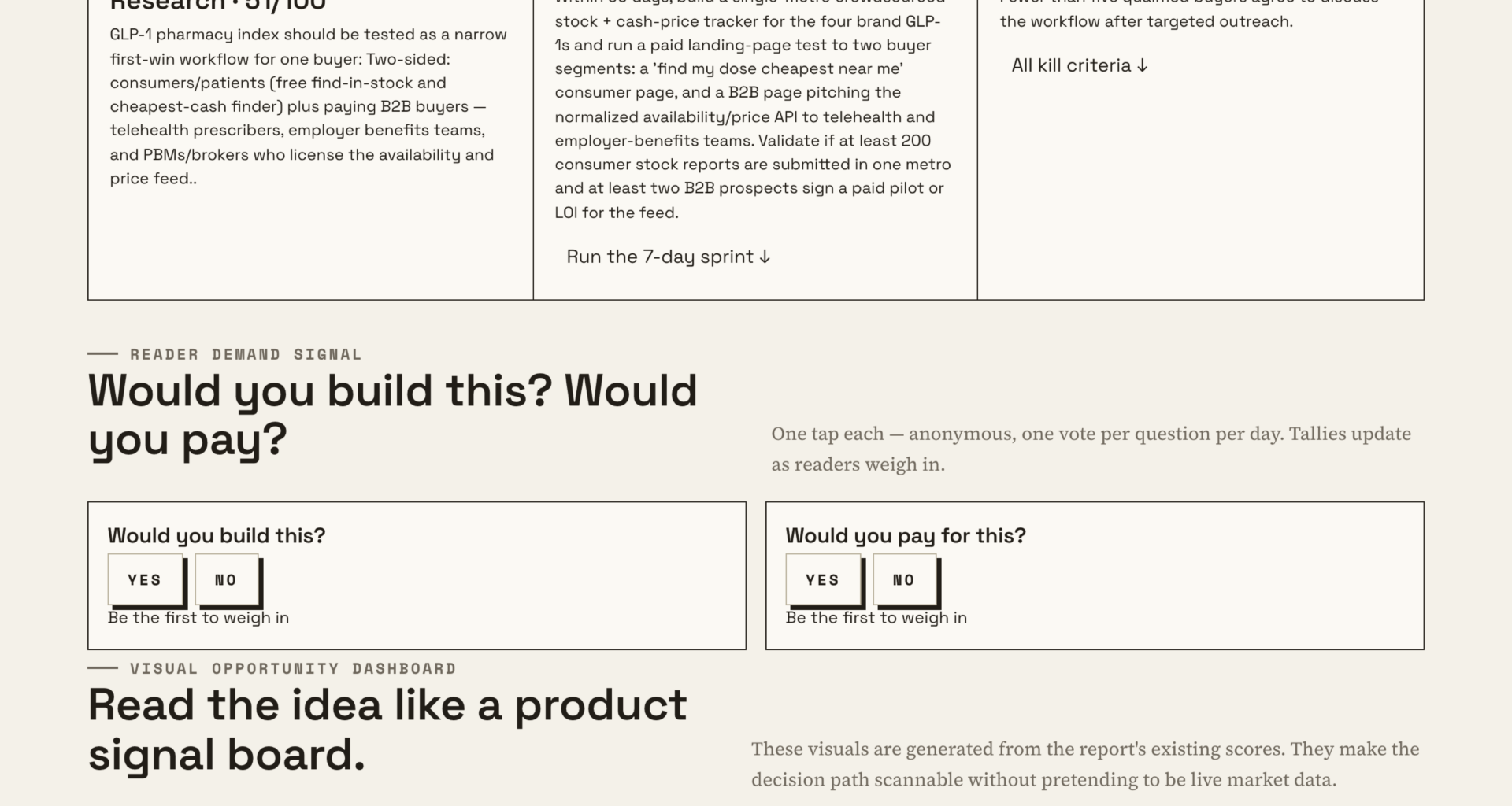

📊 Full opportunity report: How Much Do Brand-Name GLP-1 Drugs Cost Without Insurance? on IdeaNavigator AI — validation score, market gap, and execution plan.

Get business pricing on office and shipping supplies
- Business-only prices and quantity discounts
- Tax-exempt purchasing
- Multiple users, one account, clear invoices
TL;DR
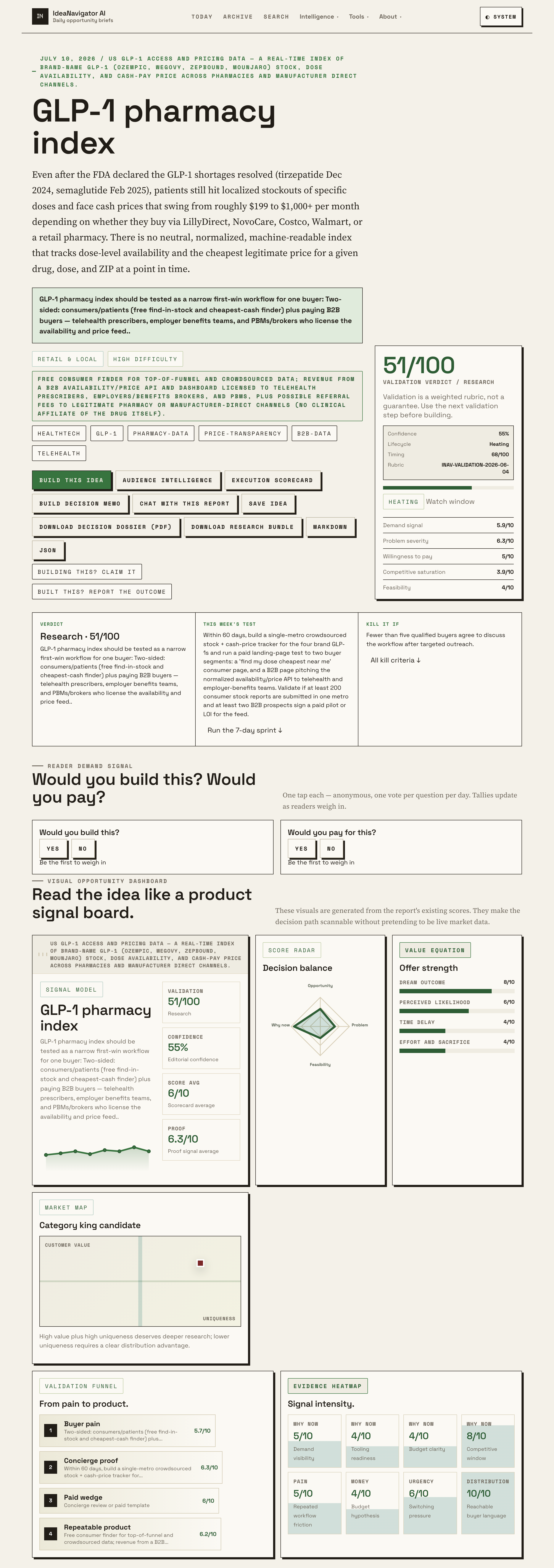
Brand-name GLP-1 cash prices are reported to range from roughly $199 to more than $1,000 per month, depending on the drug, dose and purchase channel. The figures point to a fragmented market after federal shortage listings ended, but no dated, dose-by-dose price survey or common comparison method is provided.
Cash prices for brand-name GLP-1 drugs can range from about $199 to more than $1,000 per month, depending on the drug, dose, location and sales channel, according to a market brief from IdeaNavigator AI. The brief says patients can still encounter local gaps in specific doses even after federal shortage listings for tirzepatide and semaglutide ended, leaving people paying without insurance to compare a fragmented mix of manufacturer programs and retail pharmacies.
The brief identifies Ozempic, Wegovy, Zepbound and Mounjaro as the brand-name products a price and availability index could track. It says cash prices differ among manufacturer-direct channels such as LillyDirect and NovoCare, retailers including Costco and Walmart, and other pharmacies. The stated range is approximate: the brief does not specify a survey date, list prices for each drug and dose, or explain whether the figures include fees, discounts or other conditions.
Availability can also vary by dose and ZIP code, according to the brief. While it says the FDA shortage listings for tirzepatide and semaglutide were resolved in December 2024 and February 2025, respectively, patients may still encounter localized stockouts of particular doses. A listing that a drug is no longer in shortage nationally does not, by itself, establish that every pharmacy has every dose available.
The proposed response is a consumer website that would show reported stock and cash prices for a selected drug, dose and ZIP code, with alerts for availability changes. The brief also proposes licensing a normalized price and availability feed to telehealth prescribers, employer benefits teams, pharmacy benefit managers and brokers. Those are product and business proposals; the brief does not say that the index has launched or that buyers have signed up.
Why Dose-Level Prices Matter
For people paying cash, the gap between roughly $199 and more than $1,000 a month could materially affect which legitimate purchase channel they can afford. A price comparison is only useful when it matches the prescribed drug and dose and makes clear what is included in the quoted amount. Prices that cannot be compared on the same terms may leave patients spending time checking multiple pharmacies without knowing whether a lower figure applies to them.
The issue also reaches employers and benefits managers. IdeaNavigator AI says GLP-1 drugs account for roughly 20% of pharmacy spend for employers, but it does not provide a survey, date or definition for that estimate. If accurate for the employers concerned, the figure helps explain why buyers may want better data on prices and availability. A price index could support comparison and planning; the brief does not establish that it would lower drug costs or resolve supply gaps.
From Shortages to Fragmented Access
The development described is a shift in the access problem. The FDA shortage listings for tirzepatide and semaglutide ended in late 2024 and early 2025, according to the brief. It says subsequent deadlines for compounded versions and the arrival of manufacturer cash-pay channels added to a more complex set of options. Its timeline also includes the TrumpRx portal in February 2026.
These changes do not amount to a single standardized marketplace. Manufacturer programs, retail pharmacies and discount pricing services can display different prices and availability, while stock may differ for each dose and location. The brief argues that no neutral, machine-readable index currently brings those details together. It offers that as a market assessment, without documenting a survey of existing services or defining how neutrality would be measured.
The proposed index would combine public price information with crowdsourced stock reports, then standardize entries by drug, dose and ZIP code. That approach would depend on current, comparable listings and timely user reports. The brief frames it as a narrow first product for consumers and a potential data feed for business customers.
What the Price Range Leaves Open
The reported price span is not a current, itemized comparison. The brief does not identify which products or doses correspond to its low and high figures, when each price was observed, or whether eligibility rules, shipping, membership costs or pharmacy fees affect the total. Readers therefore cannot use the range alone to determine what a specific prescription would cost today.
It is also unclear how widespread localized dose stockouts are. No pharmacy-level inventory dataset, geographic sample or reporting period is provided. The brief does not name an operating index, confirm a launch date, or identify any B2B customers. Its claim that no neutral index exists is not accompanied by a review of competing price tools.
The FDA shortage status and local shelf availability are separate questions. The brief describes the listings as resolved but does not provide current stock checks. Availability can change, and a crowdsourced report would need a timestamp and a way to distinguish a confirmed pharmacy listing from an older or unverified report.
The Proposed 60-Day Test
IdeaNavigator AI proposes testing the concept in one metro area over 60 days. The proposed consumer page would let users search by drug, dose and ZIP code, while a separate business page would pitch an availability and price feed to telehealth and employer benefits buyers.
The brief sets two validation targets: at least 200 consumer stock reports in the selected metro and at least two B2B prospects signing a paid pilot or letter of intent. These are proposed milestones, not results already achieved. The brief does not name the metro, provide a start date or report that the test is underway.
If pursued, the test would show whether consumers contribute enough timely reports and whether business buyers will pay for the data. Until results are available, the proposed index remains an idea for comparing cash prices and dose availability, rather than a service patients can rely on.
Source: IdeaNavigator AI
Key Questions
How much do brand-name GLP-1 drugs cost without insurance?
The market brief gives an approximate range of $199 to more than $1,000 per month across products and channels. It does not break that range down by drug, dose or purchase terms, so a patient’s actual cash price may differ.
Which brand-name drugs are included?
The proposed index would cover Ozempic, Wegovy, Zepbound and Mounjaro, with prices organized by drug, dose and ZIP code.
Does the end of a federal shortage listing mean every dose is in stock?
No. The brief says patients may still face localized stockouts of particular doses. A nationwide shortage listing and the inventory at a specific pharmacy are different measures.
Is the proposed price and availability index available now?
The brief describes a proposed tool and a 60-day, single-metro test. It does not report that the index has launched or that the test has begun.
Source: IdeaNavigator AI
Evergreen bestsellers Picks
bestsellers
As an affiliate, we earn on qualifying purchases.