
🔍 Read the full analysis: Could AI Make A Horror-Comedy In One Night? Our Hollow House Story on ThorstenMeyerAI.com

Get business pricing on office and shipping supplies
- Business-only prices and quantity discounts
- Tax-exempt purchasing
- Multiple users, one account, clear invoices
TL;DR
Thorsten Meyer says he made Hollow House, a 97-second horror-comedy with AI-generated characters, voices and sets, between the evening of Oct. 27 and about 1:30 a.m. Oct. 28, 2026. The project took three versions and 2,220 Higgsfield credits; Meyer says the decisive improvements came from human choices about pacing, casting consistency and colour grading.
Filmmaker Thorsten Meyer says he made Hollow House, a 97-second horror-comedy short with AI-generated characters, voices and sets, in three versions between the evening of Oct. 27 and about 1:30 a.m. Oct. 28. In a behind-the-scenes account published Oct. 28, Meyer says the first two attempts failed to deliver the pace he wanted, making the short a small-scale example of how much human editing and judgment can shape AI-generated video.
The story follows a real ghost joining the scare crew at an extreme haunted attraction. When a guest uses the safe word, the haunting does not stop; the staff respond by treating the ghost as a workplace problem. Meyer describes the 1:37 film as having been made with AI-generated visuals, voices and settings, and links to the short on YouTube.
The work took three versions. The first, made from 20 shots, ran 2 minutes 15 seconds. Meyer says it looked good but felt boring. The second ran 2 minutes 21 seconds and used 66 fast cuts. For the final version, he made three roughly 30-second segments with one video model given references for the whole cast; that version runs 97 seconds.
Meyer reports spending 2,220 Higgsfield credits across the three versions, which he valued at about $95 at his plan’s price, along with around 2,100 ElevenLabs characters for music and sound effects. He says he first created eight character-reference images with Google’s Nano Banana 2 through Higgsfield, then used those references for later frames and video. These production details come from Meyer’s account; they have not been independently verified.
One night · Three cuts · One human editor
Could AI Make a Horror-Comedy in One Night?
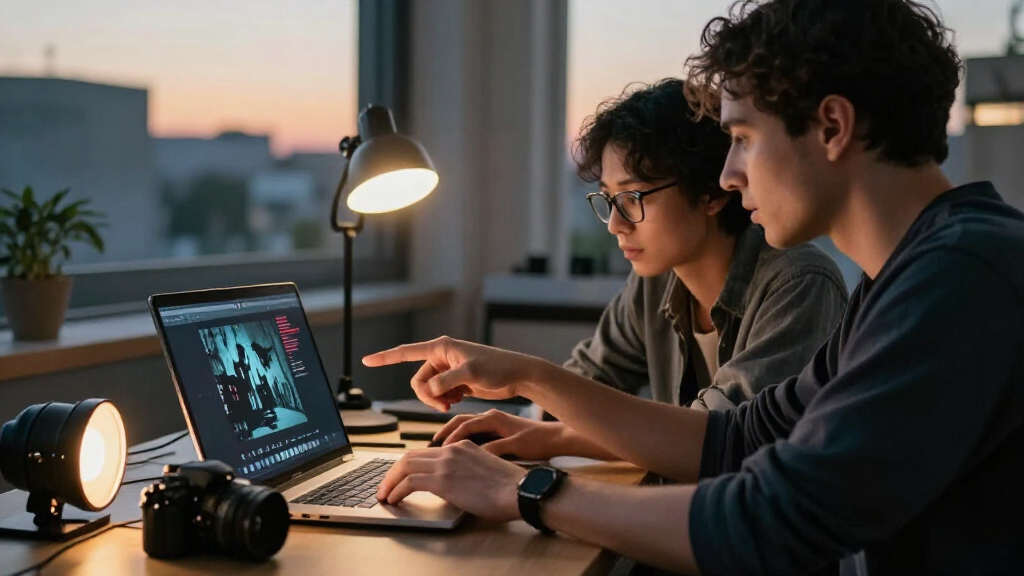
Hollow House follows a real ghost hired by an extreme haunted attraction—until a guest says the safe word and the scare crew treats the haunting like a workplace issue. Filmmaker Thorsten Meyer says he made the 97-second short overnight with AI-generated characters, voices and sets.
The edit evolved
Three versions, one night
Meyer says production began in the early evening on Oct. 27, 2026, and ended around 1:30 a.m. the next morning. Each cut changed the approach.
01 · First attempt
Good-looking, too slow
20 shots · 2:15 runtime
Meyer says the consistent visuals could not rescue the pacing. He called the result “terribly boring and amateurish.”
02 · Faster cut
More cuts, still revising
66 fast cuts · 2:21 runtime
The second version pushed the pace. Meyer continued refining the structure and generation method.
03 · Final version
Cast continuity, tighter story
3 segments · 97 seconds
One video model received references for the whole cast across three roughly 30-second segments.
From idea to finished cut
The overnight workflow
The tools generated material; Meyer’s account describes the choices and checks that shaped it into a short film.
Reference the cast
Eight character images helped guide faces, hair and costumes across shots.
Generate the scenes
Starting frames and video generations supplied visuals, speech and sound.
Check and revise
Dialogue was checked against the script; prompts and shots were adjusted.
Edit for comedy
Cut timing, shot selection and colour grading shaped the final rhythm.
Why the first cut fell flat
Comedy runs on timing
Meyer compared the first cut’s shot length with his count of cuts in the short that inspired the project.
Average image duration
Meyer’s measurements, as reported in his account
Tools and trade-offs
AI generated scenes; people directed the film
Meyer describes a mixed process involving generation, review and workarounds when actions or speech did not come out as intended.
Nano Banana 2
Used through Higgsfield to create eight cast reference images.
Veo 3.1
Used for animated shots in the first attempt, with speech and sound.
Whisper
Transcripts were compared with the script; one “HEY!” became “H-E-Y!”
ElevenLabs
About 2,100 characters used for music and sound effects, Meyer reports.
Read the claim carefully
What this account does—and does not—show
The production details are Meyer’s report of one project. They have not been independently verified.
Creator’s account
The timing, tool use, credit total and comparisons come from Meyer. No independent audit of the workflow or credits is provided.
About $95
This is the value Meyer assigns to credits at his plan price. It does not establish total expenses or a broader cost comparison.
One short, not a rule
Planning time and audience response are not specified. The account does not show that similar films can routinely be made overnight at this cost.
Quick answers
Hollow House at a glance
What is Hollow House?
A 97-second horror-comedy about a real ghost joining the staff of an extreme haunted attraction.
How long did it take?
Meyer says the three versions were made from the evening of Oct. 27 until about 1:30 a.m. Oct. 28, 2026. Earlier planning time is unclear.
How much did it cost?
He reports 2,220 Higgsfield credits, valued at about $95 at his plan price, plus around 2,100 ElevenLabs characters.
Was it entirely made by AI?
Meyer says the characters, voices and sets were AI-generated. His account also describes human writing, direction, review and editing.
Source: ThorstenMeyerAI.com · Meyer’s behind-the-scenes account, published Oct. 28, 2026. His account links to the finished short on YouTube.
Why the First Cut Fell Flat
Meyer’s account highlights a distinction between generating attractive images and making a film work. He says the initial 20-shot version had a consistent look, but its average shot lasted 5.6 seconds. By comparison, he counted about 74 cuts in the short that inspired the project, averaging roughly 1.8 seconds per image. Those figures are Meyer’s measurements, not an independently reviewed comparison.
For a comedy, a pause or cut can determine whether a joke lands. Meyer says he responded by changing the edit’s pace and the way the video was generated, rather than treating image quality as the main obstacle. He identifies three human decisions as decisive: calling the first version boring, giving a single model references for the full cast in the third attempt, and applying the final colour grade.
The project also offers a concrete account of current production trade-offs. Meyer says some actions did not come out as intended, and that speech sometimes needed checking or retakes. The result does not establish how AI filmmaking works in general, but it shows the creator’s process on one short, including revisions that still required human direction.
Products Worth Considering

HP Sprocket Photo Booth Machine Instant Color Photo Printer with 10.1 Touchscreen, LED Ring Light, 250+ Frames, 3×4 ZINK Paper, QR Code Shar

HP Sprocket Panorama Portable Color Photo and Label Printer
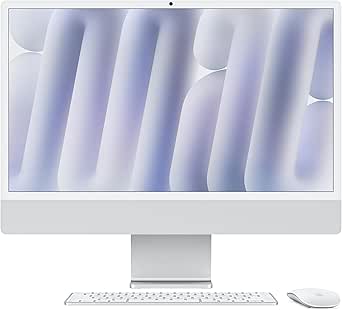
Apple iMac 2024 All-in-One Desktop with M4 Chip, 24‑inch Retina Display, 16GB Unified Memory, 256GB SSD, Silver
As an affiliate, we earn on qualifying purchases.
Three Versions, One Night
Meyer says production began in the early evening on Oct. 27 and ended at about 1:30 a.m. the following morning. Before generating clips, he made a reference image for each of the film’s eight characters. He describes those images as a way to keep faces, hair and costumes more consistent across shots, since visual details can change between generations.
In the first version, Meyer wrote a list of 20 shots, generated a starting image for each with Nano Banana 2 and animated them with Google’s Veo 3.1 in fast mode. Veo generated speech and sound with the footage, according to his account. He later checked the dialogue using Whisper, an OpenAI speech-recognition model, and compared the transcripts with the script. That review caught, among other errors, a shouted “HEY!” rendered as the spoken letters “H-E-Y!”
The premise was inspired by an AI horror-comedy short shared on X, Meyer says. He says Hollow House’s script, characters and jokes are his own. His account also describes model limitations: a requested full head turn instead moved the character’s body, a first attempt to show a guest being lifted was blocked, and a backward-bending stunt became a forward crawl. He says he adjusted prompts or used a still image and sound effect to work around some problems.
““terribly boring and amateurish.””
— Thorsten Meyer, describing his reaction to the first version
What the Account Does Not Establish
The production figures, timing and comparisons are reported by Meyer, and the source material does not provide an independent audit of the credits, tool use or workflow. The approximately $95 figure is based on his plan price; the account does not give a broader cost comparison or say whether the estimate includes other expenses.
It is also unclear how much time was spent writing, selecting generations or editing beyond the stated overnight production window, and the account does not provide audience or critic response to the finished short. The article supports a description of one creator’s process, not a conclusion that a comparable film can routinely be completed in one night or at the same cost.
Where to See the Finished Short
Meyer’s account links to the completed Hollow House short on YouTube and includes behind-the-scenes material, such as character sheets, starting frames, failed attempts and a contact sheet of the final cut. The source does not announce another version, a follow-up film or a further production milestone. Any additional details about the project would depend on updates from Meyer.
Key Questions
What is Hollow House?
Hollow House is a 97-second horror-comedy about a real ghost joining the staff of an extreme haunted attraction. Meyer says its characters, voices and set were AI-generated.
How long did it take to make?
Meyer says he worked on the three versions from early evening on Oct. 27 until about 1:30 a.m. Oct. 28, 2026. The account does not specify how much earlier planning or writing took place.
Why were there three versions?
Meyer says the first version looked good but felt too slow, while the second used faster cuts. The final version was made in three segments using one model with references for the full cast.
How much did the project cost?
Meyer reports using 2,220 Higgsfield credits, worth about $95 at his plan price, plus roughly 2,100 ElevenLabs characters for music and sound effects. The figure is his estimate and does not describe every possible production expense.
Was the short entirely made by AI?
Meyer says the film’s characters, voices and sets were AI-generated. His account also describes human choices in writing, prompting, selecting and revising shots, checking dialogue, editing and colour grading.
Source: ThorstenMeyerAI.com