
🔍 Read the full analysis: IBM’s CEO: Open-Weight Models Are Close, On-Prem AI Is A Volume Bet on ThorstenMeyerAI.com

Get business pricing on office and shipping supplies
- Business-only prices and quantity discounts
- Tax-exempt purchasing
- Multiple users, one account, clear invoices
TL;DR
IBM CEO Arvind Krishna said open-weight models can deliver about 90% of frontier-model performance at a fraction of the token cost, making on-premises AI attractive to some large companies. An Artificial Analysis comparison puts the strongest currently downloadable model at about 80% of its proprietary leader; lower operating costs also depend on hardware utilization, staffing and infrastructure.
IBM CEO Arvind Krishna said on the company’s October 21 earnings call that open-weight AI models can be about 90% as effective as leading proprietary models at a fraction of their token cost, making it worth considering AI systems run on company-owned infrastructure. A benchmark comparison published by Artificial Analysis puts the best downloadable model at about 80% of the current proprietary leader, while the economics of buying servers depend heavily on how much they are used.
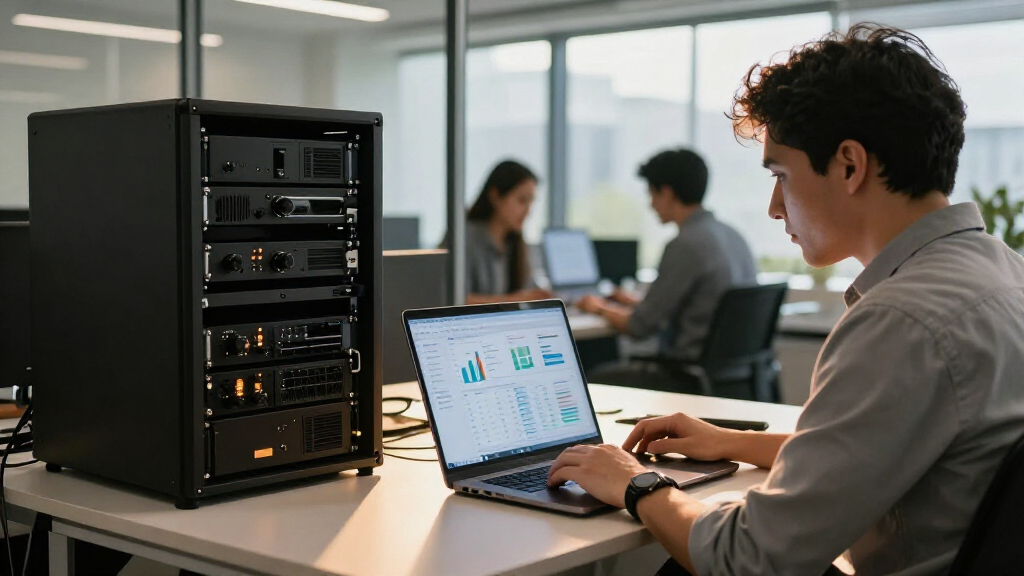
In the earnings-call Q&A, Krishna said open-weight models could cost “25% to 10% of the token cost” of frontier models while being “90% as effective.” He said a large enterprise could begin with “two or three racks.” The figures were part of his argument for matching less expensive models to routine tasks, rather than using the most capable model for every request. Krishna cited summarizing emails, reviewing contracts, answering customer calls and composing emails as examples.
Artificial Analysis’s index, read October 26, gives MiMo-V2.6-Pro the highest score among models with downloadable weights: 46.3. The leading proprietary model, Claude Opus 5.5, scores 57.6, putting MiMo at roughly 80% of the leader on that index. The source’s historical comparisons put the open model at 51% of the proprietary leader at the end of 2024 and 74% at the end of 2025. These are index scores, not a direct measure of performance on every company’s tasks.
One possible exception is Kimi K3.1 Pro, which scores 55.1, or about 96% of Claude Opus 5.5 on the same index. But the model’s weights had not been released as of October 26; its maker, Moonshot, had promised them “by Nov 4.” Until they are available, it is not an open-weight option for companies to download and deploy. The source also says no licence had been published, adding uncertainty about the terms of any release.
IBM's 90% claim, checked
Open weights reach 80% of the leader
Krishna says open-weight models are "90% as effective". On an independent index the best model you can download today reaches 80% of the best closed one, up from about half two years ago.
Best open model as a share of the best closed
Artificial Analysis Intelligence Index, current version, best downloadable vs. best proprietary model at each date.
What Krishna said
Illustrations from the earnings call, not a named benchmark.
- Late 2024"70" vs. "20 or 30"Krishna, Q3 call, 21 Oct · no named benchmark
- Late 2025"70 to 50"Krishna, Q3 call, 21 Oct · no named benchmark
- Now"90% as effective"Krishna, Q3 call, 21 Oct · no named benchmark
Top downloadable models today
Intelligence Index score and licence type. Read the licence before the leaderboard.
| Model | Index | Licence |
|---|---|---|
| MiMo-V2.6-Pro Xiaomi | 46.3 | MIT |
| DeepSeek V4.1 Flash 1017 DeepSeek | 45.1 | MIT |
| GLM-5.3 Z AI | 44.8 | own commercial licence |
| Step 5 Preview StepFun | 43.7 | own commercial licence |
| Muse Spark Open Meta | 38.9 | licence with conditions |
In points the gap did not shrink: 7.5 points at the end of 2024, 11.3 today. Closed models moved too.
Sources: Artificial Analysis, Intelligence Index v4.3.2 (read 26 Oct 2026), IBM Q3 2026 earnings call transcript (21 Oct 2026), Artificial Analysis on Kimi K3.1 Pro (23 Oct 2026).
Powered by Thorsten Meyer AI
The Economics of Running AI In-House
Krishna’s pitch matters because it links progress in downloadable models to a purchasing decision: whether an enterprise should pay a provider for each request or invest in infrastructure it controls. For organizations processing large volumes of AI tasks, a lower per-token cost could make self-hosting attractive. But a model’s benchmark score alone does not determine the total cost or whether it can do a company’s work reliably.
The source’s hardware comparison illustrates the utilization risk. An eight-GPU H200 server is listed from $172,643, while renting the same GPU class on AWS is listed at $63.30 an hour. On those figures, buying reaches the rental-equivalent cost in about 114 days at full utilization, but takes about 15 months at 25% utilization, before staffing, cooling and networking. These are illustrative list-price calculations, not a complete operating-cost analysis or a forecast of savings.
Control and data handling are part of the case, too. Krishna said banks and trading firms want AI run “in a way that is sovereign,” so that outside parties cannot access underlying data or logs. On-premises deployment may give an organization greater control over where its data and systems reside, but the source does not establish that every deployment automatically meets a company’s security, regulatory or operational requirements.
Products Worth Considering

Logitech MX Mechanical Wireless Illuminated Keyboard, Tactile Quiet, Graphite

Canon PIXMA PRO-200S Wireless Professional Inkjet Photo Printer

LG 34GX90SA-W 34-inch Ultragear WQHD OLED Curved Gaming Monitor
As an affiliate, we earn on qualifying purchases.
What Krishna Said on the Call
Krishna described the performance gap as having narrowed over time. He recalled that in late 2024 a top model might score 70 on a broad benchmark while an open model scored 20 or 30; by late 2025, he said, the comparison was 70 to 50. He used those figures to frame the price trade-off, rather than naming a specific benchmark for that part of his answer. Artificial Analysis offers a separate comparison using its own index and classifications.
His comments also identified a practical constraint: companies need people able to operate the underlying systems. Krishna asked, “Where are my kernel engineers? Where are the people who worry about the underlying network?” He said the talent gap remained outside the most sophisticated enterprises and described frontier cloud services as more expensive but “the easy answer.” That caveat matters: purchasing hardware does not by itself provide the engineering capacity to run models at scale.
IBM has a commercial interest in the shift Krishna described. The company sells infrastructure, and the source reports that he expects on-premises AI demand to support sales of IBM Spyre cards. IBM also said in prepared remarks that its llm-d project can run large models at “5 to 10 times lower cost”; the source presents that as an IBM claim, not as an independently verified measurement. The supplied report also says IBM mainframe revenue fell 20% in the quarter, citing The Register.
Open Weights and Costs Still Unsettled
The comparison does not establish that open-weight models are 90% as effective across all uses. Krishna’s estimate was not tied in the call to the Artificial Analysis index, whose current comparison places the best available downloadable model at about 80% of the proprietary leader. Results may also differ by task, model version and deployment setup.
Kimi K3.1 Pro’s status remains a key uncertainty: its reported score approaches the proprietary leader, but its weights were not yet available, and release timing and licensing terms could affect whether companies can use it. Licences differ among downloadable models, so “open-weight” does not by itself establish that commercial deployment is unrestricted.
The cited price and break-even figures are also incomplete measures of cost. They do not include staffing, cooling, networking or other operational expenses, and the outcome changes with utilization. IBM’s own llm-d cost-reduction statement has not been independently measured in the supplied material. Nvidia had not commented on the reported GeForce firmware issue described by the source, and that separate enthusiast development does not establish enterprise AI performance or economics.
Model Releases and Deployment Decisions
The next near-term test is whether Moonshot releases Kimi K3.1 Pro’s weights on the promised schedule of November 4, and what licence accompanies them. A release would make it possible to assess whether the high index score is available to organizations seeking downloadable models; it would not, on its own, establish the model’s suitability or cost in a particular deployment.
For enterprises, the practical next step is comparing models on their own workloads and calculating total operating costs at realistic utilization levels. The index can help frame the performance gap, but decisions also depend on licensing, engineering capacity, data controls and whether self-hosted infrastructure will be busy enough to justify its cost. IBM’s financial results and later customer deployments may show whether Krishna’s volume-based case translates into demand for on-premises systems.
Key Questions
What did IBM CEO Arvind Krishna claim about open-weight models?
Krishna said open-weight models can cost 10% to 25% as much per token as frontier models while being “90% as effective.” That is his estimate from the earnings call, not a result confirmed across all tasks by the benchmark figures cited here.
How close is the best currently downloadable model to the proprietary leader?
Artificial Analysis lists MiMo-V2.6-Pro at 46.3 and Claude Opus 5.5 at 57.6, putting the downloadable model at roughly 80% of the leader on that index as read October 26, 2026.
Is Kimi K3.1 Pro available as an open-weight model?
Not according to the source’s status on October 26. Moonshot had promised to release the weights “by Nov 4,” but the weights and a licence had not yet been published.
Does buying AI servers automatically cost less than renting them?
No. The cited comparison reaches the rental-equivalent cost after about 114 days at full utilization, or about 15 months at 25% utilization, before staffing and other operating expenses. Actual costs depend on utilization and the full deployment setup.
Source: ThorstenMeyerAI.com