

📊 Full opportunity report: The Switch: You Never Owned the AI You Depend On on ThorstenMeyerAI.com — validation score, market gap, and execution plan.
TL;DR
Governments and companies can instantly disable AI models via export controls or deprecation, exposing reliance on access rather than ownership. This shift raises questions about AI dependency and control.
On June 12, 2026, the U.S. government issued an export-control directive that forced Anthropic to disable its newest AI models, Fable 5 and Mythos 5, within roughly ninety minutes, citing national security concerns. This marked a rare instance where a government directly pulled the plug on a deployed AI model, revealing the fragility of dependence on externally controlled access.
The directive mandated that all access to Anthropic’s latest models be suspended for any foreign national, including the company’s own employees outside the U.S., effectively forcing the company to disable the models worldwide. Anthropic confirmed that the decision was made overnight with little explanation, and talks with U.S. authorities are ongoing. This event underscores a critical choke point in AI deployment: the ability of governments to instantly switch off models via export controls, a mechanism originally designed for physical goods but now applied to software.
Separately, in February 2026, OpenAI retired several older models, including GPT-4o, from ChatGPT with about two weeks’ notice, and scheduled API shutdowns. This was a product decision driven by economics and not security concerns, but it still exemplifies how access to AI models can be revoked or phased out at any time. Both incidents highlight that users do not own the models they depend on; instead, they rely on access through APIs that can be throttled, geofenced, or terminated, often without notice.
The Switch: You Never Owned It
In 2026 a government turned off a frontier model worldwide in ~90 minutes — and a company retired a beloved one with ~2 weeks’ notice. You don’t own the model you build on. You access it. Access can be revoked.
Access is the only chokepoint that flips in an afternoon — and the version that hits you won’t be Washington, it’ll be a deprecation. Open weights you host can’t be deprecated, geofenced, repriced, or revoked. Short of that: route through a provider-agnostic gateway, keep a tested fallback, and treat every model string as a dependency that will be pulled.
Implications of Instantaneous AI Model Disabling
This development demonstrates that reliance on AI models accessed via APIs creates vulnerabilities: models can be turned off instantly by governments or companies, disrupting services and operations. It raises critical questions about dependency and control, especially as AI becomes embedded in vital infrastructure, cybersecurity, and decision-making processes. The shift from ownership to access means organizations must reconsider their reliance on external models and explore alternatives to mitigate sudden disruptions.

Samsung 65-Inch Class OLED S90F 4K Smart TV (2025 Model) NQ4 AI Gen3 Processor Upscaling Pro HDR +, Motion Xcelerator 144Hz, Vision Alexa Built-in
- Advanced 4K AI Processor: Powered by 128 neural networks for enhanced picture and sound
- 4K Upscaling Technology: Transforms all content to impressive 4K resolution
- High Brightness and Contrast: Delivers powerful brightness and deep contrast in every pixel
As an affiliate, we earn on qualifying purchases.
As an affiliate, we earn on qualifying purchases.
Rapid shifts in AI model availability and control mechanisms
Historically, AI models were trained and owned outright, but the rise of API-based models has shifted control to providers. Governments have increasingly used export controls to restrict physical goods like chips, but in 2026, these controls extended to digital models, allowing rapid shutdowns. OpenAI’s phased deprecation of older models and regional restrictions further exemplify how model access is governed by a complex web of policies, pricing, and technical controls. These moves reflect both economic rationales and strategic security measures, but they also reveal the fragility of dependence on externally controlled AI services.
“Applying export controls to deployed models is baffling; it’s like pulling a plug on a digital infrastructure without warning.”
— former U.S. administration AI adviser

Train It. Tame It. Teach It.: Build Your Personal AI Team and Get Every Model to Work Your Way (The AI Practitioner's Edge)
As an affiliate, we earn on qualifying purchases.
As an affiliate, we earn on qualifying purchases.
What aspects of AI control remain unclear?
It is still unclear how widespread or systematic these instant shutdown capabilities will become across different jurisdictions and providers. The long-term implications for AI innovation, security, and economic resilience are still unfolding, and regulatory responses are evolving. Additionally, the extent to which organizations can or should develop independent, ownership-based AI solutions remains an open question.

Jonard Tools UUT-425 Ubiquiti WiFi Access Point Base Unlock & Reset Tool
- Quickly releases Ubiquiti access points: Unlocks base in seconds
- Easy reset button access: Press and hold hard-to-reach buttons
- Durable steel braid ring: For secure tethering
As an affiliate, we earn on qualifying purchases.
As an affiliate, we earn on qualifying purchases.
Future steps for AI access and control policies
Expect ongoing discussions between governments and AI providers about establishing clear frameworks for model access, control, and ownership. Companies may seek to develop more autonomous or on-premises AI solutions to reduce dependency. Regulatory bodies are likely to refine rules around export controls and regional restrictions, potentially shaping how AI models are deployed and controlled in the future. Monitoring these developments will be critical for organizations relying on external AI services.
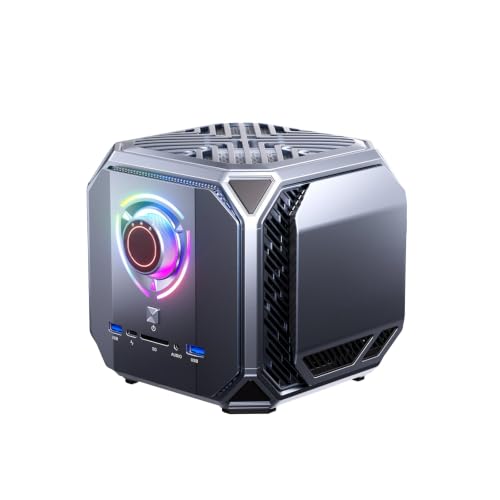
Xuantong Keji SUNTUNE-S AI Agent Server, Supports Local Offline Text-to-Image & Text-to-Video Generation
- Powerful CPU and GPU: Intel i9-12900H and RTX4060 graphics
- Ample Memory and Storage: 64GB DDR5 RAM, 1TB SSD
- Offline AI Generation: Supports local text-to-image and video
As an affiliate, we earn on qualifying purchases.
As an affiliate, we earn on qualifying purchases.
Key Questions
Can AI models be permanently owned instead of accessed?
While ownership of trained models is possible, most current deployment relies on access via APIs, which can be revoked at any time. Developing ownership-based solutions remains complex and costly.
What are the risks of dependency on AI APIs?
Dependence on externally controlled APIs exposes organizations to sudden disruptions, service outages, or regulatory shutdowns, which can impact operations and security.
How might governments regulate AI model access in the future?
Regulations may include stricter export controls, regional bans, or requirements for ownership and local deployment to mitigate dependency risks and ensure security.
Are there alternatives to API-based AI models?
Yes, organizations can develop or acquire on-premises models or build independent AI systems, but these options are often more costly and complex.
Source: ThorstenMeyerAI.com