
You should prioritize air quality in workplace planning because it directly affects your employees’ health, focus, and productivity. Poor air can cause headaches, fatigue, and even long-term health issues, while good ventilation and indoor plants can boost alertness and reduce sick days. Creating a healthier environment improves comfort and efficiency. If you want to discover effective ways to enhance your workspace’s air quality, keep exploring how these strategies make a difference.

Get office and shipping supplies delivered free — and shop member deals
- Fast, free delivery on millions of items
- Access to Prime Big Deal Days deals on October 6–7
- Prime Video, Amazon Music and more included
Key Takeaways
- Good air quality enhances employee health, reducing sick days and long-term health issues.
- It improves focus and productivity by minimizing headaches, fatigue, and concentration difficulties.
- Incorporating plants and proper ventilation creates a healthier, more comfortable work environment.
- Regular maintenance of ventilation systems ensures effective removal of indoor pollutants.
- Prioritizing air quality supports overall workplace safety, well-being, and operational efficiency.

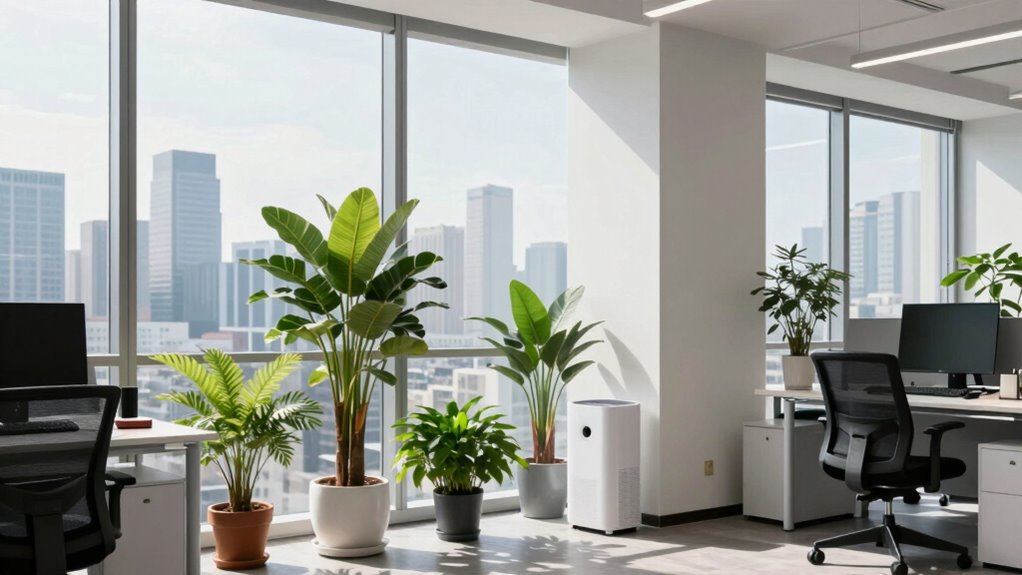
Have you ever wondered how the air you breathe at work impacts your health and productivity? It’s easy to overlook, but the quality of indoor air plays a vital role in your daily performance and overall well-being. Poor air quality can lead to headaches, fatigue, difficulty concentrating, and even long-term health problems. That’s why integrating good air quality practices into workplace planning isn’t just a luxury—it’s a necessity. When designing or updating your work environment, paying attention to factors like indoor plants and ventilation systems can make a significant difference. Indoor plants are more than just decorative elements; they actively improve air quality by absorbing carbon dioxide and releasing oxygen. Some plants also filter out harmful toxins, such as formaldehyde and benzene, which can accumulate from office equipment, furniture, and cleaning products. Placing a few well-chosen indoor plants near your desk or communal areas can boost air freshness naturally, contributing to a healthier workspace.
However, relying solely on plants isn’t enough. Ventilation systems are the backbone of maintaining good air quality, especially in enclosed offices. Proper ventilation ensures a steady flow of fresh air, diluting pollutants, odors, and airborne pathogens. Modern ventilation systems are designed to filter out airborne contaminants, control humidity, and regulate temperature, creating a more comfortable environment. When these systems are well-maintained and properly integrated into workplace planning, they reduce the risk of indoor air pollution and improve overall air exchange. Regular inspections, filter replacements, and system upgrades help sustain ideal airflow and air purity. That means fewer sick days, increased alertness, and better focus for you and your colleagues. Incorporating indoor air quality considerations into your workplace design can lead to healthier long-term outcomes.
Incorporating these elements into your workplace planning isn’t complicated. It involves selecting the right indoor plants suited for indoor environments and ensuring your ventilation systems are up to date and properly maintained. Additionally, understanding the importance of ventilation systems and their role in removing pollutants can help you make informed decisions about system upgrades. Regular inspections, filter replacements, and system upgrades help sustain ideal airflow and air purity. Additionally, encouraging habits like opening windows when possible and avoiding the buildup of clutter that traps dust can further enhance air quality. Remember, a well-ventilated space with fresh, clean air helps you stay energized and alert, which in turn boosts productivity. Your workspace should be designed with air quality in mind, not as an afterthought. When you prioritize indoor air quality, you’re investing in a healthier, more comfortable, and more efficient work environment for yourself and everyone around you.
As an affiliate, we earn on qualifying purchases.
Frequently Asked Questions
How Often Should Workplace Air Quality Be Tested?
You should test workplace air quality at least quarterly, especially if your ventilation standards are flexible or if there are changes in occupancy or equipment. Regular pollutant monitoring helps identify issues early, ensuring a healthy environment. If your workplace has higher risks or stricter standards, consider testing more frequently. Consistent testing keeps you informed, maintains compliance, and promotes employee well-being, making it an essential part of workplace planning.
What Indoor Plants Improve Air Quality?
You might think indoor plants don’t substantially improve air quality, but research shows certain plants excel at air purification. Plant selection matters—species like snake plants, pothos, and peace lilies effectively remove toxins and boost oxygen levels. By incorporating these air-purifying plants into your workspace, you actively enhance air quality, creating a healthier, more productive environment. Small choices like plant selection truly make a meaningful difference in indoor air health.
Can Air Purifiers Eliminate All Indoor Pollutants?
Air purifiers can substantially improve indoor air quality, but they can’t eliminate all pollutants. Their limitations in pollutant removal effectiveness mean some particles, gases, or volatile organic compounds may remain. You shouldn’t rely solely on air purifiers for thorough air cleaning, especially for hazardous substances or high pollution levels. Instead, combine their use with good ventilation, source control, and regular cleaning to guarantee a healthier indoor environment.
How Does Humidity Affect Indoor Air Quality?
Think of your indoor air like a delicate garden; humidity is the weather that influences growth. Too much humidity, and mold can sprout like weeds, harming air quality. Proper humidity control keeps moisture levels balanced, preventing mold and other pollutants from thriving. By maintaining ideal humidity, you create a healthier environment, safeguarding your workspace from mold and ensuring cleaner, safer air for everyone.
Are There Specific Regulations for Workplace Air Quality?
Yes, there are specific regulations for workplace air quality. You need to follow occupational standards that set permissible exposure limits for airborne contaminants. Additionally, ventilation requirements are outlined to guarantee proper air circulation, reducing pollutants and maintaining a healthy environment. By adhering to these regulations, you protect employee health, comply with legal obligations, and create a safer workspace. Regular monitoring and maintenance of ventilation systems are essential to meet these standards effectively.
As an affiliate, we earn on qualifying purchases.
Conclusion
Prioritizing air quality in your workplace isn’t just a minor detail—it’s the lifeblood of a thriving, productive environment. When you breathe cleaner air, you’re fueling innovation and energy like a mighty engine roaring to life. Imagine your workspace as a sanctuary where every breath lifts your team to new heights. Don’t let poor air quality be the silent thief of productivity; instead, make it your mission to create an environment so pure, it feels like working inside a fresh mountain breeze.
As an affiliate, we earn on qualifying purchases.
air quality monitor for workplace
As an affiliate, we earn on qualifying purchases.
As an affiliate, we earn on qualifying purchases.
Halloween Picks
halloween
As an affiliate, we earn on qualifying purchases.