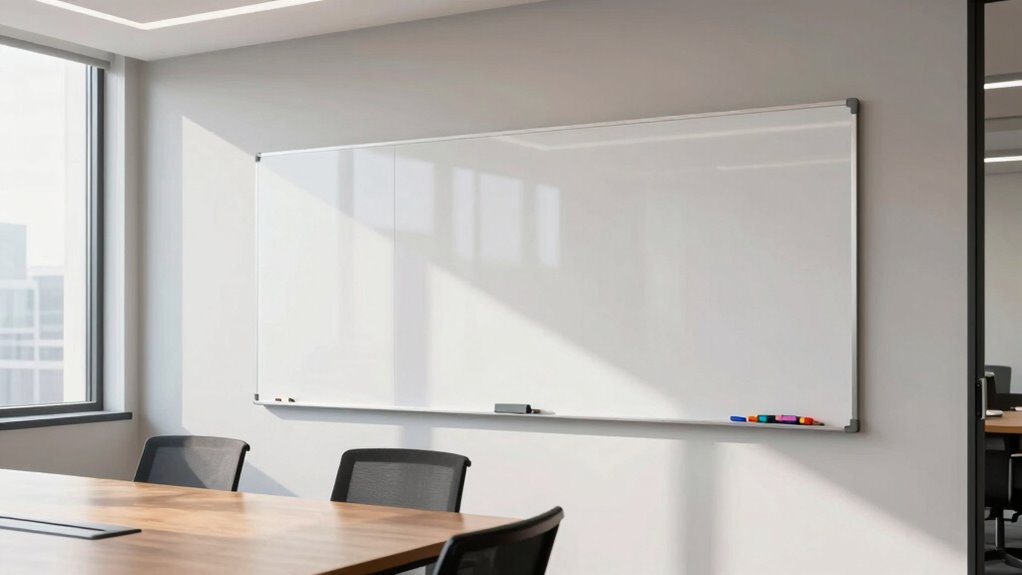

Proper whiteboard placement is key to boosting collaboration and productivity in your office. Position it at an accessible, eye-level spot to support easy interaction and minimize strain. Avoid awkward corners or obstructed views, ensuring everyone can see and contribute comfortably. Good placement also considers lighting and flow, making meetings more natural and engaging. If you want to discover more tips on optimizing your workspace for better results, keep exploring how strategic placement makes a difference.

Get business pricing on office and shipping supplies
- Business-only prices and quantity discounts
- Tax-exempt purchasing
- Multiple users, one account, clear invoices
Key Takeaways
- Proper placement enhances visibility and participation, making discussions more effective and inclusive for all team members.
- Ergonomically positioned whiteboards reduce physical strain and support comfortable, spontaneous note-taking and updates.
- Strategically placed whiteboards improve workflow by facilitating seamless idea flow and reducing unnecessary movement.
- Optimal placement minimizes glare and obstructions, enhancing lighting conditions and visual clarity.
- Thoughtful positioning fosters collaboration, engagement, and a more productive, cohesive office environment.
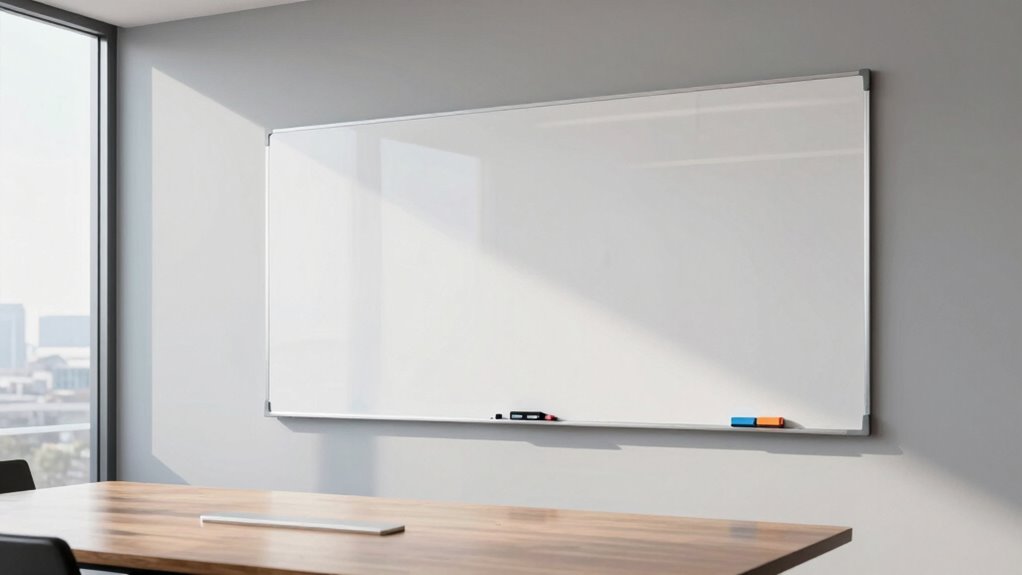
Have you ever wondered how the placement of a whiteboard can influence your office’s productivity? It’s more than just sticking it on a wall; it’s about strategic positioning that supports collaboration and efficiency. When you consider ergonomic design, you realize that a whiteboard should be within easy reach and at a height that minimizes strain. If it’s too high or too low, you and your colleagues will waste time adjusting posture or shifting awkwardly to write or read. Proper placement guarantees everyone can comfortably contribute and access the board without discomfort, reducing fatigue and maintaining focus during meetings or brainstorming sessions. Additionally, considering market insights about workspace ergonomics can help optimize the environment further. Visual accessibility plays a vital role too. If the whiteboard is placed where everyone can see it clearly, it naturally encourages participation and keeps discussions focused. Positioning it in a central location, ideally at eye level for most users, helps prevent anyone from straining to see details or read notes. When the board is obstructed by furniture, walls, or other objects, it hampers communication and causes unnecessary frustration. You want to create an environment where ideas flow freely, and that starts with guaranteeing the whiteboard is visible from all seating areas. This way, no one has to turn or strain their neck to catch what’s written, keeping attention on the discussion rather than on adjusting their position. Thinking about ergonomic design also means considering how the whiteboard’s placement impacts movement. You should avoid placing it in a corner or against a wall where reaching across the space becomes awkward. Instead, position it so that you can approach from multiple angles comfortably. This flexibility allows for spontaneous updates or notes without disrupting the flow of a meeting. Furthermore, good placement minimizes the need for people to stand up or stretch excessively, which can break concentration. It’s helpful to incorporate workspace ergonomics principles into your office setup to enhance overall comfort. Ensuring that the whiteboard’s location aligns with ergonomic principles can significantly improve overall workspace efficiency and reduce unnecessary strain. Considering Visual accessibility and other ergonomic factors together creates a more productive environment. For example, proper lighting can further improve visibility and reduce eye strain when using the whiteboard. Ultimately, the goal is to foster a workspace where communication is seamless and participation feels natural. When you pay attention to ergonomic design and visual accessibility, your office becomes a place where ideas can be shared effortlessly. A well-placed whiteboard encourages engagement, improves clarity, and keeps your team on the same page. It’s a simple change that can have a profound impact on your office’s productivity and collaborative spirit. So, next time you’re setting up or reorganizing, think about where your whiteboard lives — it might just be the key to smoother, more effective teamwork.
Frequently Asked Questions
How Does Whiteboard Placement Impact Employee Productivity?
Whiteboard placement directly impacts your productivity by enhancing visual clarity and facilitating digital integration. When positioned strategically, it’s easier for you to collaborate, share ideas, and access information quickly. Proper placement minimizes distractions and guarantees everyone can see and contribute without straining or confusion. This streamlined setup helps you stay focused, improves communication, and ultimately boosts your efficiency during meetings and brainstorming sessions.
What Are the Most Common Mistakes in Whiteboard Positioning?
You might be making the mistake of placing a tiny whiteboard on a huge wall, making it feel like a postage stamp in a stadium. Choose a whiteboard size that’s proportionate to the space and your team’s needs. Also, avoid wall colors that clash or make the whiteboard hard to see—select neutral or contrasting shades. Proper placement guarantees everyone can easily read and contribute, boosting collaboration.
How Can Whiteboard Placement Improve Team Collaboration?
You can boost team collaboration by placing the whiteboard where everyone can see and reach easily, fostering spontaneous creative brainstorming sessions. When everyone has clear access, it enhances visual communication, making ideas more accessible and discussions more dynamic. This setup encourages active participation, helps clarify concepts quickly, and keeps the team engaged. Effective placement turns the whiteboard into a central hub for collaborative thinking and problem-solving.
Are There Ergonomic Considerations for Whiteboard Placement?
Like a lighthouse guiding ships, proper whiteboard placement illuminates your workspace with clarity. You should consider ergonomic factors, ensuring the board is at eye level to reduce strain. Also, think about design aesthetics—placing it where it complements the room’s style boosts comfort and motivation. Acoustic considerations matter too; avoid placing it where sound echoes or distractions hinder focus, creating a balanced environment that nurtures both productivity and well-being.
How Does Lighting Affect Whiteboard Visibility and Use?
Lighting conditions directly impact whiteboard visibility and use, so you should guarantee the area is well-lit without glare. Poor lighting can reduce visual clarity, making it hard to read notes or diagrams. Bright, even lighting enhances contrast and minimizes shadows, helping you see everything clearly. Adjusting blinds or adding adjustable lighting options can optimize conditions, making your whiteboard sessions more effective and comfortable, especially during long meetings or brainstorming sessions.
Conclusion
Just like a well-placed lighthouse guides ships safely to shore, strategic whiteboard placement can steer your team toward better collaboration and productivity. When you position whiteboards thoughtfully, they become natural focal points, inviting ideas and discussions. Don’t let your office be a maze of missed opportunities—optimize your space, and watch your team’s creativity and communication flourish. Remember, a good whiteboard spot is the anchor that keeps your team connected and inspired.
Fall Picks
fall essentials
As an affiliate, we earn on qualifying purchases.