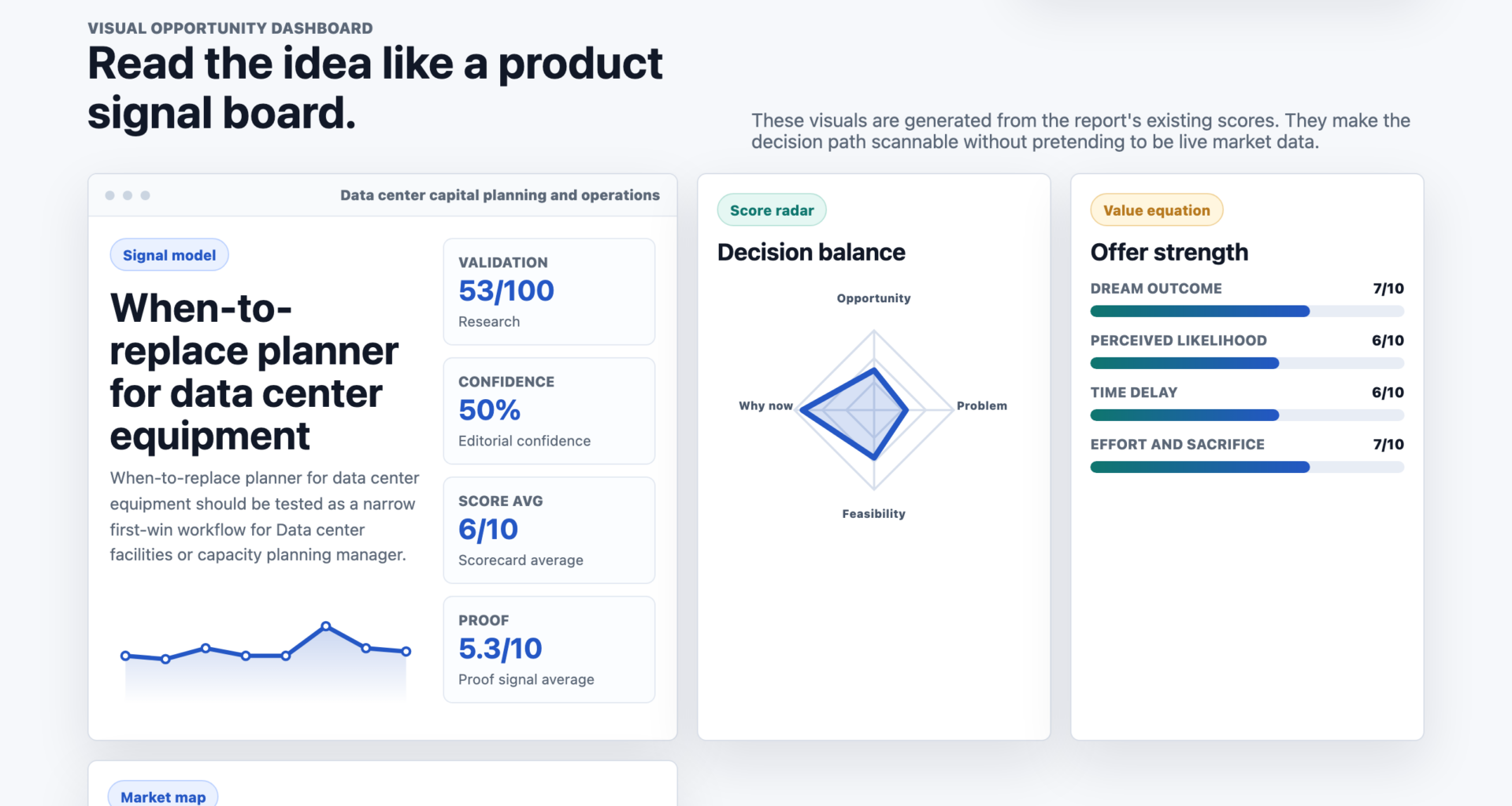

📊 Full opportunity report: When-to-replace planner for data center equipment on IdeaNavigator AI — validation score, market gap, and execution plan.

Get business pricing on office and shipping supplies
- Business-only prices and quantity discounts
- Tax-exempt purchasing
- Multiple users, one account, clear invoices
TL;DR
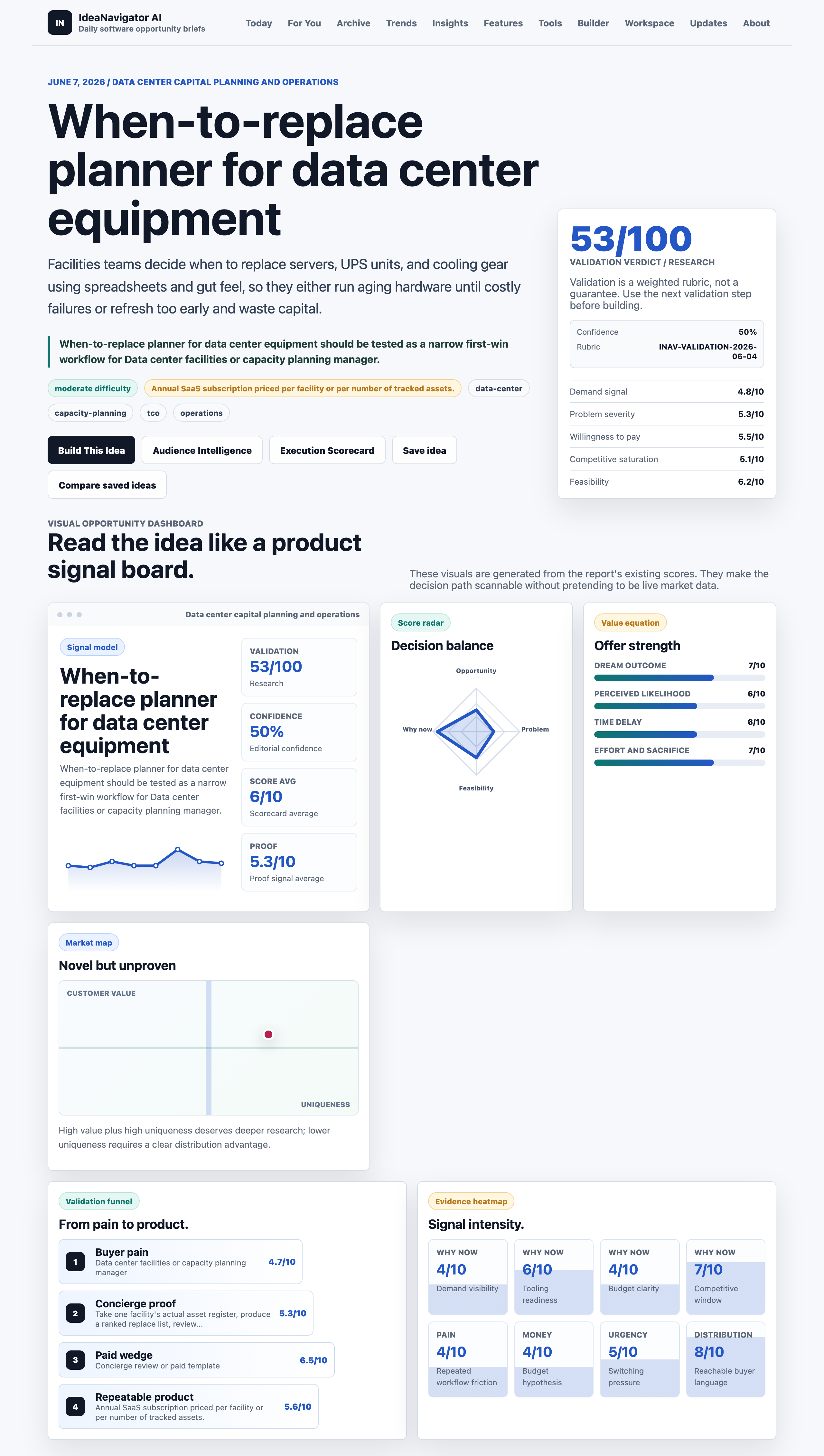
A prototype ‘when-to-replace’ planner for data center equipment is under evaluation. It aims to optimize hardware replacement timing based on asset age, energy use, and failure risk. This could improve capital efficiency and reduce downtime.
A new ‘when-to-replace’ planner for data center equipment is being tested as a practical tool for facilities managers to optimize hardware replacement timing, addressing longstanding challenges in capacity and capital planning.
The proposed planner ingests data from a facility’s asset register, including age, power consumption, and maintenance costs. It then generates a ranked list of equipment, recommending whether to replace or retain each unit based on factors such as rising energy costs and failure risks. This approach aims to replace heuristic decision-making, which often relies on spreadsheets or intuition, with data-driven insights. The testing process involves applying the planner to a single facility’s asset data, then reviewing its recommendations with the facility’s capacity manager. The goal is to measure agreement levels and assess whether the suggested replacements align with operational needs and budget constraints. The model’s initial focus is on hardware such as servers, uninterruptible power supplies (UPS), and cooling units, which are significant cost and energy drivers in data centers.Why It Matters
This development could significantly impact data center operations by enabling more precise, cost-effective hardware refresh cycles. Optimized replacements can reduce energy consumption, prevent costly failures, and improve overall efficiency. As energy costs and hardware densities increase, such tools become more critical for sustainable, profitable data center management. The shift from manual, experience-based decisions to data-driven planning could also set new industry standards for capital expenditure and operational reliability.As an affiliate, we earn on qualifying purchases.
Background
Data center facilities traditionally rely on manual methods like spreadsheets and experience to decide when to replace equipment. This often leads to premature upgrades or delayed replacements, risking unnecessary costs or failures. Rising energy prices and increasing hardware density have intensified the need for more accurate, automated decision tools. The concept of a ‘when-to-replace’ planner has been discussed in industry circles but has not yet been widely tested or adopted. The current effort by IdeaNavigator AI aims to validate this approach through real-world pilot testing, marking a step toward more intelligent capacity planning.“Replacing heuristic-based decisions with data-driven tools can significantly improve cost efficiency and reliability.”
— an anonymous researcher
As an affiliate, we earn on qualifying purchases.
What Remains Unclear
It is not yet clear how well the planner’s recommendations will align with actual operational needs across different types of data centers. The effectiveness of the tool in diverse environments and its integration into existing workflows remain to be validated through ongoing testing.energy-efficient data center servers
As an affiliate, we earn on qualifying purchases.
As an affiliate, we earn on qualifying purchases.
What’s Next
The next steps include completing pilot tests with multiple facilities, gathering feedback from facility managers, and refining the algorithm. If successful, the tool could be offered as a SaaS subscription, with further development to include additional asset types and more complex modeling of failure and energy cost dynamics.uninterruptible power supply for data centers
As an affiliate, we earn on qualifying purchases.
As an affiliate, we earn on qualifying purchases.
Key Questions
How does the ‘when-to-replace’ planner work?
The planner analyzes asset data such as age, power consumption, and maintenance costs to generate replacement recommendations based on rising energy costs and failure risks.
Who will benefit most from this tool?
Data center facilities and capacity planning managers seeking to optimize hardware refresh cycles and reduce operational costs.
When will this tool be available for widespread use?
The tool is currently in pilot testing; a commercial version could be available within the next year if validation results are positive.
What are the limitations of the current prototype?
Its effectiveness across different data center environments and with various hardware types remains to be proven through ongoing testing and validation.
Source: IdeaNavigator AI
Columbus Day / Indigenous Peoples' Day Picks
long weekend sales
As an affiliate, we earn on qualifying purchases.