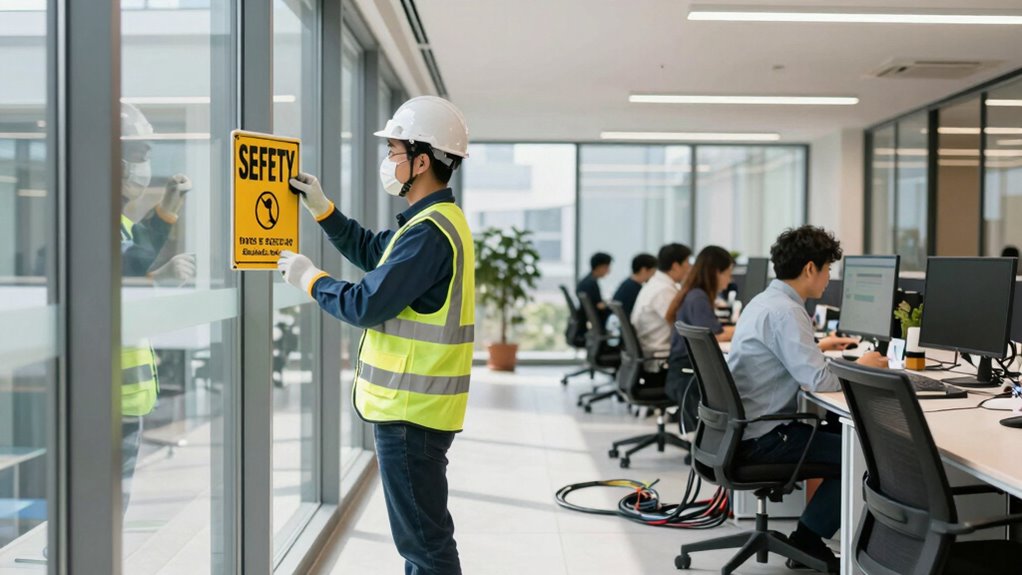

Incorporating office safety into daily operations helps prevent injuries, boosts productivity, and shows employees you value their well-being. When safety is a priority, you reduce hazards, improve morale, and foster a culture of trust and responsibility. Making safety habitual ensures issues are addressed proactively rather than as afterthoughts. By embedding safety into your routine, you create a secure environment that benefits everyone. Continue exploring how to make safety a core part of your work culture.

Get business pricing on office and shipping supplies
- Business-only prices and quantity discounts
- Tax-exempt purchasing
- Multiple users, one account, clear invoices
Key Takeaways
- Integrating safety into daily operations ensures proactive hazard management, reducing the likelihood of accidents and injuries.
- Embedding safety fosters a safety-conscious culture, encouraging employee participation and shared responsibility.
- Continuous safety practices improve overall workplace productivity by minimizing disruptions caused by incidents.
- Making safety an operational priority demonstrates commitment to employee well-being and legal compliance.
- Regular safety integration supports ongoing improvements, keeping protocols current with evolving risks and technologies.
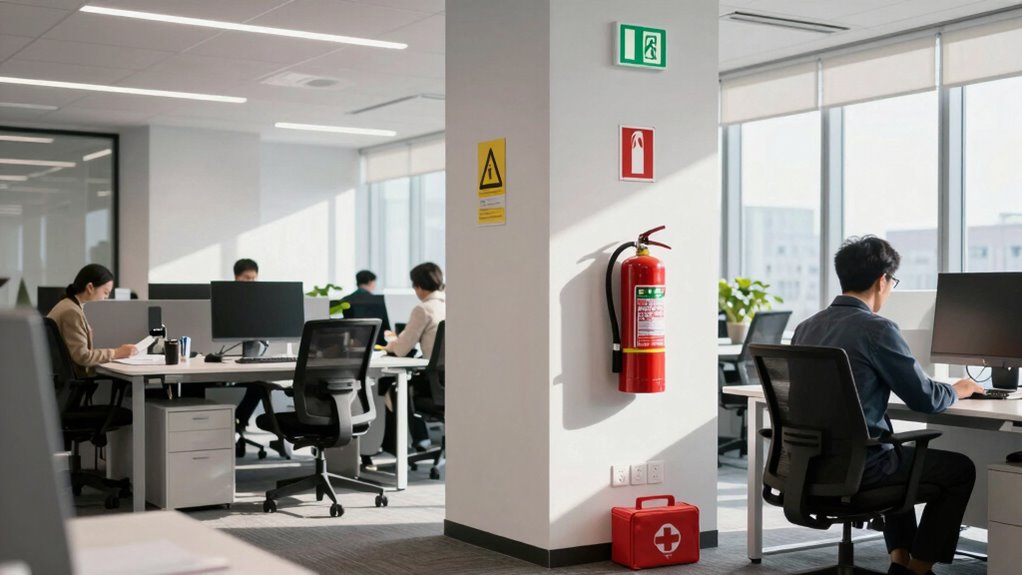
Ensuring safety in office operations is essential for maintaining a productive and accident-free work environment. When safety becomes an integral part of your daily operations, you prevent injuries, improve morale, and boost overall efficiency. One of the first steps you should take is conducting ergonomic assessments. These assessments help identify potential issues with workstations that could lead to musculoskeletal problems or discomfort. By adjusting desks, chairs, and computer setups, you create a comfortable space that minimizes strain and reduces the risk of long-term injuries. Prioritizing ergonomic assessments demonstrates that you value your employees’ well-being, which in turn fosters a culture of safety and care.
Beyond ergonomic considerations, emergency preparedness plays a key role in maintaining a safe office environment. You need to have clear, well-communicated plans for various emergencies, whether it’s a fire, medical incident, or natural disaster. Regularly practicing emergency drills ensures everyone knows their role and can respond swiftly in crisis situations. Incorporating safety protocols into your daily operations makes safety second nature for your team, rather than something they only think about in an emergency. This proactive approach minimizes chaos and confusion during actual events, helping to protect lives and reduce property damage. Additionally, conducting regular safety audits helps identify new hazards and ensures all safety measures are up to date. Implementing continuous safety improvements guarantees that safety remains a dynamic and ongoing priority. Regular training sessions also reinforce safety procedures and keep staff prepared for unexpected situations.
When you embed safety into your operational processes, it’s not just about compliance; it’s about creating a workspace where people feel secure and valued. This means routinely reviewing safety policies, updating equipment, and addressing hazards before they cause harm. For instance, maintaining clear pathways, securing loose wires, and ensuring fire extinguishers are functional are simple yet indispensable steps. These small actions, when integrated into everyday routines, prevent accidents before they happen. Moreover, fostering a safety-conscious workplace culture encourages employees to actively participate in maintaining a secure environment. Additionally, fostering awareness of office safety best practices helps employees recognize and mitigate potential risks proactively.
Furthermore, involving your team in safety initiatives encourages shared responsibility. When employees understand the importance of safety measures like ergonomic assessments and emergency preparedness, they’re more likely to follow protocols and report potential hazards. This collaborative effort turns safety into a collective goal rather than just a management mandate. It also cultivates trust, showing that you prioritize their health and safety above all else. Building a strong safety communication framework ensures that everyone remains informed and engaged in safety practices.
Incorporating safety into your operations isn’t a one-time task; it’s an ongoing process. Regular training, updates, and inspections keep safety at the forefront of your office culture. When safety is woven into your daily routines, it becomes an effortless part of your office life—protecting your team and ensuring your operations run smoothly.
As an affiliate, we earn on qualifying purchases.
Frequently Asked Questions
How Can Small Offices Improve Safety Without Extensive Resources?
You can improve safety in your small office by conducting ergonomic assessments to identify and fix workstation issues, ensuring comfort and reducing injury risk. Implement simple safety training sessions to educate staff on proper practices and emergency procedures. Encouraging open communication about hazards and regularly reviewing safety protocols also helps. These steps are cost-effective and show that safety is a priority, not an afterthought, fostering a safer, more productive work environment.
What Are the Legal Consequences of Neglecting Office Safety?
Neglecting office safety can lead to serious legal liabilities, including fines and lawsuits, if someone gets injured. You risk non-compliance with standards like OSHA regulations, which can result in penalties and increased liability. By prioritizing safety, you protect your business from legal consequences, guarantee compliance standards are met, and create a safer environment for everyone. Ignoring safety isn’t just risky—it can cost you financially and legally.
How Often Should Safety Protocols Be Reviewed and Updated?
You should review and update safety protocols at least once a year, or more frequently if there are significant changes in your office environment. Regular safety training and emergency drills keep everyone prepared and aware. Think of it as a lifeline — neglecting updates could lead to disaster. Keep safety measures fresh in everyone’s mind, ensuring quick, confident responses during emergencies and creating a safer workspace for all.
Who Should Be Responsible for Implementing Safety Measures?
You should guarantee leadership accountability for implementing safety measures, as they set the tone for your safety culture. Managers and supervisors must actively promote safety protocols, conduct regular training, and enforce compliance. By taking responsibility, they foster an environment where safety becomes second nature. When leadership is committed, your entire office benefits from a proactive approach, reducing accidents and creating a workplace where everyone feels secure and valued.
How Does Office Safety Impact Employee Productivity?
Think of your office as a well-tuned machine; when workplace ergonomics are prioritized, each part functions smoothly, boosting productivity. When emergency preparedness is in place, employees feel secure and focused, not distracted by safety worries. This sense of safety and comfort enhances concentration and efficiency, leading to higher output. In this way, office safety directly fuels employee productivity, making your workplace a powerhouse of performance and well-being.
As an affiliate, we earn on qualifying purchases.
Conclusion
Remember, safety isn’t just a box to check—it’s the foundation of smooth operations. When you prioritize office safety from the start, you prevent accidents and create a healthier environment for everyone. As the saying goes, “A stitch in time saves nine.” By weaving safety into your daily routines, you guarantee your team stays protected and your business runs seamlessly. Don’t wait for trouble; make safety an integral part of your operations today.
As an affiliate, we earn on qualifying purchases.
office emergency preparedness kit
As an affiliate, we earn on qualifying purchases.
As an affiliate, we earn on qualifying purchases.
Halloween Picks
halloween
As an affiliate, we earn on qualifying purchases.