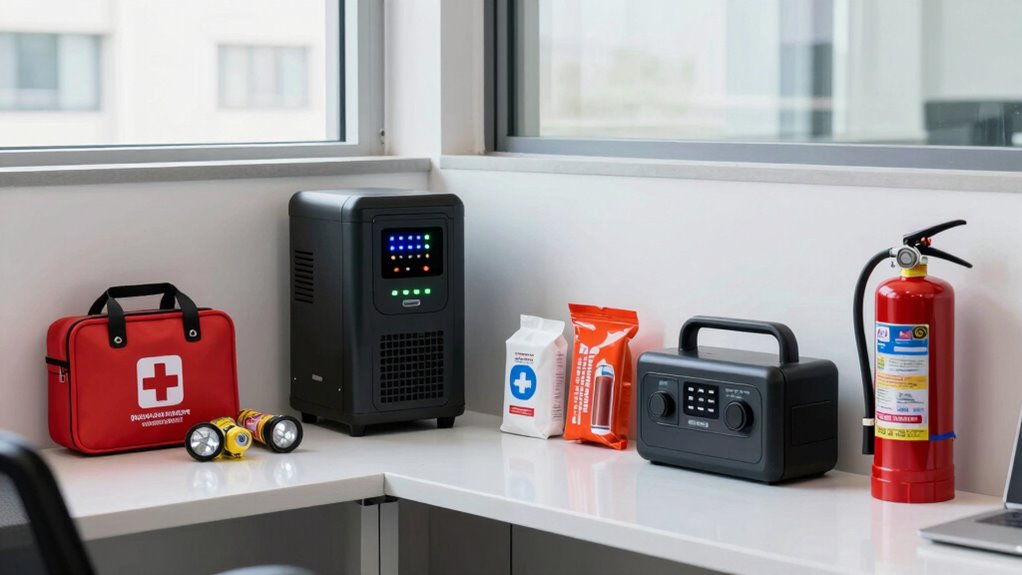

Having backup power and emergency kits is essential for your office’s readiness, ensuring critical systems stay operational during outages and emergencies. These measures help keep your workspace safe, minimize disruptions, and support quick response efforts. Well-maintained kits with first aid supplies and communication tools, combined with reliable backup power, boost staff confidence and safety. By integrating these into your safety plans, you create a resilient environment ready for unexpected events—discover more ways to strengthen your office safety now.

Get business pricing on office and shipping supplies
- Business-only prices and quantity discounts
- Tax-exempt purchasing
- Multiple users, one account, clear invoices
Key Takeaways
- Backup power ensures critical systems remain operational, maintaining office functionality during outages.
- Emergency kits provide immediate resources, enhancing safety and calm during emergencies.
- Employee training on backup systems and procedures improves response efficiency in crises.
- Regular safety assessments and drills reinforce preparedness and identify potential vulnerabilities.
- Integrating backup power and emergency supplies into safety plans fosters a resilient and proactive office environment.
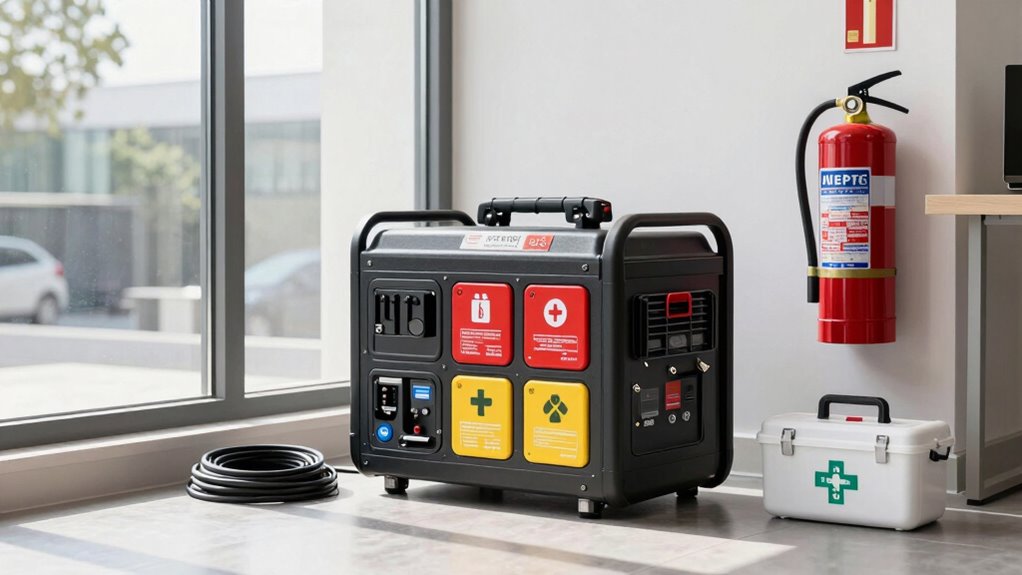
Have you ever considered how your office would operate during a power outage or emergency? It’s a question that highlights the significance of being prepared. Making certain your workplace remains functional and safe during unexpected disruptions isn’t just about convenience; it’s about prioritizing workplace safety and protecting everyone in your office. Backup power sources, like generators or uninterruptible power supplies (UPS), play an essential role in this readiness. They keep critical systems running—think of computers, security systems, and communication devices—so your team can continue working or evacuate safely if needed. Without backup power, important functions halt, and safety protocols may become impossible to implement, increasing risks for employees.
Ensuring backup power keeps your office safe and operational during emergencies, protecting staff and critical systems alike.
But having backup power is only part of the solution. Employee training becomes equally indispensable. When your team knows what to do during an outage or emergency, chaos is minimized, and safety is maximized. Regular training sessions teach staff how to operate backup systems, follow evacuation procedures, and use emergency kits effectively. These sessions boost confidence and ensure everyone understands their role when seconds matter. Well-trained employees can make the difference between a smooth response and a dangerous delay, reinforcing the importance of ongoing safety education. Additionally, incorporating emergency preparedness into your training can further improve your team’s ability to respond effectively.
Emergency kits are another foundation of office readiness. Stocked with essentials like first aid supplies, flashlights, batteries, and communication tools, these kits provide immediate resources that can reduce injury, keep people informed, and maintain calm during crises. When combined with backup power, emergency kits become even more effective, offering a complete safety net. For example, with a portable flashlight powered by backup batteries, employees can navigate dark corridors safely, preventing accidents and injuries. Having these kits readily accessible and regularly checked demonstrates your commitment to workplace safety and shows that you’re proactive in safeguarding your team’s well-being. Regularly reviewing emergency response plans ensures your team remains prepared for various scenarios. Incorporating preventive measures can further bolster your safety strategy by addressing potential vulnerabilities before they escalate.
Furthermore, integrating training programs on emergency procedures can increase overall preparedness and reduce response times during actual incidents.
Additionally, understanding the importance of backup power and emergency preparedness can significantly enhance your office’s resilience to unforeseen events. Integrating backup power and emergency kits into your office’s safety plan isn’t a one-time effort. It requires ongoing assessment, maintenance, and employee training. Conduct drills that simulate power outages and emergencies so your staff can practice their response. Keep backup systems maintained and stocked with fresh supplies, and review safety procedures regularly. This proactive approach fosters a culture of safety, where everyone understands their responsibilities and feels prepared to handle unexpected situations. Ultimately, investing in these safety measures not only helps protect your team but also ensures your office remains resilient, operational, and secure during any crisis.
As an affiliate, we earn on qualifying purchases.
Frequently Asked Questions
How Often Should Backup Power Systems Be Tested?
You should test your backup power systems at least once every three to six months. During these tests, focus on battery maintenance and power source testing to guarantee everything functions properly. Regular testing helps identify potential issues early, prolongs battery life, and guarantees your system will activate when needed. Keep records of each test to track performance over time and schedule maintenance accordingly for maximum office readiness.
What Is the Typical Lifespan of Emergency Kits?
Your emergency kit probably has a lifespan that’s as long as a bad joke—around 3 to 5 years. To stay prepared, you need regular emergency kit maintenance and a strict kit replacement schedule. Don’t ignore expired supplies; they’re as useful as a screen door on a submarine. Regular checks guarantee your kit’s contents are fresh, functional, and ready to save the day, not just gather dust.
Are There Legal Requirements for Office Emergency Preparedness?
Yes, there are legal requirements for office emergency preparedness. You must guarantee legal compliance by adhering to regulatory standards set by local, state, or federal agencies. These standards often mandate having emergency kits, backup power sources, and safety plans in place. Failing to meet these requirements could result in penalties or liability issues. Regularly review and update your emergency procedures to stay compliant and protect your employees effectively.
How Do You Prioritize Emergency Kit Contents?
You prioritize emergency kit contents by customizing it to your office’s specific needs, considering staff training essentials and potential risks. Focus on essential supplies like first aid kits, water, non-perishable food, and flashlights. Regularly update and review the kit, ensuring staff know its location and usage. Incorporate staff training essentials to prepare everyone for emergencies, making sure the kit supports quick, effective response and recovery efforts.
What Training Is Needed for Staff on Emergency Procedures?
Think of emergency procedures training as your office’s safety net—without it, falls become harder to catch. You need regular, ongoing training sessions to keep staff communication sharp and guarantee everyone knows their roles during crises. For example, annual drills help staff respond quickly and confidently. Consistent training frequency reinforces critical skills, reduces panic, and keeps your team prepared to handle emergencies effectively.
As an affiliate, we earn on qualifying purchases.
Conclusion
When you’ve prepared your office with backup power and emergency kits, it’s like planting a seed of confidence. Just as a sudden storm might catch the sky unprepared, your office stays steady, resilient, ready to weather any surprise. In those quiet moments of calm, you realize that being ready isn’t just about equipment—it’s about peace of mind. When the unexpected hits, you’re not caught off guard; you’re simply part of a well-prepared landscape.
uninterruptible power supply for office
As an affiliate, we earn on qualifying purchases.
As an affiliate, we earn on qualifying purchases.
As an affiliate, we earn on qualifying purchases.
Columbus Day / Indigenous Peoples' Day Picks
long weekend sales
As an affiliate, we earn on qualifying purchases.