

The best digital marketing analytics resources in 2026 are the ones that match how you actually work: some marketers need to learn Google Analytics and dashboard building from scratch, while others want statistical rigor or AI-driven measurement strategy. My top pick is A Practical Guide to Digital Marketing Analytics, which covers KPI tracking, dashboards, and AI-era decision making in one accessible package. Close behind are Digital Marketing Analytics: Making Sense of Consumer Data for a broader strategic grounding and Adobe Analytics For Dummies for anyone working inside Adobe’s ecosystem. The core tradeoff across this category is practical tooling versus conceptual depth — hands-on platform guides get you productive fast but age quickly, while theory-heavy texts stay relevant longer but demand more patience. Keep reading for the full breakdown of all eleven.

Get business pricing on office and shipping supplies
- Business-only prices and quantity discounts
- Tax-exempt purchasing
- Multiple users, one account, clear invoices
Key Takeaways
- Books that tie analytics directly to platform workflows (Adobe Analytics For Dummies, the Practical Guide) deliver faster time-to-value than theory-first texts for working marketers.
- Only two entries in this roundup — the SPSS-based Marketing Analytics and Web Analytics 2.0 — offer genuine statistical depth, which matters if your role involves modeling rather than reporting.
- AI-focused titles (The AI Marketing Canvas, Mastering Marketing with AI) are the fastest-moving category and risk dating within a year, so weigh currency over comprehensiveness when choosing them.
- The best value pick costs a fraction of premium textbooks while covering roughly 80% of what a mid-level marketer needs, making it the smart default for most readers.
- Social Media Analytics stands alone as the only channel-specific title — pick it only if social metrics are your primary job, otherwise the generalist guides cover enough.
| The Art of Digital Marketing |  | Best for Building a Strategic Foundation | Format: Print book | Topic Focus: Digital marketing campaign strategy | Key Themes: Strategic planning, targeting, measurable campaigns | VIEW LATEST PRICE | See Our Full Breakdown |
| Digital Marketing Analytics: Making Sense of Consumer Data in a Digital World |  | Best for Consumer Data Interpretation | Format: Print book | Topic Focus: Consumer data analysis for marketing | Key Themes: Data interpretation, consumer behavior, decision making | VIEW LATEST PRICE | See Our Full Breakdown |
| A Practical Guide to Digital Marketing Analytics |  | Best for Hands-On Implementation | Format: Digital/print book | Topic Focus: Applied marketing analytics | Key Themes: KPI tracking, dashboards, data-driven decisions, AI | VIEW LATEST PRICE | See Our Full Breakdown |
| Digital Analytics for Marketing (Mastering Business Analytics) |  | Best for Business Analytics Depth | Format: Print book (series: Mastering Business Analytics) | Topic Focus: Digital analytics methodology | Key Themes: Business analytics, data-driven marketing, analytical frameworks | VIEW LATEST PRICE | See Our Full Breakdown |
| The AI Marketing Canvas, Second Edition |  | Best for AI Strategy Planning | Format: Print book (Second Edition) | Topic Focus: AI strategy for marketers | Key Themes: Five-step AI plan, AI adoption, marketing strategy | VIEW LATEST PRICE | See Our Full Breakdown |
| Mastering Marketing with AI: Digital Marketing, Social Media, Content, SEO, Advertising, Analytics, Automation, Customer Retention |  | Best for AI-Driven Marketing | Format: Book (digital/print) | Primary Topic: AI-powered marketing across channels | Subject Areas: Digital marketing, social media, content, SEO, advertising, analytics, automation, retention | VIEW LATEST PRICE | See Our Full Breakdown |
| Web Analytics 2.0: The Art of Online Accountability and Science of Customer Centricity |  | Best Classic Foundation | Format: Print book | Primary Topic: Web analytics methodology and customer centricity | Core Framework: Online accountability and behavioral measurement | VIEW LATEST PRICE | See Our Full Breakdown |
| Social Media Analytics: Effective Tools for Building, Interpreting, and Using Metrics |  | Best for Social Media Metrics | Format: Book (digital/print) | Primary Topic: Social media metrics and measurement | Coverage Areas: Building, interpreting, and applying social metrics | VIEW LATEST PRICE | See Our Full Breakdown |
| Marketing Analytics: Statistical Tools for Marketing and Consumer Behavior Using SPSS | 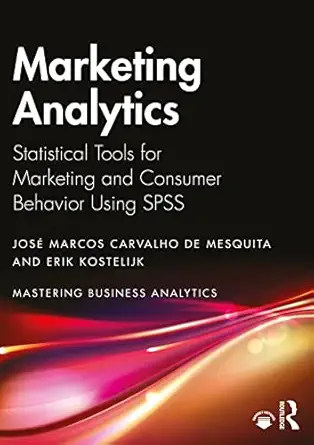 | Best for Hands-On Statistics | Format: Print book | Primary Topic: Statistical marketing analytics | Software Taught: SPSS | VIEW LATEST PRICE | See Our Full Breakdown |
| Marketing Analytics: Essential Tools for Data-Driven Decisions |  | Best for Decision-Making Frameworks | Format: Print book | Primary Topic: Marketing analytics for decision-making | Core Focus: Data-driven marketing decisions and essential tools | VIEW LATEST PRICE | See Our Full Breakdown |
| Adobe Analytics For Dummies |  | Best for Learning a Specific Platform | Format: Paperback / ebook (For Dummies series) | Topic: Adobe Analytics platform training | Skill Level: Beginner | VIEW LATEST PRICE | See Our Full Breakdown |
| digital marketing analytics tool | Format | Best Use Case |
|---|---|---|
| The Art of Digital Marketing | Print book | Professional development and academic study |
| Digital Marketing Analytics: M | Print book | Analysts moving from reporting to insight |
| A Practical Guide to Digital M | Digital/print book | Immediate implementation in a working marketing role |
| Digital Analytics for Marketin | Print book (series: Mastering Business Analytics) | Formal study and analytics career development |
| The AI Marketing Canvas | Print book (Second Edition) | Building and presenting an AI marketing roadmap |
| Mastering Marketing with AI: D | Book (digital/print) | Building an AI-informed marketing strategy end to end |
| Web Analytics 2.0: The Art of | Print book | Building a measurement culture and analytics strategy |
| Social Media Analytics: Effect | Book (digital/print) | Social media reporting and metric-driven channel management |
| Marketing Analytics: Statistic | Print book | Learning applied statistics for marketing research |
| Marketing Analytics: Essential | Print book | Moving from reporting analytics to strategic decision-making |
| Adobe Analytics For Dummies | Paperback / ebook (For Dummies series) | Onboarding onto an existing Adobe Analytics deployment |
More Details on Our Top Picks
The Art of Digital Marketing
The Art of Digital Marketing earns its place as the foundational strategy pick because it teaches the thinking that should come before any dashboard is opened. Where Digital Marketing Analytics jumps straight into consumer data, this title frames measurement as one part of a larger campaign design process, which matters for buyers who can interpret a report but can’t yet shape a campaign worth measuring. The payoff is targeting and measurability built into strategy from day one rather than bolted on afterward. The tradeoff is density: professionals with limited time may find the pacing slow compared with the more hands-on Practical Guide to Digital Marketing Analytics. It also deliberately skips tool walkthroughs, so anyone expecting GA4 tutorials should look elsewhere in this lineup.
Pros:- Teaches campaign design with measurement baked in from the start
- Strong coverage of audience targeting methodology
- Suitable for both professionals and coursework
- Written as a definitive, structured reference rather than tips and tricks
Cons:- Contains no hands-on tooling or platform tutorials
- Dense and slow-moving for readers new to the field
Best for: Marketing managers and students who need a rigorous grounding in campaign strategy before worrying about tools
Not ideal for: Practitioners who want immediate dashboard-building instruction — this is conceptual, not a software manual
- Format:Print book
- Topic Focus:Digital marketing campaign strategy
- Key Themes:Strategic planning, targeting, measurable campaigns
- Audience Level:Intermediate to advanced
- Includes Tool Tutorials:No
- Best Use Case:Professional development and academic study
Our verdict“Buy this if you need to learn how to design measurable campaigns strategically, not just how to read the numbers after the fact.”
Digital Marketing Analytics: Making Sense of Consumer Data in a Digital World
This title stands out for one specific strength: teaching readers to interpret consumer behavior signals, which is a different skill from tracking KPIs. Compared with The Art of Digital Marketing, which spends most of its pages on campaign construction, this book assumes campaigns exist and focuses on turning messy behavioral data into business decisions. That framing makes it the stronger pick for analysts already fluent in marketing basics. It also serves as a useful bridge toward heavier statistical titles in this roundup like Marketing Analytics: Statistical Tools…, without requiring SPSS knowledge. The tradeoff is uneven depth — some chapters push into analytical territory that may overwhelm beginners, and readers wanting step-by-step dashboard builds will get more from the Practical Guide below.
Pros:- Frames analytics around consumer behavior, not just traffic metrics
- Connects data interpretation directly to business decisions
- Bridges beginner guides and statistical textbooks
- Focused scope keeps the material cohesive
Cons:- Some analytical passages run complex for newcomers
- Lighter on step-by-step implementation than competing titles
Best for: Mid-level marketers and analysts who can run campaigns but struggle to draw decisions from consumer data
Not ideal for: Complete beginners — the analytical framing assumes you already know basic marketing terminology
- Format:Print book
- Topic Focus:Consumer data analysis for marketing
- Key Themes:Data interpretation, consumer behavior, decision making
- Audience Level:Intermediate
- Includes Tool Tutorials:Limited
- Best Use Case:Analysts moving from reporting to insight
Our verdict“This is the pick for marketers who already know their channels and now need to make consumer data genuinely readable.”
A Practical Guide to Digital Marketing Analytics
Of the five books here, this is the one built for doing rather than reading. Its focus on KPI tracking and dashboard construction directly addresses the gap left by both The Art of Digital Marketing and Digital Marketing Analytics, which explain what to measure but spend little time on how to build the reporting itself. The AI angle adds current relevance — it treats AI as part of the analytics workflow rather than a separate topic, which pairs well with The AI Marketing Canvas for readers wanting both strategy and execution. The drawbacks are real: the material gets technical quickly, and the thin publisher detail means less community support or companion resources than established titles in this roundup offer. Still, for practitioners who need output this quarter, this delivers the most immediately actionable content.
Pros:- Step-by-step guidance on building dashboards and tracking KPIs
- Integrates AI into the analytics workflow
- Focused on producing real output quickly
- Covers the full loop from metric to decision
Cons:- Technical passages assume prior analytics familiarity
- Limited publisher support and companion materials
- Less rigorously edited than traditional publishing houses
Best for: Marketing practitioners and small teams who need working KPI dashboards now, not theory
Not ideal for: Readers who want a polished academic reference — the technical, execution-first style assumes comfort with tools
- Format:Digital/print book
- Topic Focus:Applied marketing analytics
- Key Themes:KPI tracking, dashboards, data-driven decisions, AI
- Audience Level:Intermediate practitioner
- Includes Tool Tutorials:Yes — dashboards and KPI frameworks
- Best Use Case:Immediate implementation in a working marketing role
Our verdict“Choose this when you need to stand up working marketing dashboards fast and want AI baked into the process.”
Digital Analytics for Marketing (Mastering Business Analytics)
This entry occupies the most analytical seat in the lineup, sitting between practitioner guides and the statistics-heavy Marketing Analytics: Statistical Tools for Marketing and Consumer Behavior Using SPSS. It’s better suited to readers who want analytics treated as a business discipline rather than a marketing chore — the concepts map to broader organizational decision-making, which is exactly what the Practical Guide skips in favor of speed. The payoff is transferable methodology that holds up in MBA-style settings or analytics-adjacent roles. The cost is accessibility: compared with Digital Marketing Analytics, it leans harder on analytical frameworks and offers fewer case studies to anchor them, leaving self-learners to construct their own examples. Marketing generalists wanting quick wins should pass; analytically inclined readers get the most durable content here.
Pros:- Treats digital analytics as a rigorous business discipline
- Concepts transfer beyond marketing to general analytics roles
- Systematic structure suited to formal study
- Deeper conceptual grounding than practitioner guides
Cons:- Sparse case studies make abstract concepts harder to anchor
- Too technical for marketing generalists
Best for: Business analysts and MBA students who need marketing analytics grounded in broader analytical methodology
Not ideal for: Hands-on marketers seeking quick tactical wins — the framework-heavy approach delays practical payoff
- Format:Print book (series: Mastering Business Analytics)
- Topic Focus:Digital analytics methodology
- Key Themes:Business analytics, data-driven marketing, analytical frameworks
- Audience Level:Intermediate to advanced
- Includes Tool Tutorials:No — conceptual focus
- Best Use Case:Formal study and analytics career development
Our verdict“Pick this if you’re building serious analytical credentials rather than solving this month’s reporting problem.”
The AI Marketing Canvas, Second Edition
This pick fills a role none of the other four attempt: it’s a planning framework, not an analytics manual. The five-step AI plan gives marketers a sequenced roadmap for adopting AI, which is something the Practical Guide to Digital Marketing Analytics touches only as a workflow feature and Digital Analytics for Marketing ignores entirely. For teams under pressure to present an AI roadmap to leadership, this structure matters more than tool tutorials. The updated second edition keeps the material aligned with current AI capabilities. The tradeoffs are the flip side of its strength: there’s little technical content, so readers who want to understand model outputs or data pipelines will finish hungry, and the strategy-first approach won’t help anyone who needs a dashboard live next week.
Pros:- Clear five-step framework makes AI adoption feel sequenced and manageable
- Updated edition reflects current AI marketing practice
- Actionable steps suit leadership presentations and planning cycles
- Fills an AI strategy gap no other title in this batch covers
Cons:- Minimal technical or analytical depth
- Limited companion materials and supplementary resources
Best for: Marketing leaders and team managers who must build an organizational AI adoption plan for marketing
Not ideal for: Hands-on analysts wanting AI implementation detail — this is strategic scaffolding, not technical instruction
- Format:Print book (Second Edition)
- Topic Focus:AI strategy for marketers
- Key Themes:Five-step AI plan, AI adoption, marketing strategy
- Audience Level:Managers and strategists
- Includes Tool Tutorials:No — framework focused
- Best Use Case:Building and presenting an AI marketing roadmap
Our verdict“Buy this to plan your team’s AI marketing journey; skip it if you need to execute the analytics yourself.”
Mastering Marketing with AI: Digital Marketing, Social Media, Content, SEO, Advertising, Analytics, Automation, Customer Retention
Among the books in this lineup, Mastering Marketing with AI stands out for the breadth of its ambition — it stretches from SEO and social media all the way to automation and customer retention, all through the lens of artificial intelligence. Where The AI Marketing Canvas narrows in on a single five-step planning framework, this title works as a one-volume survey of AI across the entire marketing stack, which makes it a sensible starting point for practitioners who want context before committing to a methodology. The tradeoff is depth: covering that many domains means no single topic gets the rigorous treatment found in dedicated titles like Digital Marketing Analytics. The absence of clear audience-level guidance also means experienced analysts may find early chapters too general.
Pros:- Covers the full marketing stack from SEO to retention in one volume
- Frames analytics, automation, and AI as connected disciplines
- Practical retention and automation strategies rarely covered in analytics-only books
- Accessible to marketers without a technical background
Cons:- Breadth comes at the cost of depth on any single topic
- No clear indication of difficulty level or intended audience
- AI tools evolve quickly, so specific tactics can age faster than foundational texts
Best for: Marketing generalists and managers who want a single broad reference connecting AI to every channel they run
Not ideal for: Analysts who need deep statistical rigor — this survey format trades depth for coverage
- Format:Book (digital/print)
- Primary Topic:AI-powered marketing across channels
- Subject Areas:Digital marketing, social media, content, SEO, advertising, analytics, automation, retention
- Approach:Broad survey with practical strategies
- Experience Level:Unspecified; suits mixed-level readers
- Best Use Case:Building an AI-informed marketing strategy end to end
Our verdict“Pick this if you want one wide-ranging AI-plus-marketing reference rather than a deep specialty book.”
Web Analytics 2.0: The Art of Online Accountability and Science of Customer Centricity
Web Analytics 2.0 remains the foundational text of this category — the book most modern analytics titles, including Digital Analytics for Marketing, implicitly build upon. Its core contribution is a mental model for online accountability: how to move from counting pageviews to understanding customer behavior and tying measurement to business outcomes. Compared with Marketing Analytics: Essential Tools for Data-Driven Decisions, this pick is less about statistical technique and more about how to think like an analyst — what to measure, why, and how to present it. The honest drawback is age: the tools referenced have changed, and readers wanting current platform walkthroughs should pair it with something like Adobe Analytics For Dummies. Beginners may also find the conceptual density demanding without a practical companion.
Pros:- Timeless framework for online accountability and measurement strategy
- Strong emphasis on customer-centric rather than vanity metrics
- Teaches analytical thinking that transfers across any tool
- Widely regarded as the classic text in the field
Cons:- Platform examples are dated relative to current analytics suites
- Conceptual density can overwhelm true beginners
- Few hands-on exercises or worked practical examples
Best for: Analysts and marketing leads who want the conceptual framework that underpins all modern web measurement
Not ideal for: Readers seeking current tool tutorials — platform-specific screenshots and walkthroughs here are dated
- Format:Print book
- Primary Topic:Web analytics methodology and customer centricity
- Core Framework:Online accountability and behavioral measurement
- Approach:Conceptual and strategic rather than tool-based
- Experience Level:Intermediate to advanced
- Best Use Case:Building a measurement culture and analytics strategy
Our verdict“Read this for the enduring mindset of web analytics, not for current software instructions.”
Social Media Analytics: Effective Tools for Building, Interpreting, and Using Metrics
Most titles in this roundup treat social as one chapter among many; Social Media Analytics dedicates the entire book to it, and that focus is its whole value proposition. It walks through the full lifecycle of social data — building metrics, interpreting them, and acting on them — which fills a gap the broader surveys like Mastering Marketing with AI only gesture at. Compared with Web Analytics 2.0, this pick is narrower but more immediately actionable for social media managers who live in engagement dashboards. The tradeoff is shelf life: social platforms and their native metrics change constantly, so readers should treat the interpretive frameworks as the durable asset and expect specific metric names to feel dated. It also assumes you already know why you’re measuring, so it’s not a strategy primer.
Pros:- Dedicated end-to-end treatment of social metrics rather than a single chapter
- Covers the full arc from building metrics to acting on them
- Directly useful for reporting social ROI to stakeholders
- Frameworks apply across platforms even as specific metrics change
Cons:- Platform-specific details age quickly in the social space
- Narrow scope compared with full digital analytics titles
- Assumes existing familiarity with marketing fundamentals
Best for: Social media managers and community leads who need to justify their channel spend with defensible metrics
Not ideal for: Generalists wanting all-channel coverage — the single-channel focus limits its usefulness elsewhere
- Format:Book (digital/print)
- Primary Topic:Social media metrics and measurement
- Coverage Areas:Building, interpreting, and applying social metrics
- Approach:Channel-focused practical strategy
- Experience Level:Intermediate social media practitioners
- Best Use Case:Social media reporting and metric-driven channel management
Our verdict“Choose this when social is your primary channel and you need metric fluency, not another general analytics survey.”
Marketing Analytics: Statistical Tools for Marketing and Consumer Behavior Using SPSS
This is the most technical pick in the lineup, and it earns that distinction honestly. While Marketing Analytics: Essential Tools for Data-Driven Decisions stays at the level of concepts and decision frameworks, this title puts SPSS software in your hands and walks through statistical techniques applied to real marketing and consumer-behavior problems. For students and analysts who learn by doing, that hands-on structure beats the lecture-style alternatives. The obvious tradeoff is the SPSS dependency: compared with books built around web analytics or AI tools, this one ties your learning to a specific (and pricey) statistics package that many modern marketing teams don’t use. If your organization runs Python or R instead, much of the software-specific instruction loses relevance — though the underlying statistical reasoning still transfers.
Pros:- Hands-on statistical practice tied directly to marketing problems
- SPSS walkthroughs make abstract methods concrete
- Strong bridge between consumer behavior theory and analysis
- Ideal for coursework and structured self-study
Cons:- Locked to SPSS, which limits value for teams using other tools
- Too technical for marketers without a statistics background
- Thinner on digital-channel and AI topics than the rest of this roundup
Best for: Business students and analysts who want to practice statistical methods in SPSS while learning marketing applications
Not ideal for: Marketers without access to SPSS or statistical training — the software requirement is a real barrier
- Format:Print book
- Primary Topic:Statistical marketing analytics
- Software Taught:SPSS
- Subject Areas:Marketing analysis, consumer behavior statistics
- Approach:Hands-on, tool-based instruction
- Intended Audience:Business students and analytics professionals
- Best Use Case:Learning applied statistics for marketing research
Our verdict“Buy this if you need statistical rigor with guided SPSS practice; skip it if your stack lives outside SPSS.”
Marketing Analytics: Essential Tools for Data-Driven Decisions
Where Marketing Analytics: Statistical Tools… Using SPSS teaches you to run the numbers, this book teaches you to decide what to do with them. Its strength is connecting analytical tools to data-driven decision-making — the judgment layer that pure-technique books often skip — which positions it as the managerial counterpart to the SPSS title. Compared with Web Analytics 2.0, it is broader in scope (marketing-wide rather than web-only) but less canonical in its frameworks. The compromises are real: it leans light on case studies, so readers who learn from worked examples may feel underserved, and the material assumes enough quantitative comfort that complete beginners will want an entry point like Adobe Analytics For Dummies first. For mid-level marketers ready to move from reporting to recommending, though, it hits the right level.
Pros:- Focuses on decision-making, not just measurement technique
- Broad marketing-wide scope beyond web analytics alone
- Frameworks translate analysis into business recommendations
- Well suited to managers who oversee analysts rather than run models
Cons:- Sparse case studies limit its usefulness for example-driven learners
- Assumes quantitative comfort that beginners may lack
- Less hands-on than tool-based titles in this lineup
Best for: Mid-to-senior marketers who already have data flowing and need frameworks to turn it into decisions
Not ideal for: Absolute beginners or readers who learn best from detailed worked case studies
- Format:Print book
- Primary Topic:Marketing analytics for decision-making
- Core Focus:Data-driven marketing decisions and essential tools
- Approach:Framework-driven, marketing-wide perspective
- Experience Level:Intermediate
- Best Use Case:Moving from reporting analytics to strategic decision-making
Our verdict“This makes the most sense for marketers who want to act on data strategically rather than master the mechanics of analysis.”
Adobe Analytics For Dummies
Every other entry in this roundup teaches analytics as a discipline; this one teaches a single platform. That focus is exactly why it earns a spot. Where Digital Marketing Analytics: Making Sense of Consumer Data in a Digital World builds broad conceptual foundations, this book walks newcomers through Adobe Analytics itself — segmentation, workspace projects, and reporting basics — so a marketer can go from zero to functional inside their company’s existing stack. The plain-English explanations are the selling point: Adobe’s interface intimidates beginners, and this removes that friction.
The tradeoff is real, though. It will not help you choose metrics, build a measurement strategy, or work in Google Analytics, and software books age fast — check that your organization’s Adobe version still matches the edition. Compared with Web Analytics 2.0, it trades strategic depth for hands-on platform instruction, which is the right call for some buyers and the wrong one for others.
Pros:- Beginner-friendly tone that removes the intimidation of Adobe’s interface
- Practical, platform-specific instruction rather than abstract theory
- Clear explanations of segmentation, reporting, and workspace fundamentals
- Faster path to productivity than Adobe’s official documentation
Cons:- Tied to one vendor’s ecosystem with no transferable coverage of Google Analytics or other tools
- Content can fall out of date as Adobe rolls out interface and feature updates
- Lacks the strategic measurement frameworks covered by broader titles in this roundup
Best for: Marketers or analysts newly assigned to a company that already runs Adobe Analytics and needing to get productive quickly
Not ideal for: Self-directed learners or freelancers without Adobe access — the platform license is expensive, and theory-focused books like Digital Analytics for Marketing will serve them better
- Format:Paperback / ebook (For Dummies series)
- Topic:Adobe Analytics platform training
- Skill Level:Beginner
- Coverage:Core Adobe Analytics concepts, segmentation, reporting, analysis workspace
- Tool Specificity:Vendor-specific (Adobe Analytics only)
- Best Use Case:Onboarding onto an existing Adobe Analytics deployment
- Currency Risk:May lag behind Adobe software updates
Our verdict“Buy this only if your organization already pays for Adobe Analytics and you need to learn that specific platform fast; everyone else should pick a tool-agnostic analytics book.”

How We Picked
I judged each of these eleven titles against four buyer-focused criteria: practical applicability (can a reader build reports or dashboards after finishing?), currency (does the content reflect the privacy-first, AI-assisted analytics landscape of 2026?), depth versus accessibility (does it match the statistical sophistication its audience actually needs?), and durability (will the lessons survive the next platform update?). A guide that walks through KPI selection and dashboard construction scores higher than one that lists metrics without explaining how to act on them.
The ranking follows a simple logic: balanced, actionable guides rise to the top, channel-specific and platform-specific titles sit in the middle as specialist picks, and academically rigorous but tool-agnostic textbooks fill the premium and niche slots. Where two books cover similar ground, the one with clearer frameworks and more current examples won out. Every title earned its place by being genuinely good at something — the differences come down to who each one serves best, not overall quality alone.
| digital marketing analytics tool | Format |
|---|---|
| The Art of Digital Marketing | Print book |
| Digital Marketing Analytics: M | Print book |
| A Practical Guide to Digital M | Digital/print book |
| Digital Analytics for Marketin | Print book (series: Mastering Business Analytics) |
| The AI Marketing Canvas | Print book (Second Edition) |
| Mastering Marketing with AI: D | Book (digital/print) |
| Web Analytics 2.0: The Art of | Print book |
| Social Media Analytics: Effect | Book (digital/print) |
| Marketing Analytics: Statistic | Print book |
| Marketing Analytics: Essential | Print book |
| Adobe Analytics For Dummies | Paperback / ebook (For Dummies series) |
Factors to Consider When Choosing Digital Marketing Analytics Tools
Before choosing any one of these eleven resources, it helps to understand what actually separates a useful analytics education from an expensive bookshelf ornament. These are the factors that shaped my rankings and should shape your decision.
Match the Resource to Your Actual Tool Stack
The most common mistake buyers make is grabbing a generalist book when their real gap is platform-specific knowledge — or the reverse. If your day-to-day work happens inside Adobe Analytics, a strategic text on consumer data theory will leave you no faster at building segments. Conversely, if you manage analytics across five channels, a single-platform guide narrows your thinking too early. Audit which tools your team actually pays for and reports from, then pick accordingly. Platform-specific knowledge depreciates fastest but pays off quickest, so budget for updating it every two to three years. Generalist frameworks cost more effort upfront but keep working after every vendor redesign.
Decide How Statistical You Really Need to Be
There is a wide gulf between reading a dashboard and building a regression model, and the books in this category split along exactly that line. Most marketers need enough statistics to avoid misreading A/B tests and correlation — not enough to run SPSS. If you do need modeling, expect a step up in price, density, and prerequisites; the statistical handbooks assume comfort with quantitative methods before page one. Buy the math depth your role demands, not the depth that looks impressive on a syllabus. A common trap is over-purchasing rigor: buyers abandon dense textbooks halfway through and learn nothing. When in doubt, start accessible and upgrade later.
Weigh Currency Against Longevity in the AI Era
Analytics practice is shifting faster now than at any point since the death of third-party cookies, and AI-centric titles are the most exposed. A book centered on today’s AI tooling may describe workflows that look different within eighteen months, while a book on measurement fundamentals stays useful through multiple tool generations. The practical move is to pair one durable, principles-first book with one current, tool-specific book rather than betting everything on the newest release. Check the publication or revision date before buying anything AI-branded; a second edition matters far more in this niche than in most. Also be wary of titles that bolt AI onto old content purely for marketing appeal.
Consider Channel Breadth Before Committing
Social-only analytics books solve social-only problems extremely well, but they can silently distort your measurement instincts if you later own email, paid search, or lifecycle reporting. Channel-specific metrics — engagement rate, share of voice — behave differently from funnel-level metrics like CAC and LTV, and generalist books do a better job connecting the two. Unless social is unambiguously your lane, start with a cross-channel resource and add the specialist book later. The reverse path usually means unlearning channel-bound habits. That said, if your job title literally contains “social,” the specialist pick will outperform any generalist on day-to-day usefulness.
Watch the Price-to-Depth Gap on Textbook-Style Titles
Academic and professional-textbook formats often cost three to five times more than trade paperbacks while covering overlapping material. What the premium price buys is rigor, citations, exercises, and structured pedagogy — valuable for certification prep or formal study, excessive for self-directed learners. Read the table of contents before paying textbook prices; you may find a cheaper trade book covers seven of the ten chapters you actually need. Students and career-changers get the best value from premium formats because they exploit the exercises. Working marketers optimizing for speed usually do not.
Frequently Asked Questions
Do I need a statistics background to use these digital marketing analytics resources?
For most of the titles in this roundup, no — the majority assume you can read a chart and reason about percentages, nothing more. The exceptions are the SPSS-based Marketing Analytics and, to a lesser degree, Digital Analytics for Marketing, which expect familiarity with quantitative methods and will frustrate readers without it. If your goal is dashboards, KPIs, and campaign measurement, the accessible guides cover everything you need. If your role involves experimentation design, forecasting, or consumer-behavior modeling, the statistical route is worth the steeper entry cost. My honest advice: underestimate your math tolerance once and you will abandon the book — start easier than you think you need.
Are AI-focused marketing analytics books worth buying, given how fast AI changes?
They can be, but only if you judge them on frameworks rather than tool walkthroughs. Books like The AI Marketing Canvas earn their keep by teaching a repeatable planning process — how to decide where AI fits in measurement and execution — which survives tool changes. Books that center on specific AI features and interfaces age in months. Before buying, check the revision date and whether the second edition reflects current model capabilities or just adds an AI chapter to older content. A reasonable rule is to spend on one AI-framework book and rely on vendor documentation for tool specifics. That split keeps your knowledge current without rebuying books every year.
Which book should I buy if I’m new to marketing analytics entirely?
Start with A Practical Guide to Digital Marketing Analytics or Adobe Analytics For Dummies if you work in Adobe’s ecosystem — both are built for readers with zero analytics background and move from concepts to hands-on work quickly. The beginner mistake to avoid is starting with a textbook-format title like the SPSS guide, which assumes quantitative habits you may not have built yet. A practical first book also gives you vocabulary and dashboards you can show at work within weeks, which builds momentum. Once you are comfortable interpreting metrics, layer on a strategy-focused book like Digital Marketing Analytics: Making Sense of Consumer Data. Two accessible books beat one intimidating one every time.
Is a social media analytics book enough on its own, or do I need a general analytics resource too?
If social is your entire remit, a dedicated social analytics book is genuinely sufficient for daily work — metrics like engagement rate, reach, and share of voice are covered more deeply there than in any generalist title. The gap appears the moment you need to connect social activity to business outcomes: pipeline, revenue attribution, or blended acquisition cost. Those cross-channel questions are where generalist books earn their place, because social-native metrics do not translate cleanly to funnel metrics. The pragmatic approach is to own the specialist book now and add a general one when your scope widens. Buyers who skip the general resource entirely tend to hit a ceiling when reporting to leadership.
How much should I expect to spend, and does paying more get me better content?
Trade paperback guides in this category typically run far below the cost of professional and academic textbooks, and for many buyers the cheaper format is the smarter purchase — the core concepts of KPI selection, attribution, and dashboard design are well covered at the lower price point. Premium prices buy structure: exercises, case datasets, statistical grounding, and citation-backed depth that matter if you are studying formally or preparing for a credential. What price does not reliably buy is currency; an expensive textbook can be more dated than a recently revised paperback. Decide whether you are paying for pedagogy or for content — if it is content, the value picks in this lineup will serve you well. Mixing one affordable practical guide with one premium rigorous text is often the best total spend.
Conclusion
The right pick here depends less on quality — all eleven are credible — and more on what kind of marketer you are. For best overall, A Practical Guide to Digital Marketing Analytics delivers the broadest, most current blend of KPIs, dashboards, and AI-era decision making, which is why it leads this roundup. For best value, Digital Marketing Analytics: Making Sense of Consumer Data covers strategic ground that pricier textbooks duplicate at a fraction of the cost. For best premium, Marketing Analytics (SPSS edition) and Digital Analytics for Marketing offer statistical and academic rigor that nothing else here matches. For beginners, Adobe Analytics For Dummies is the gentlest on-ramp — especially if Adobe is your daily platform — with Web Analytics 2.0 as a close alternative for self-directed learners. For specific needs: choose Social Media Analytics if social is your lane, The AI Marketing Canvas for AI strategy planning, Mastering Marketing with AI for AI across the full marketing stack, and The Art of Digital Marketing if you want analytics framed inside end-to-end campaign strategy. Pick the one that matches your tool stack and career stage, and you will not go wrong.
Halloween Picks
halloween
As an affiliate, we earn on qualifying purchases.