
Effective records management helps you keep essential documents while discarding what’s unnecessary, ensuring compliance, security, and efficiency. Start by identifying which files truly support your operations and legal obligations, then create clear retention and disposal policies. Use the right tools and technology to automate and secure your records. Regularly review and update your system, and train your team on best practices. Keep practicing these steps to make smarter decisions—there’s much more to explore ahead.
Key Takeaways
- Identify essential records based on relevance, legal requirements, and usage to determine what to keep and discard.
- Establish clear retention and disposal policies to manage the lifecycle of records effectively.
- Use automation tools and technology to streamline record maintenance, security, and retrieval processes.
- Regularly review and update records systems to ensure compliance with current regulations and best practices.
- Train teams on proper records management practices to embed a culture of compliance and efficiency.
ELABEST X100 Ergonomic Mesh Office Chair with Footrest, Big and Tall Hone Desk Chair with 5D Flip-Up Arms, Adjustable 3D Lumbar Support,Gaming & Executive Computer Chairs
【Your All-Day Comfort Solution】 Premium Ergonomic Desk Chair with Footrest featuring dynamic 3D lumbar support, 5D Flip-Up Armrests,...
As an affiliate, we earn on qualifying purchases.
Why Records Management Matters for Your Organization

Effective records management is essential because it helps your organization stay compliant with legal requirements, avoid costly penalties, and protect sensitive information. Understanding the records lifecycle allows you to manage each stage—from creation to disposal—efficiently. Proper data classification is critical, as it helps you categorize records based on their sensitivity and importance. By doing so, you can apply appropriate security measures and retention policies, reducing risks of data breaches or legal issues. Managing the records lifecycle ensures that you keep indispensable documents accessible when needed, while securely disposing of outdated or unnecessary data. This organized approach streamlines operations, saves storage space, and promotes transparency. Additionally, integrating connected technology into your records management process can further enhance efficiency and security. Implementing a comprehensive records management strategy provides a clear framework for handling records effectively throughout their lifecycle. Recognizing the importance of well‑sourced coverage in records management can help organizations establish reliable and consistent practices. Moreover, utilizing digital tools and automation can significantly reduce manual effort and minimize human error. Incorporating automated classification systems can further optimize the process by ensuring records are correctly categorized from the outset. Ultimately, effective records management safeguards your organization’s reputation and supports ongoing regulatory compliance.

La-Z-Boy Delano Big and Tall Executive Office Chair - Ergonomic Lumbar Support Memory Foam - Bonded Leather Desk Chair for Home Office - Mahogany Wood Arms - Chestnut Brown
EXECUTIVE OFFICE CHAIR FOR HOME AND WORK: Sophisticated mid-back design blends professional style with modern comfort. Shapely curves...
As an affiliate, we earn on qualifying purchases.
How to Identify Which Documents and Data to Keep
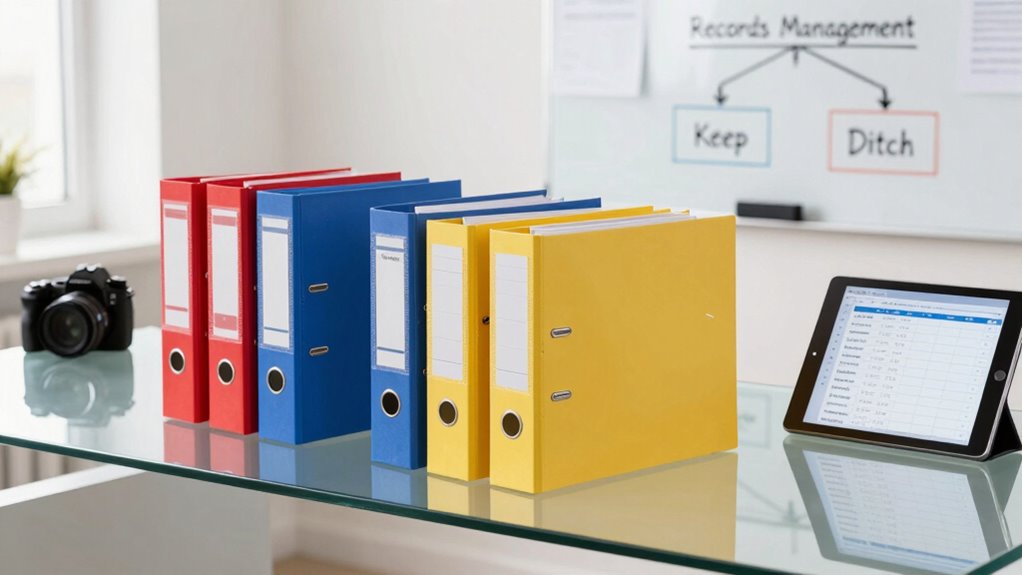
How do you determine which documents and data are worth keeping? Start by considering your organization’s digital footprint and the importance of each file. Effective document categorization makes this process easier. Focus on these key points:
Identify essential documents by assessing relevance, usage, value, and compliance for efficient data management.
- Relevance to current operations or legal requirements
- Frequency of use and access
- Value for future reference or decision-making
- Compliance with organizational policies and regulations
- Understanding the entertainment and activities that foster organizational engagement can also influence data retention priorities. Additionally, implementing cloud storage solutions can enhance data security and facilitate efficient management of your digital assets. Properly managing your data lifecycle ensures that valuable information is preserved while obsolete files are securely disposed of, optimizing both storage and compliance efforts. Recognizing the importance of file categorization can streamline the process and reduce unnecessary data retention, especially when combined with data management best practices.

SEDETA L Shaped Electric Standing Desk, 55" x 55" Height Adjustable Office Executive Desk with 6 Fabric Drawers and Storage Shelves, Sit Stand Computer Desk with Power Outlet for Home Office (Brown)
【Large Storage Space】The 55.1 inch x 55.1-inch l shaped standing desk provides a spacious workspace. Equipped with 6...
As an affiliate, we earn on qualifying purchases.
Setting Up Clear Records Retention and Disposal Policies
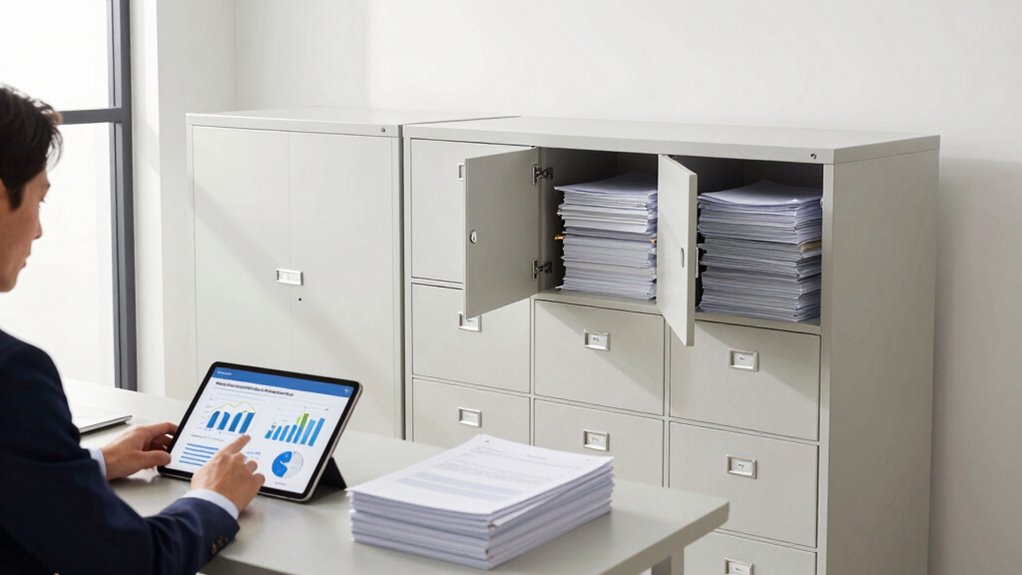
Establishing clear records retention and disposal policies guarantees your organization manages its documents efficiently and in compliance with regulations. Start by implementing effective document categorization to group similar records, making it easier to assign appropriate retention schedules. These schedules specify how long each category of records should be kept before disposal, ensuring you retain critical information and eliminate unnecessary clutter. Clearly define disposal procedures to securely delete or destroy records once their retention period expires. Regularly review and update your retention schedules to adapt to regulatory changes and organizational needs. By establishing these policies, you create a structured approach that minimizes risks, improves accessibility, and supports legal compliance. Consistent enforcement of your retention and disposal policies keeps your records management system reliable and streamlined.

YOMILUVE Farmhouse L Shaped Electric Standing Desk with File Cabinet, 55 inch Height Adjustable Computer Desk with Drawers & Storage Shelves, Corner Standing Desk with Power Outlets, Brown and White
【Height-Adjustable Standing Desk】:Our farmhouse standing desk is height-adjustable from 28.7 inches to 46.5 inches and features three programmable...
As an affiliate, we earn on qualifying purchases.
Choosing the Best Tools and Tech for Managing Your Records

Choosing the right tools and technology is essential for effective records management. You need software that fits your needs, automates processes, and keeps your data secure. You can also incorporate local automation to further enhance efficiency and ensure your records are managed seamlessly across your systems. Additionally, selecting simple, user-friendly systems can help ensure that maintaining your records remains manageable and less overwhelming, even during busy times. Incorporating tech & gadgets like connected workflows and smart tools can also support better decision-making and long-term organization. Implementing safe electrical practices in your setup can prevent data loss or hardware damage due to power issues or surges.
Selecting the Right Software
Selecting the right software is crucial for effectively managing your records, as the tools you choose can greatly impact organization, compliance, and accessibility. To find the best fit, consider these key factors:
- Compatibility with metadata tagging systems to streamline searchability.
- Integration with cloud storage for secure, remote access.
- User-friendly interface to ensure smooth adoption.
- Robust security features to protect sensitive information.
Choosing software that supports metadata tagging makes it easier to categorize and retrieve records efficiently. Cloud storage ensures your data is accessible from anywhere and safe from physical damage. Prioritize tools that align with your organization’s needs, simplify workflows, and bolster compliance efforts, making record management more effective and less burdensome.
Automating Record Processes
Implementing the right tools and technology can substantially streamline your record management processes, saving time and reducing errors. Automating workflows enables you to handle repetitive tasks, such as data entry and document routing, with minimal manual effort. This accelerates your digital transformation, making records accessible and manageable across departments. When choosing tools, look for solutions that integrate seamlessly with your existing systems and support automation features like auto-tagging, version control, and automatic archiving. Cloud-based platforms often provide real-time updates and collaboration capabilities, enhancing efficiency. By automating record processes, you ensure consistency, improve compliance, and free up staff to focus on higher-value activities. Select the right technology thoughtfully, and you’ll create a more agile, accurate, and streamlined records management system.
Ensuring Data Security
Since data security is critical to maintaining trust and compliance, you need to focus on using the right tools and technology to protect your records. Choosing the best solutions involves understanding key features like encryption protocols and access controls. Here are four essentials:
- Implement strong encryption protocols to safeguard data during storage and transmission.
- Use layered access controls to restrict record access based on roles and permissions.
- Opt for secure authentication methods, such as multi-factor authentication.
- Regularly update and patch your records management software to fix vulnerabilities.
- Verify that your records management system complies with regulations by researching company credentials.
- Incorporate ethical considerations into your security practices to ensure responsible data handling.
Training Your Team on Records Management Best Practices

Training your team on records management best practices is essential to guarantee consistent, compliant handling of information. Engaged team members are more likely to follow procedures and understand the importance of proper records handling. To boost team engagement, use diverse training methods such as interactive workshops, online courses, and real-world scenarios. Clearly communicate policies and expectations, emphasizing how good records management benefits everyone. Reinforce training with regular refreshers and accessible resources so your team stays informed. Encourage questions and feedback to ensure understanding and buy-in. Effective training creates a culture of accountability, making records management an integral part of daily operations. When your team knows what to do and why it matters, your organization stays organized, compliant, and efficient. Transparency about privacy policies helps build trust and ensures everyone understands data handling practices. Understanding wave and wind principles can further improve how your team adapts to changing records management technologies and standards, especially as digital recordkeeping evolves. Additionally, incorporating natural principles can enhance the resilience and adaptability of your records management systems in a dynamic environment. Incorporating sound management strategies can also help your team better navigate the complexities of evolving digital environments and ensure long-term data integrity.
How to Ensure Your Records Stay Compliant With Regulations

To guarantee your records stay compliant with regulations, you need to stay informed about current legal requirements and industry standards. Staying updated helps you navigate legal considerations and properly apply data classification. Here are four key steps:
- Regularly review relevant laws and regulations affecting your industry.
- Implement a clear data classification system to categorize sensitive and non-sensitive information.
- Ensure retention schedules align with legal and regulatory requirements.
- Train your team on legal considerations and proper data handling practices.
Additionally, understanding records management best practices—such as proper sanitation, maintenance, and safety protocols—can help ensure your documentation processes support compliance and operational efficiency.
Regularly Reviewing and Updating Your Records System

To keep your records system effective, you need to schedule regular audits to identify gaps and inconsistencies. Updating your retention policies guarantees your procedures stay aligned with current regulations and business needs. Consistently reviewing these elements helps you maintain compliance and improve record management practices. Incorporating modern technology solutions can further enhance your records management efficiency.
Schedule Regular Audits
Scheduling regular audits is essential to keep your records system accurate and efficient. These reviews ensure your digital archiving stays organized and relevant. During audits, you can assess whether your record categorization is still effective, identify outdated files, and confirm compliance with industry standards. Regular check-ins help prevent clutter and reduce retrieval time. To maximize your efforts, focus on these key areas:
- Verify the accuracy of record categorization.
- Remove outdated or duplicate files.
- Ensure digital archiving methods are up-to-date.
- Confirm compliance with legal and company policies.
Update Retention Policies
How often do you review and update your retention policies? Regular updates ensure your data classification and retention schedule match current needs and compliance standards. Over time, business processes change, new regulations emerge, and old data becomes obsolete. To stay effective, revisit your policies periodically. Consider a simple table to visualize your updates:
| Data Type | Retention Period |
|---|---|
| Customer Info | 5 years |
| Employee Records | 7 years |
| Financial Data | 10 years |
This helps you determine if your retention schedule reflects current priorities. Updating policies keeps your records organized, minimizes risk, and guarantees you keep what matters while ditching the rest. Consistent review helps you adapt to changes and maintain control over your records management system.
Final Tips for Staying Organized and Efficient

Staying organized and efficient requires adopting a few final strategies that can make a significant difference in your records management routine. First, maintain consistent file organization by using clear naming conventions and logical folder structures. Second, streamline your digital archiving process by regularly backing up data and using automated tools. Third, set aside time weekly to review and purge unnecessary files, keeping only what matters. Finally, leverage digital tools like search functions and metadata to quickly locate records when needed. These tips help you stay on top of your records, reduce clutter, and boost productivity. Incorporating these practices ensures your file organization remains tidy, and your digital archives stay accessible and secure.
Frequently Asked Questions
How Often Should I Review My Records Management Policies?
You should review your records management policies at least annually to stay aligned with changing regulations and business needs. Conduct regular audits to assess compliance and determine if updates are necessary. An annual review guarantees your policies remain effective, minimizes risks, and incorporates new industry standards. Adjust your audit frequency based on organizational changes or regulatory updates, but never let more than a year pass without evaluating your records management approach.
What Are Common Mistakes to Avoid in Records Retention?
You should avoid neglecting your archiving policies, which can lead to compliance challenges. Don’t delete records too early, risking legal issues, or keep everything indefinitely, causing clutter and confusion. Failing to regularly review and update your retention schedules can also create gaps. Always guarantee your policies align with current regulations, and train staff to follow them diligently, reducing compliance risks and maintaining an efficient records management system.
How Can I Handle Digital and Paper Records Simultaneously?
You handle digital and paper records simultaneously by establishing clear procedures for digital organization and paper scanning. You categorize and label digital files consistently, ensuring easy retrieval, and regularly scan paper documents into your digital system. You also synchronize your filing methods, maintaining uniform naming conventions and storage locations. This approach streamlines workflows, reduces clutter, and keeps your records secure, accessible, and well-organized across both formats.
What Are the Best Practices for Securely Disposing of Records?
To securely dispose of records, you should use secure shredding for paper documents, making sure they’re thoroughly destroyed. For digital records, perform digital deletion using trusted software that overwrites data completely. Always verify that the records are no longer recoverable before disposing of them. Follow your organization’s policies and document the disposal process to guarantee compliance and protect sensitive information effectively.
How Do I Measure the Effectiveness of My Records Management System?
Think of your records system as a ship sailing smoothly. To measure its effectiveness, you check your audit metrics and compliance benchmarks like navigation charts. Regularly review these indicators to spot areas needing improvement. If your ship stays on course and passes inspections, your system functions well. Adjust policies as needed, and celebrate milestones to ensure your records management stays efficient, compliant, and reliable.
Conclusion
By staying organized and regularly reviewing your records, you avoid unnecessary clutter and compliance issues. Imagine a small business that lost critical client data because of outdated retention policies—think of the chaos and cost. Instead, by implementing clear policies and training your team, you’ll keep what matters most safe and accessible. Keep your records streamlined, up-to-date, and compliant, so your organization runs smoothly and confidently into the future.