
Maintaining clear policy change logs is essential to prevent confusion and guarantee everyone stays on the same page. By consistently documenting precise details like what changed, when, why, and who approved it, you create a transparent record that reduces misunderstandings and missteps. Well-structured logs support compliance efforts, accountability, and efficient organizational processes. If you want to learn how to set up effective logs and avoid common pitfalls, there’s more to explore below.
Key Takeaways
- Maintaining detailed records of policy changes ensures transparency and reduces misunderstandings among stakeholders.
- Recording specific change details, dates, reasons, and responsible persons facilitates effective tracking and accountability.
- Using consistent formatting and logical organization makes change logs easy to review and prevents confusion.
- Regular updates, reviews, and centralized documentation keep policies current and accessible for audits and compliance.
- Well-structured change logs support organizational clarity, improve communication, and minimize errors during policy implementation.
Why Tracking Policy Changes Is Critical for Clarity
Tracking policy changes is essential because it keeps everyone on the same page and prevents confusion. When you maintain clear records, policy transparency improves, making it easier for team members to understand updates and expectations. This transparency ensures that all stakeholders are aware of recent changes, reducing misunderstandings. Additionally, effective compliance tracking becomes possible, helping you verify that policies are followed consistently. By documenting every modification, you create an accessible history that supports audits and regulatory requirements. Moreover, policy change logs serve as a valuable resource for organizational accountability and for training new employees, ensuring they understand the evolution of organizational guidelines. Incorporating version control into your documentation practices ensures that updates are managed systematically and efficiently. This practice also enhances privacy policies by clearly outlining what data is affected by each change. Maintaining comprehensive logs can also facilitate dispute resolution by providing clear evidence of policy history. Ultimately, diligent policy change logs foster clarity, accountability, and trust within your organization, making it easier to adapt and stay compliant over time.
The Challenges of Poor Policy Documentation

When policy documentation is poor or incomplete, it creates significant confusion and increases the risk of mistakes. Policy ambiguity makes it harder for your team to understand expectations, leading to inconsistent implementation. This can also hinder the effective use of smart home automation to ensure policies are consistently followed. The lack of clarity also elevates compliance risks, as you might unknowingly violate regulations or company standards. Poor documentation can result in overlooked updates or outdated procedures, further complicating adherence. Additionally, vetted documentation ensures that policies remain accurate and trustworthy over time. Incorporating clear procedures into your documentation can help reduce misunderstandings and support smoother operations. Ultimately, unclear policies undermine accountability and efficiency. To avoid these challenges, you need precise, thorough documentation that leaves little room for misinterpretation. Well-maintained policy records ensure everyone stays aligned, reducing errors and safeguarding your organization from compliance issues. Incorporating connected technology into policy management can help streamline updates and improve clarity across your team. Additionally, comprehensive documentation supports ongoing training and reduces knowledge gaps within your organization.
What Data to Record in Your Policy Change Log

When recording policy changes, you need to document the specific details of what was altered. It’s also essential to identify who is responsible for making and approving these changes. This clarity helps guarantee accountability and keeps your policy logs accurate and useful. Including well-sourced names ensures the coverage remains reliable and trustworthy. Additionally, referencing content categories from your website, such as Cookies or Affiliate Disclosures, can help organize your records effectively. Moreover, maintaining a clear record of these details minimizes confusion and facilitates future reviews. Incorporating water safety guidelines can further enhance the comprehensiveness of your policy change logs. Recognizing authenticity and existence in your documentation can also promote transparency and trustworthiness in your records.
Change Details Documentation
Have you considered what specific details are essential to include in your policy change log? Clear documentation of change details guarantees effective version control and creates a reliable audit trail. Record the date and time of each change to track progress over time. Describe what was altered, added, or removed with precision to avoid confusion. Include the reason for the change to provide context and facilitate future reviews. Noting the person responsible for implementing the update ensures accountability. Consistent, detailed entries make it easier to trace the evolution of policies and verify compliance. By capturing these details consistently, you build a transparent record that supports audits and helps prevent misunderstandings about policy history. Proper change details documentation is the backbone of effective policy management. Additionally, understanding the importance of personality assessments like 16PF can help streamline the process. Recognizing net worth details of individuals involved can also provide valuable context for policy decisions.
Responsible Person Identification
Recording the responsible person’s identity is a vital component of your policy change log. By clearly noting who is responsible for each change, you guarantee accountability assignment is transparent. This responsible person serves as the point of contact for any questions or follow-up, making it easier to track the origin of modifications. Including their name, role, or department helps prevent confusion and maintains clarity across your team. When you document the responsible person, you create a clear record that supports audits and reviews. This practice encourages ownership and ensures everyone knows who is accountable for specific policy updates. Additionally, aligning the responsible person’s duties with established accountability practices can further strengthen your change management process. Implementing European cloud innovation standards in your documentation can enhance compliance and security. Incorporating transparent record-keeping methods ensures that your process remains clear and effective over time. Moreover, utilizing document control tools can streamline updates and safeguard against unauthorized changes.
How to Create a Policy Change Log Everyone Can Use?

To make your policy change log accessible, you need clear formatting standards that everyone can comprehend. Consistent update procedures guarantee the log stays current and reliable. When you implement these points, you’ll create a tool that everyone can easily use and trust.
Clear Formatting Standards
Ever wondered how clear and consistent formatting can make your policy change log more effective? Establishing formatting standards guarantees everyone reads and understands updates the same way. Use a uniform font, size, and color scheme throughout the document. Consistent headers, dates, and version numbers help track changes effortlessly. Adhering to documentation standards means organizing information logically—chronologically or by topic—so users can quickly find what they need. Clear headings, bullet points, and concise language improve readability. When your formatting is consistent, it reduces confusion and saves time during reviews. Remember, a well-structured change log isn’t just neat—it’s a powerful tool for clarity and efficiency. Set these standards early, and your team will thank you for a more streamlined, understandable process.
Consistent Update Procedures
Creating a consistent update procedure is essential for making certain your policy change log remains clear and usable by everyone. By establishing a regular update frequency, you prevent gaps that cause confusion or outdated information. Decide on a schedule—whether weekly, bi-weekly, or monthly—and stick to it. This consistency promotes policy consistency across your organization, making it easier for team members to track changes. Use a standardized format for each update, including date, description, and the person responsible. Clear procedures also involve documenting how changes are reviewed and approved before logging. When everyone follows the same process, your change log becomes a reliable resource that minimizes misunderstandings and guarantees policies stay current and well-maintained.
Key Elements of an Effective Policy Change Log
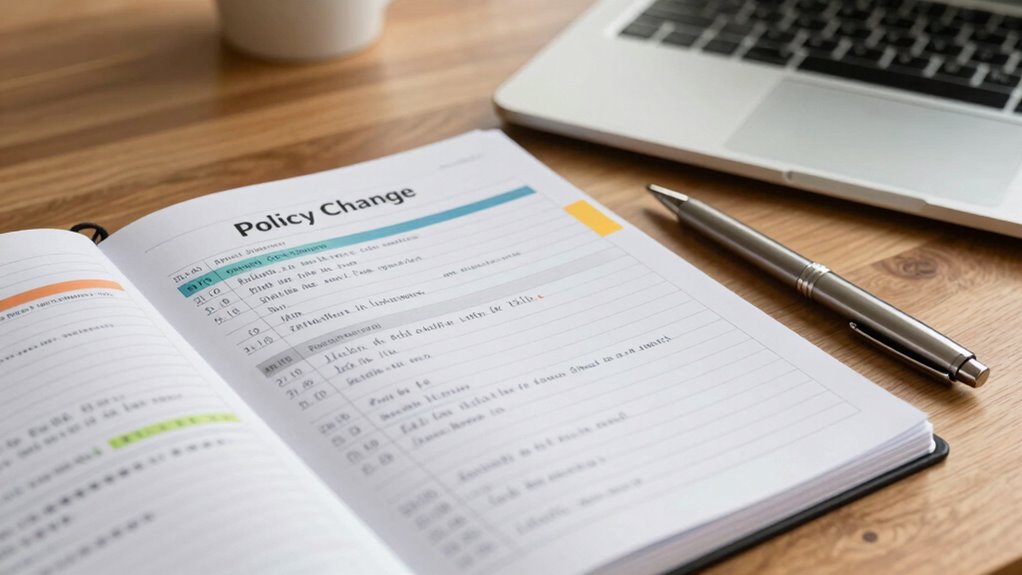
An effective policy change log must include several key elements to guarantee clarity and utility. First, clearly document the change, using precise policy terminology to avoid confusion. Second, note the date of each update to track change frequency and identify recent modifications. Third, record who made the change to ensure accountability. Here’s a quick overview:
| Element | Description | Importance |
|---|---|---|
| Description of Change | Clear, succinct explanation of the update | Ensures users understand the modification |
| Date of Change | When the change was made | Tracks change frequency and relevance |
| Responsible Person | Who approved or made the change | Maintains accountability |
| Version Number | Revision number for reference | Facilitates document management |
Including these elements keeps your change log precise, easy to follow, and effective.
Tips for Maintaining and Updating Your Policy Records

To effectively maintain and update your policy records, you should establish a systematic process for reviewing and documenting changes regularly. Consistently updating your policy documentation guarantees that records stay accurate and reflect current practices. Schedule periodic reviews to identify outdated or unclear policies, and promptly record any revisions. Use clear versioning to track changes over time, making it easier to reference previous updates. Maintain a centralized repository for all policy documents to ensure easy access and consistency. Prioritize record accuracy by double-checking details and aligning updates with organizational standards. Regular maintenance prevents confusion and ensures everyone follows the latest policies, reducing errors and misunderstandings. Staying disciplined with your update routine makes your policy change logs a reliable resource for your organization.
Real-Life Examples of Well-Structured Policy Change Logs
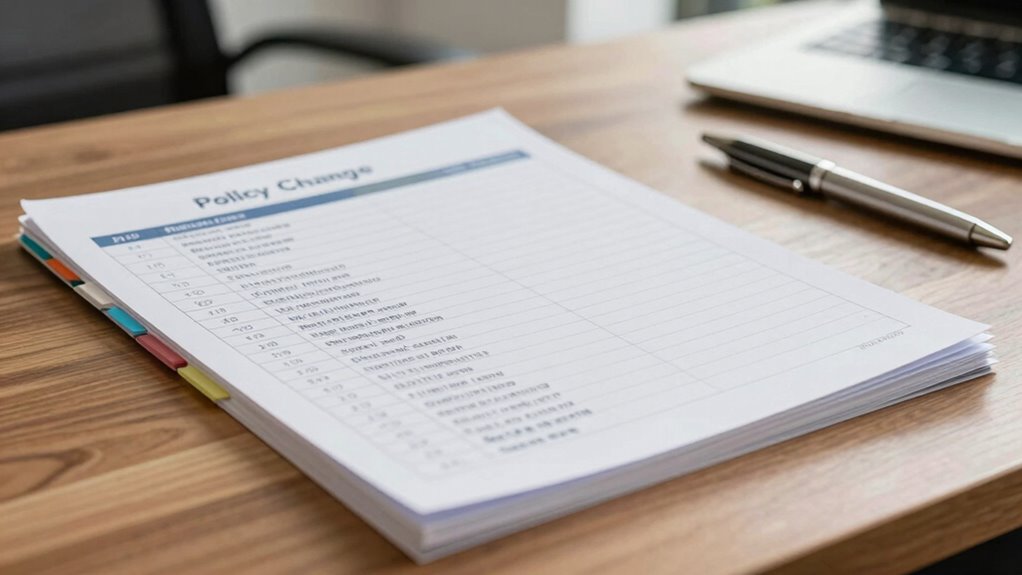
Have you ever wondered what a truly effective policy change log looks like in practice? A well-structured log uses clear version tracking, making it easy to identify updates and their authors. For example, a company’s log might note each change with timestamps, responsible personnel, and a brief description of the modification. This creates reliable audit trails, helping you trace the evolution of policies over time. Such logs prevent confusion when revisions overlap or when multiple team members contribute. They provide transparency and accountability, ensuring everyone understands the history behind policy updates. By maintaining detailed, organized change records, you can easily verify compliance, facilitate reviews, and streamline future updates. These real-life examples showcase how disciplined documentation simplifies policy management and enhances clarity across your organization.
Avoiding Common Mistakes When Managing Policy Change Records

Managing policy change records can be challenging, especially when overlooked mistakes lead to confusion or compliance issues. To avoid this, guarantee you use clear policy terminology throughout your records, so everyone understands each change’s purpose. Document every change with specific details, including the reason and date, to maintain transparency. One common mistake is neglecting proper change approval processes; always secure the necessary sign-offs before implementing updates. This prevents unauthorized modifications and maintains control over your policies. Regularly review records for accuracy and completeness, catching errors early. Consistent documentation of change approval and adherence to terminology help create a reliable log, reducing misunderstandings and ensuring compliance with regulations. Stay diligent, and your policy change records will serve as a valuable, clear resource.
Frequently Asked Questions
How Often Should Policy Change Logs Be Reviewed?
You should review policy change logs regularly, ideally after each significant version update or at least quarterly. Doing so guarantees you stay current with any modifications that might impact employee training or daily operations. This proactive approach helps prevent confusion, keeps everyone on the same page, and ensures policies are consistently followed. Regular reviews make it easier to implement new procedures smoothly and maintain compliance across your organization.
Who Should Be Responsible for Maintaining the Change Log?
You should assign responsibility for maintaining the change log to a designated team member, ensuring clear responsibility assignment. They must follow documentation standards to keep the log accurate and up-to-date. Regular reviews help prevent confusion, so make sure this person updates the log promptly after any policy change. By doing so, you promote consistency and accountability, making it easier for everyone to track policy evolution and stay aligned.
Can Digital Tools Improve Policy Change Tracking?
Yes, digital tools can considerably improve policy change tracking. You’ll benefit from digital recordkeeping, which makes storing and accessing updates easy, and version control, ensuring you’re always aware of the latest policy changes. These tools help prevent confusion by automatically logging changes, providing clear timestamps, and allowing you to review previous versions effortlessly. By adopting such technology, you streamline policy management and maintain accurate, up-to-date documentation.
How Do Change Logs Impact Compliance Audits?
Change logs act like a trusted lighthouse, guiding you through audit preparation and compliance verification. They show a clear trail of updates, making it easier to demonstrate adherence during audits. When you maintain detailed change logs, you reduce surprises and streamline the process, ensuring auditors can verify compliance quickly. This proactive approach keeps your organization on track and minimizes risks, turning complex audit tasks into manageable checkpoints.
What Privacy Considerations Exist for Policy Change Data?
You should consider privacy implications and data security when managing policy change data. Protect sensitive information by restricting access and encrypting logs to prevent unauthorized viewing. Be transparent with users about how their data is stored and used, ensuring compliance with privacy regulations. Regularly review your security measures to prevent breaches, and establish clear policies for handling sensitive change logs to maintain trust and safeguard privacy.
Conclusion
By maintaining a clear policy change log, you prevent chaos from erupting like a volcano. It’s your secret weapon to keep everyone on the same page and avoid confusion that could derail your organization. When you stay diligent with updates, your policies become a fortress of clarity, guiding your team smoothly through any change. Don’t let chaos reign—embrace this tiny practice and watch your policy management become unstoppable!