

To separate “need” from “nice to have,” start by identifying items essential for daily operations, like reliable computers and furniture, that can’t be compromised. Evaluate how missing each item would impact productivity and prioritize accordingly. Consider long-term value and support from vendors, not just upfront costs. Staying disciplined with your budget helps avoid overspending on non-essentials. Want to craft a clear procurement plan? Keep going to uncover more helpful strategies.

Get office and shipping supplies delivered free — and shop member deals
- Fast, free delivery on millions of items
- Access to Prime Big Deal Days deals on October 6–7
- Prime Video, Amazon Music and more included
Key Takeaways
- Identify essential items that directly impact productivity and daily operations, labeling them as needs.
- Evaluate each item’s long-term value and support, prioritizing durability and reliability over features.
- Use budget constraints to differentiate between must-have essentials and optional enhancements.
- Ask whether each item addresses core organizational priorities or if it’s merely a convenience.
- Incorporate sustainability considerations to determine if a product aligns with long-term environmental goals.
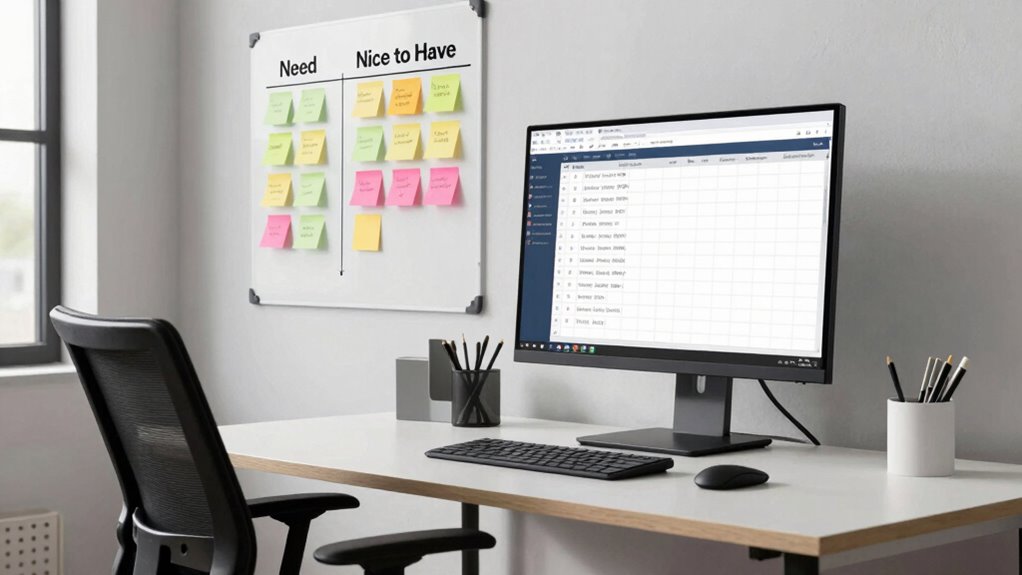
Have you ever found yourself overwhelmed by endless lists of wants and needs when making a decision? It’s a common feeling, especially when shopping for office supplies or equipment. The key to making smart choices is learning how to distinguish what’s truly essential from what’s just nice to have. This process begins with a clear understanding of your organization’s priorities and involves a strategic approach, including vendor evaluation and budget prioritization.
Start by defining your core needs. Ask yourself what the office absolutely must have to operate efficiently and effectively. These are the items that, if missing, would hinder productivity or disrupt daily functions. For example, reliable computers or essential furniture are non-negotiables. Once you identify these needs, you can evaluate vendors based on their ability to meet these core requirements. During vendor evaluation, look for quality, reliability, and support services, not just price. A vendor offering the lowest upfront cost might seem appealing but could end up costing more in repairs or replacements later. This evaluation helps guarantee that your choices align with your actual needs rather than fleeting preferences or marketing hype.
Define your core needs and evaluate vendors based on quality and reliability to ensure smart, long-term office investments.
Next, prioritize your budget. Knowing your financial limits keeps you from overspending on non-essential items. Allocate funds first to those essentials, ensuring they’re covered before considering anything that’s nice to have. Budget prioritization keeps your spending disciplined and focused. It also provides a framework for comparing options objectively. If a piece of equipment or furniture exceeds your budget but offers little additional value, it’s probably not worth the extra expense. Conversely, if a slightly higher investment in a reliable vendor guarantees longer-lasting, better-supported products, it might be a smart choice even if it’s a little above your initial plan. Incorporating sustainable practices into procurement decisions can also lead to cost savings and positive environmental impacts, reinforcing your organization’s commitment to responsible resource management.
As you go through this process, remember that your goal isn’t just to buy what’s cheapest but to make thoughtful, strategic decisions that serve your organization’s long-term interests. It’s tempting to add extra features or upgrades, but ask whether they genuinely improve productivity or if they’re just “nice to have.” Keep your focus on the essentials first, and only consider the “nice to have” options once your core needs are met within your budget. Recognizing the importance of biodiversity and sustainable practices can also inspire smarter resource management and environmentally-conscious procurement decisions that benefit both your organization and the planet. Being aware of environmental impacts during procurement can help you choose options that support your sustainability goals without compromising quality or efficiency. Developing an understanding of sustainable procurement practices can further enhance your decision-making process and promote long-term environmental responsibility. This awareness not only benefits your organization but also contributes to a healthier planet, aligning with the broader goal of environmental sustainability.
As an affiliate, we earn on qualifying purchases.
Frequently Asked Questions
How Do I Prioritize Multiple Office Equipment Needs Simultaneously?
To prioritize multiple office equipment needs, start by evaluating which items directly impact productivity and employee well-being, like ergonomic accessories and smart technology. Focus first on essentials that improve comfort and efficiency, then consider those that offer added convenience. Create a list, rank items based on urgency and budget, and seek input from staff. This approach guarantees you address critical needs first while planning for future upgrades.
What Criteria Define a “Need” Versus a “Nice to Have”?
You define a “need” by its impact on productivity and employee well-being—ergonomic accessories, for example, improve comfort and reduce injuries. Conversely, decorative items, while nice to have, don’t directly affect work efficiency. Remarkably, studies show 80% of office workers prefer ergonomic upgrades over aesthetic changes. Focus on essentials that support daily tasks and health first, then consider decorative items as upgrades for morale and environment.
How Can Budget Constraints Influence the Separation Process?
Budget constraints can make the separation process tricky, but you can manage this by evaluating your budget flexibility. When funds are limited, prioritize procurement strategies that focus on essential needs first, guaranteeing critical functions are covered. Avoid unnecessary expenses by clearly distinguishing needs from nice-to-haves. This way, you optimize your spending, make smarter purchasing decisions, and ensure crucial office requirements are met without overspending.
Are There Industry Standards for Determining Essential Office Supplies?
Remember, “what’s essential is often overlooked.” Industry standards for office supplies emphasize basic items like paper, pens, and desks, but these vary by industry. You should compare vendors to find quality and price, ensuring supplies meet your needs. Incorporate sustainability considerations, favoring eco-friendly products where possible. This approach helps you determine what’s truly necessary, avoiding overbuying and aligning purchases with both standards and your company’s values.
How Often Should Office Needs Be Reassessed for Relevance?
You should reassess your office needs every six to twelve months, especially when considering changes in office space or employee comfort. Regular reviews help guarantee your supplies and workspace remain relevant, supporting productivity and well-being. If your team grows or shifts, or if new technology impacts how your office functions, reevaluate more frequently. Staying proactive keeps your office environment efficient, comfortable, and aligned with current needs.
As an affiliate, we earn on qualifying purchases.
Conclusion
By focusing on your core needs and distinguishing them from nice-to-haves, you guarantee smarter office purchases. Remember, a recent survey found that 68% of companies overspend on office supplies by prioritizing non-essential items. So, stay disciplined, evaluate each item carefully, and always ask yourself if it’s truly necessary. This way, you’ll optimize your budget and create a more efficient workspace, making every dollar count.
As an affiliate, we earn on qualifying purchases.
As an affiliate, we earn on qualifying purchases.
Fall Picks
fall essentials
As an affiliate, we earn on qualifying purchases.