
TL;DR

Get business pricing on office and shipping supplies
- Business-only prices and quantity discounts
- Tax-exempt purchasing
- Multiple users, one account, clear invoices
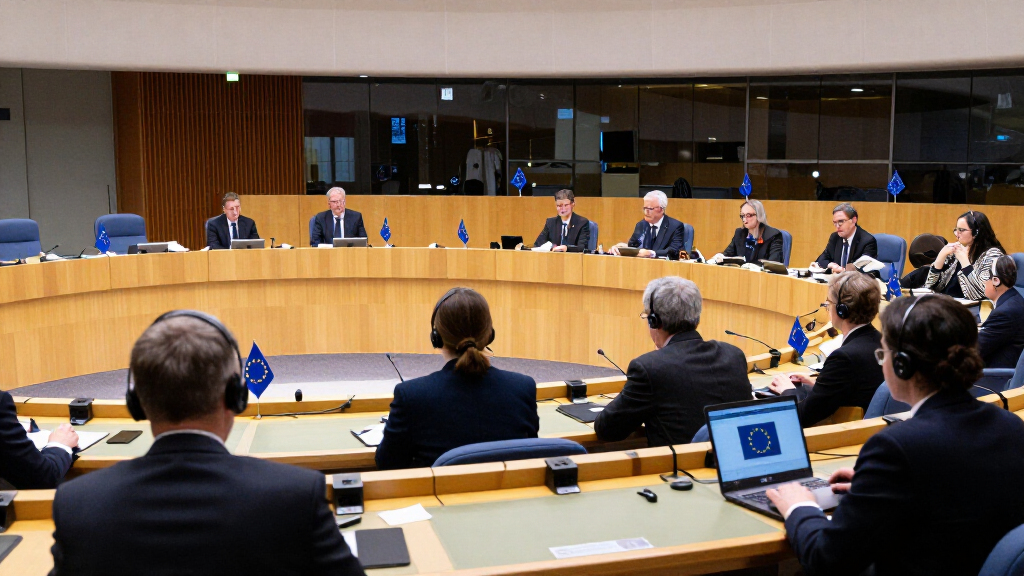
ECB President Christine Lagarde told European Parliament lawmakers on Sept. 28 that the euro-area economy remained resilient but inflation rose to 3.2% in August, largely reflecting higher energy costs. She defended the ECB’s recent 25-basis-point rate increase and said AI could lift productivity while also affecting jobs, investment and inflation; its overall macroeconomic impact remains uncertain.
Lagarde said real gross domestic product grew solidly in the second quarter of 2026, with growth spread across most countries and sectors. She said the pattern was expected to continue in the third quarter, citing manufacturing, government spending on defence and infrastructure, recovering services and AI-related activity in digital services, investment and exports. The ECB’s September staff projections put growth at 0.9% in 2026, 1.4% in 2027 and 1.5% in 2028.
Annual headline inflation rose from 2.9% in July to 3.2% in August, according to figures Lagarde presented. Energy inflation climbed to 14.3% from 10.3%, reflecting higher energy commodity prices and refining margins on liquid fuels. Food inflation eased to 1.1%, while inflation excluding food and energy edged down to 2.4%. Compensation per employee grew 3.3% in the second quarter, down from 3.6% in the first; Lagarde said wages had not yet shown a material response to the energy shock.
The ECB raised its three key interest rates by 25 basis points earlier in September. Lagarde said the decision reflected higher projected inflation and risks around the outlook, while the bank had not yet seen evidence that energy costs were feeding into wages. She said longer-term interest rates had also risen since the previous meeting, a development expected to weigh on growth and reduce the pass-through of monetary policy more than projected in the September exercise. The ECB’s baseline forecasts headline inflation averaging 3.0% in 2026, 2.5% in 2027 and 2.1% in 2028.
Rate Decision Meets Energy Inflation
The hearing set out how the ECB is weighing an energy-driven rise in prices against signs that the shock has not yet spread materially into wages. That distinction matters for households and businesses because a sustained rise in broader inflation could affect borrowing costs and the pace of economic activity. Lagarde said the ECB considers the inflation outlook, underlying inflation dynamics and the transmission of monetary policy when judging its response.
AI adds another uncertainty to that outlook. Lagarde said firms were expected to devote around 10% of total investment to AI in 2026 and that AI-related borrowing already represented roughly a quarter of credit growth to firms. These figures point to AI’s growing role in investment and credit, but do not establish how much productivity or inflation will change. The effects could influence the ECB’s assessment of growth and prices over time.
The ECB’s Three-Part Assessment
Lagarde described the ECB’s approach to energy shocks as responding to the risk that higher energy prices become embedded in inflation, rather than reacting to energy prices alone. Its three-part assessment examines the inflation outlook and associated risks; underlying inflation, including the pass-through of energy costs to other prices and wages; and how monetary policy affects borrowing costs and growth.
At the hearing, the ECB’s projections showed headline inflation above its 2% medium-term target through 2027, then at 2.1% in 2028. Longer-term inflation expectations were mostly around 2%, Lagarde said, while expectations over shorter horizons remained elevated. The outlook was subject to high uncertainty, with risks of higher inflation and weaker growth.
On AI, Lagarde said the technology could reshape production, business models and economic structures, but that its overall macroeconomic effect was uncertain. The supplied speech excerpt begins to describe channels through which AI may affect the economy but ends before giving further detail. It therefore does not provide a complete account of her discussion of those channels.
““We do not react to energy prices, we react if we see risks of higher energy prices becoming embedded in inflation.””
— Christine Lagarde, ECB president
Inflation and AI Effects Remain Open
It remains unclear whether the energy-price increase will feed into wages and broader prices. Lagarde said there was no evidence of that pass-through at the time of the hearing, but the ECB identified upside risks to inflation and downside risks to growth. The supplied speech does not specify how long the energy shock is expected to last.
The scale and timing of AI’s effects on productivity, employment, investment and inflation are also uncertain. Lagarde described AI as capable of transforming the economy but did not, in the available excerpt, quantify likely economy-wide gains or losses. The excerpt ends mid-discussion, so it does not establish the full set of effects or policy conclusions she presented.
ECB to Reassess Incoming Data
The ECB’s next policy decisions will depend on how the inflation outlook, underlying price and wage trends, and monetary-policy transmission develop. Lagarde said the bank would continue to assess those three criteria as new information arrives. The speech did not announce a date or outcome for a future rate decision.
For the economy, the ECB’s September projections provide the stated baseline: growth is forecast to strengthen from 0.9% in 2026 to 1.5% in 2028, while headline inflation is forecast to ease to 2.1% over the same period. Those are projections, not confirmed outcomes; the bank said the outlook remains highly uncertain.
Key Questions
What did Lagarde tell the European Parliament committee?
She discussed the euro-area economic outlook, the ECB’s recent interest-rate increase and how energy inflation and AI could affect the economy.
Why did the ECB raise rates?
Lagarde said the ECB raised its three key rates by 25 basis points because inflation was projected to be higher, chiefly due to energy prices. She said the bank had not yet seen evidence of those prices feeding into higher wages.
How high was euro-area inflation in August 2026?
Headline inflation was 3.2% in August, up from 2.9% in July, according to figures Lagarde presented. Energy inflation rose to 14.3% from 10.3%.
What did Lagarde say about AI’s economic impact?
She said AI could reshape production and business models and potentially affect productivity, labour markets and inflation. Its overall macroeconomic effect remains uncertain.
What are the ECB’s economic projections?
The September staff baseline forecasts euro-area growth of 0.9% in 2026, 1.4% in 2027 and 1.5% in 2028. It projects headline inflation of 3.0%, 2.5% and 2.1% in those years, respectively; these are forecasts rather than established results.
Source: primary
Fall Picks
fall essentials
As an affiliate, we earn on qualifying purchases.