
TL;DR

Get business pricing on office and shipping supplies
- Business-only prices and quantity discounts
- Tax-exempt purchasing
- Multiple users, one account, clear invoices
Christine Lagarde said euro area headline inflation was 4% in October, with energy inflation rising to 20.8% amid Middle East conflict and reduced refinery capacity. She said core inflation was 2.5% and the ECB was not seeing signs of second-round effects beyond those included in its projections. Lagarde said the central bank would assess new data before deciding monetary policy.
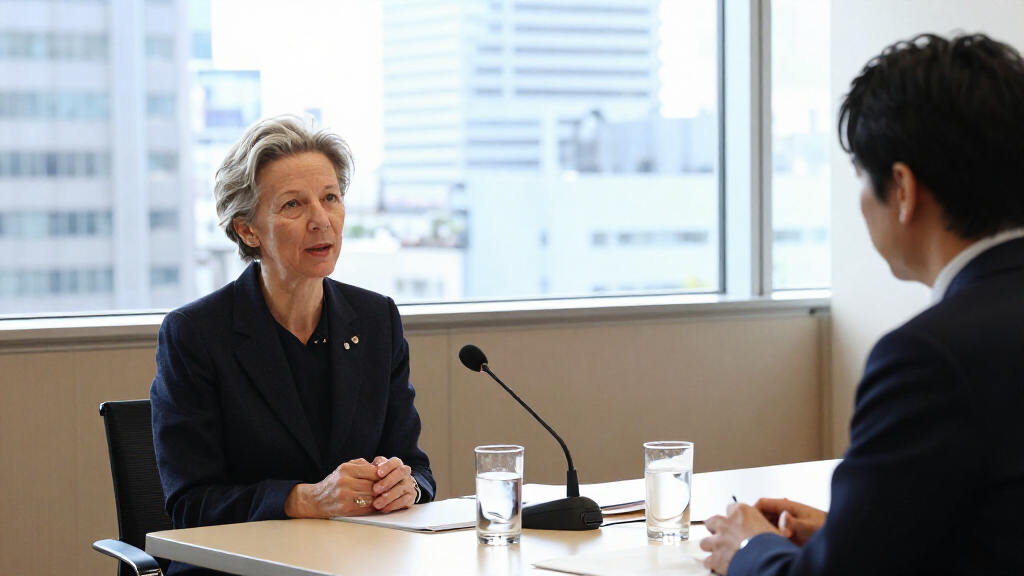
European Central Bank President Christine Lagarde said euro area inflation reached 4% in October, largely because energy inflation accelerated, while underlying price measures remained more stable. In an interview with Japan’s Yomiuri Shimbun, published by the ECB on November 7, she said policymakers would examine incoming data before judging how the latest price pressures affect the medium-term outlook.
Lagarde attributed much of October’s headline inflation to energy. Energy inflation rose to 20.8% from 18.9% in September, which she said reflected the Middle East conflict and reduced global refinery capacity. Food inflation also increased. The ECB president said October’s headline figure was higher than the central bank had expected a few months earlier, but was in line with market expectations.
Measures excluding volatile components were less elevated: core inflation was 2.5%, unchanged from September, while services inflation edged up to 3.3%. Lagarde said services inflation had remained within the range seen over the preceding four months. She added that the detailed breakdown of inflation was not yet available, leaving the ECB to assess whether services price growth was concentrated in energy-intensive areas such as transport or reflected broader indirect effects.
Lagarde said the ECB was not currently seeing signs of second-round effects beyond those already included in its projections. She cited wage agreements and company wage expectations as forward-looking indicators the central bank was monitoring. She declined to anticipate whether the forecasts would be revised upward, saying the forecast exercise would determine how higher energy futures and long-term interest rates, alongside more recent declines in oil prices, affect inflation and growth.
Energy Pressures Shape ECB Decisions
The combination of elevated headline inflation and steadier core measures presents a challenge for the ECB: officials must judge whether the increase is mainly a temporary energy-driven shock or whether it could spread into prices and wages. Lagarde said inflation would remain high in coming quarters and warned that the longer inflation stays elevated, the greater the risk to the medium-term target.
That distinction matters to households, businesses and financial markets because it can influence the path of interest rates and the cost of borrowing. Lagarde did not announce a policy change or signal a specific rate decision in the interview. Instead, she emphasized uncertainty and a data-dependent approach as the ECB weighs energy costs, inflation detail and economic conditions.
Products Worth Considering

Dell UltraSharp U2424H 24-Inch FHD Monitor

Dell 27 Plus 4K USB-C Monitor (S2725QC), 27-inch IPS, 120Hz

Dell UltraSharp U3223QE 31.5-Inch 4K UHD Monitor
As an affiliate, we earn on qualifying purchases.
Lessons From the 2021 Energy Shock
Asked about the ECB’s response to the 2021 energy shock following Russia’s invasion of Ukraine, Lagarde said central banks initially treated the rise in prices as a supply shock likely to pass. She recalled discussions involving the Federal Reserve, Bank of England, Bank of Japan and ECB, in which officials expected supply-driven inflation to recede.
Lagarde described that judgment as “misguided” in hindsight, saying a demand shock was also taking place as economies reopened and consumers spent savings accumulated during the pandemic. She said the experience reinforced the difficulty of separating interacting causes of inflation. In the current environment, she pointed to trade and supply-chain disruptions and a stronger focus on security over efficiency as factors making the economic outlook less predictable.
The interview also addressed women in leadership. Lagarde said 27 people attend ECB Governing Council meetings and that she and Executive Board member Isabel Schnabel were the only two women at the table at the time of the interview. She said national governments appoint members and may favor candidates who resemble those already in positions of power. She also praised former Japanese Prime Minister Shinzo Abe’s “One Million Women” initiative, which she said brought one million additional women into the workplace through measures including greater municipal freedom to open childcare centers.
““It’s important to look under the hood.””
— Christine Lagarde, ECB president, in the Yomiuri Shimbun interview
Key Inflation Details Still Pending
The ECB did not yet have the detailed October inflation breakdown when Lagarde spoke, so it remained unclear whether the rise in services inflation was concentrated in energy-intensive sectors or reflected wider indirect effects. The interview also did not specify how much higher energy futures or long-term interest rates might change the central bank’s medium-term forecasts.
Lagarde said there was no evidence at that point of additional wage-driven inflation beyond what the ECB had already incorporated in its projections. That assessment could change as new wage and price data arrive. She did not give a timetable or a specific threshold that would trigger a change in interest rates, and no policy decision was announced in the interview.
ECB Forecasts Await New Data
The ECB’s next forecast exercise will assess how changed energy-market expectations, long-term interest rates and other economic developments affect the outlook for inflation and growth. Lagarde said policymakers would examine the detailed services inflation breakdown and continue monitoring wage agreements and company expectations.
She described monetary policy as being made amid heightened uncertainty, including trade and supply-chain disruption. The interview did not set out a date for a rate move or promise a particular response. The next developments will be the release of fuller inflation data and the ECB’s updated assessment of whether price pressures are broadening or remaining largely energy-driven.
Key Questions
What inflation rate did Lagarde cite for October?
Lagarde said headline inflation was 4% in October. She said the figure was higher than the ECB had expected a few months earlier but in line with market expectations.
What was driving the increase?
She said energy was the main factor: energy inflation rose to 20.8% from 18.9% in September, amid the Middle East conflict and reduced global refinery capacity. Food inflation also increased.
Did Lagarde signal an interest-rate increase?
No specific rate decision or increase was announced in the interview. Lagarde said the ECB would use incoming data and its forecast exercise to assess the effects of changing energy prices and other conditions.
Is the ECB seeing wage-driven second-round inflation?
Lagarde said the ECB was not seeing signs of second-round effects beyond those already included in its projections. She said officials were watching multi-year wage agreements and companies’ wage expectations.
When was the interview conducted and published?
The ECB says the interview with Yomiuri Shimbun journalist Hironari Akiyama was conducted on November 4, 2026, and published by the ECB on November 7.
Source: ecb.europa.eu