
The Business Model Canvas is a one-page visual tool that helps you map out your entire business, revealing blind spots and uncovering new opportunities. It organizes nine key components like customer segments, value propositions, channels, and costs, making complex ideas clear and actionable. By identifying gaps and overlooked revenue streams, you can make smarter decisions and refine your strategy. Keep exploring—there’s much more to discover to strengthen your business.
Key Takeaways
- The Business Model Canvas visually maps all core components, highlighting gaps and blind spots in strategy and operations.
- It connects customer segments with value propositions to ensure targeted, aligned offerings.
- Regularly updating the canvas reveals overlooked revenue streams and hidden cost drivers.
- The tool facilitates objective assessment of assumptions, uncovering vulnerabilities and external risks.
- It supports continuous refinement by integrating market trends, customer feedback, and competitive insights.
What Is the Business Model Canvas and Why It’s Essential for Your Business
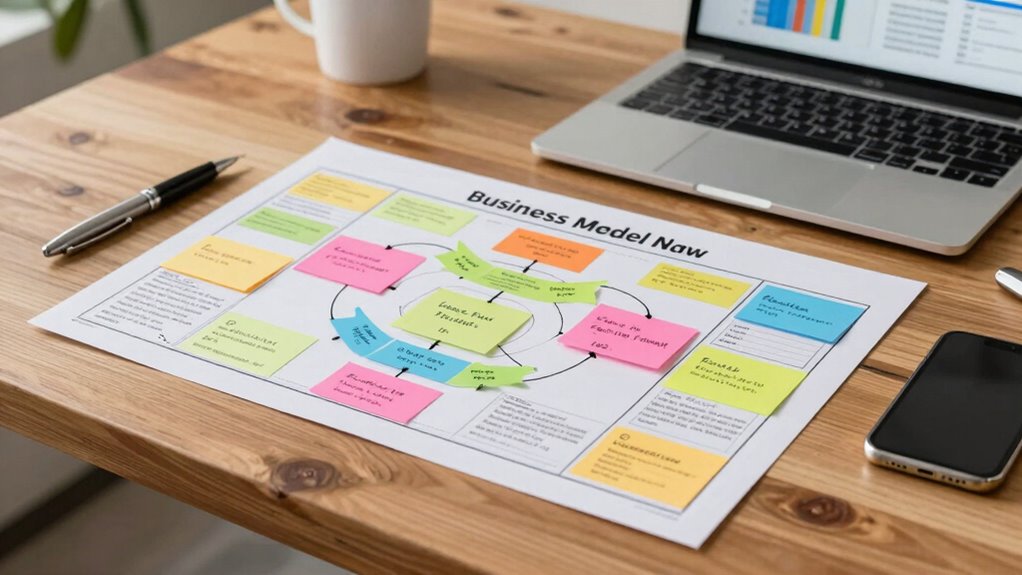
Have you ever wondered how successful businesses map out their strategies so clearly? The Business Model Canvas is a powerful tool that helps you do just that. It provides a one-page visual blueprint of your entire business, making it easier to see how different components connect. It highlights your Value Proposition—the unique value you deliver—and your Customer Segments, the specific groups you target. By clearly defining these, you can align your offerings with customer needs and stand out in the market. The Canvas simplifies complex ideas into a straightforward format, allowing you to identify strengths and gaps quickly. This clarity helps you make smarter decisions, refine your business model, and ultimately, increase your chances of success. Additionally, understanding the reliable, well-researched concepts behind your business components ensures that your strategy is rooted in solid foundations, making your plans more effective. Recognizing the importance of visual elements and other design principles can also help you develop more engaging and effective customer experiences. Incorporating best practices from successful companies can further enhance your understanding of how to structure your business effectively.
Understanding the Nine Building Blocks of Your Business Model
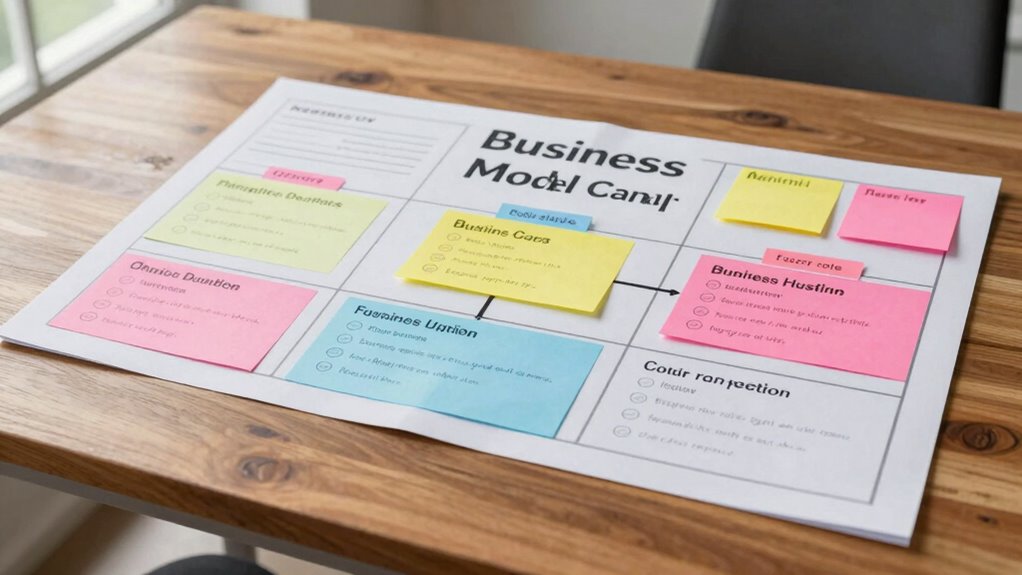
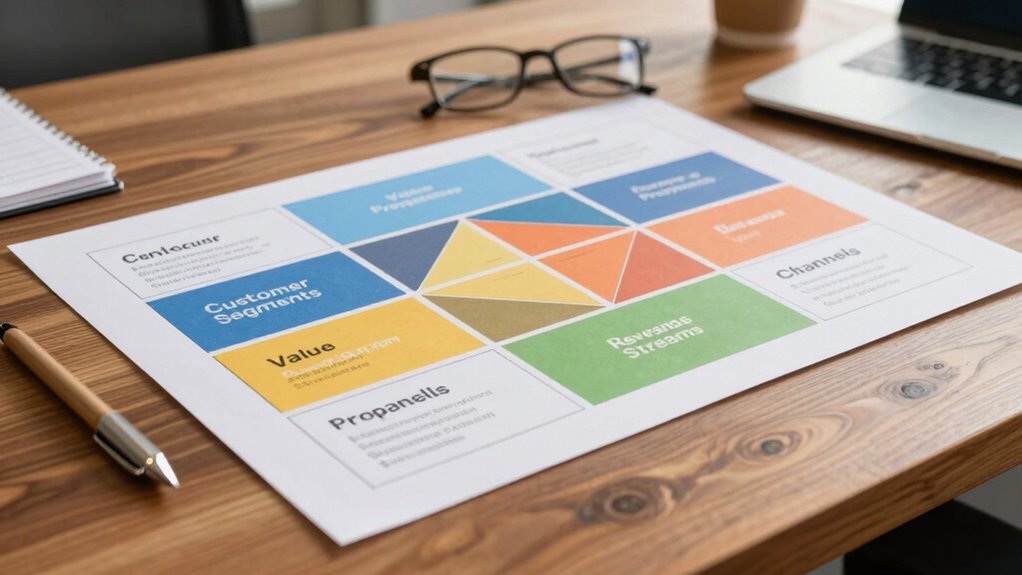
The Business Model Canvas organizes your business into nine key building blocks, each representing a vital aspect of how your company creates, delivers, and captures value. Understanding these blocks helps you see the full picture clearly. Start with Customer Segments, which define who your target customers are. Knowing your Customer Segments allows you to tailor your Value Proposition—what makes your product or service uniquely valuable and solves their problems. The Value Proposition should directly address the needs and desires of your segments, ensuring relevance and appeal. By grasping the connection between Customer Segments and your Value Proposition, you can better align your offerings with customer needs. This clarity enables you to optimize your business model for growth, efficiency, and customer satisfaction.
Why Blind Spots in Your Business Model Matter and How They Hold You Back
Blind spots like overlooked revenue streams and hidden cost drivers can silently undermine your business. These blind spots stop you from seeing opportunities for growth and areas where expenses are draining resources. Addressing them is essential to unseal your full potential and avoiding unnecessary setbacks. Recognizing the influence of wave and wind can help you better understand external factors that impact your business environment. Incorporating sustainable cloud solutions into your analysis can reveal additional blind spots related to energy efficiency and environmental impact. Being aware of digital safety risks is also crucial to protect your business from cyber threats that could exploit these unseen vulnerabilities. Additionally, understanding technological advancements can help you stay ahead of industry changes and prevent obsolescence.
Overlooked Revenue Streams
Overlooked revenue streams can silently limit your business’s growth potential. When you miss unrecognized revenue opportunities, you leave money on the table and overlook profit that could boost your bottom line. These blind spots often stem from focusing too narrowly on core offerings, ignoring supplementary services, or underestimating customer needs. By not identifying all possible income sources, you risk stagnation and falling behind competitors who capitalize on these overlooked avenues. Recognizing hidden revenue streams requires a clear view of your entire value chain and customer journey. Additionally, understanding customer needs more comprehensively can reveal new opportunities for monetization. For example, exploring alternative markets such as electric bike accessories can open up additional revenue streams. When you expand your perspective, you access new revenue sources that can substantially enhance profitability. Addressing these blind spots guarantees you’re capturing every dollar your business can generate, fostering sustainable growth and long-term success.
Hidden Cost Drivers
Unseen cost drivers can quietly drain your resources and undermine your business’s profitability. These hidden expenses often go unnoticed, causing profit leaks that hinder growth. By identifying and addressing these blind spots, you can improve cost optimization and prevent unnecessary spending. For example, inefficient processes, overlooked supplier fees, or maintenance costs can quietly accumulate, eating into your margins. Without visibility into these hidden costs, you risk making decisions based on incomplete data, leading to further inefficiencies. Recognizing and managing these cost drivers allows you to streamline operations, allocate resources more effectively, and maximize profitability. The key is to continuously monitor and analyze your expenses, ensuring no profit leaks remain hidden, so your business stays agile and financially healthy. Additionally, implementing connected equipment and real-time data tracking can help uncover these hidden cost factors more effectively, providing deeper insights into your operations and expenses. Utilizing cost management tools can further enhance your ability to detect and control these expenses proactively.
How the Business Model Canvas Reveals Common Blind Spots
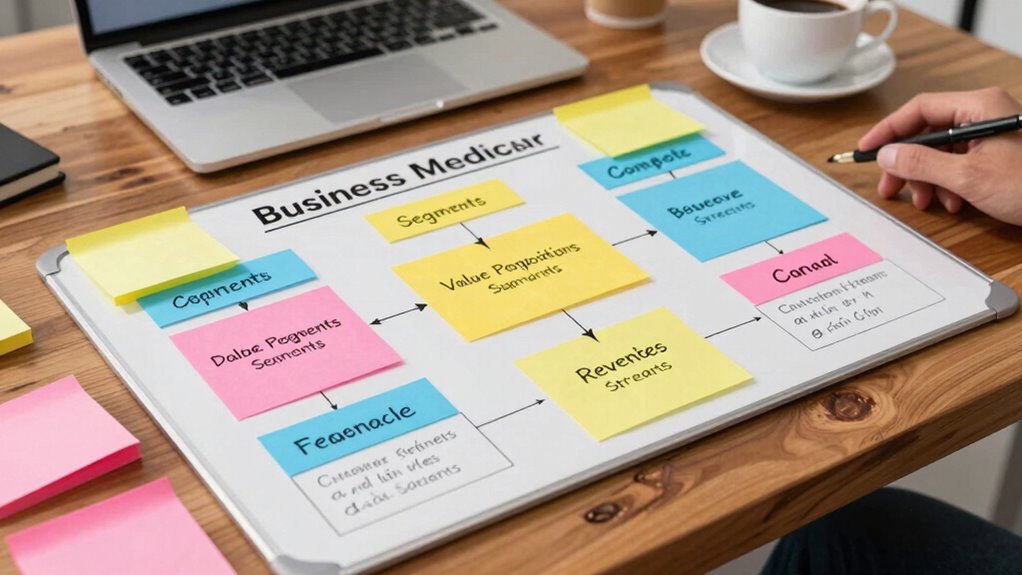
The Business Model Canvas is a powerful tool that helps you identify gaps and weaknesses in your business strategy. It highlights blind spots you might overlook, like over-relying on a narrow customer segment or neglecting opportunities for market diversification. By visualizing your value propositions, customer segments, and channels side by side, you see where your assumptions may be flawed. For example, if your customer segmentation is too narrow, you risk missing out on potential markets. Similarly, overlooking market diversification could leave you vulnerable to industry shifts. The Canvas prompts you to examine these areas objectively, revealing hidden vulnerabilities. Recognizing these blind spots early enables you to adapt your approach, target broader audiences, and diversify markets for sustainable growth. Incorporating balanced designs into your strategy can foster more comprehensive insights and a resilient business model. Additionally, understanding the importance of water-based options, such as aquatics or hydrotherapy, can inspire innovative approaches to expanding your offerings and reaching new customer segments. Exploring market analysis tools can further enhance your ability to analyze market trends and optimize your business model. Moreover, leveraging customer feedback mechanisms can help identify unforeseen challenges and opportunities from your audience’s perspective.
Step-by-Step Guide to Filling Out Your Business Model Canvas Effectively
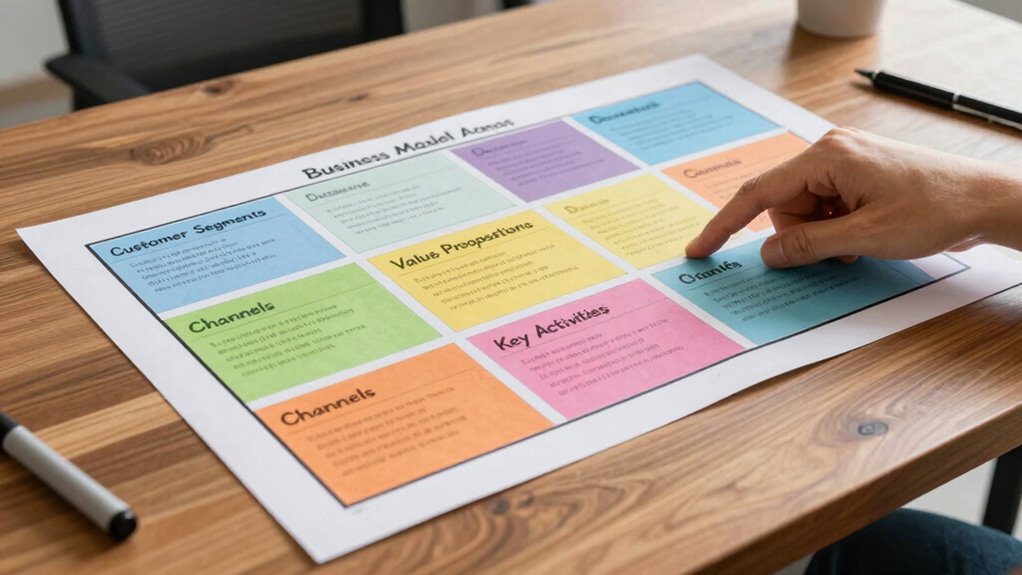
Filling out your Business Model Canvas effectively starts with understanding each building block and how they connect. Begin with Customer Segmentation to identify your target audiences clearly. Knowing who your customers are helps you tailor your Value Proposition to meet their specific needs and desires. Next, define your Value Proposition to articulate what makes your product or service unique and compelling. As you proceed, connect Customer Segmentation with your Value Proposition to ensure alignment. Fill out each section systematically, focusing on clarity and honesty. Remember, the goal is to create a coherent map that reveals how your business creates value for different customer groups. Incorporating insights from auditory processing challenges can help you refine your value offerings and target the right customer segments. This approach ensures your canvas is practical, insightful, and ready to guide strategic decisions. Additionally, exploring industry-specific trends can help refine your value offerings and target the right customer segments. Paying attention to sound therapy benefits can provide innovative ways to enhance your value propositions and connect more deeply with customers seeking holistic solutions.
Real-World Examples of Business Model Canvas in Action
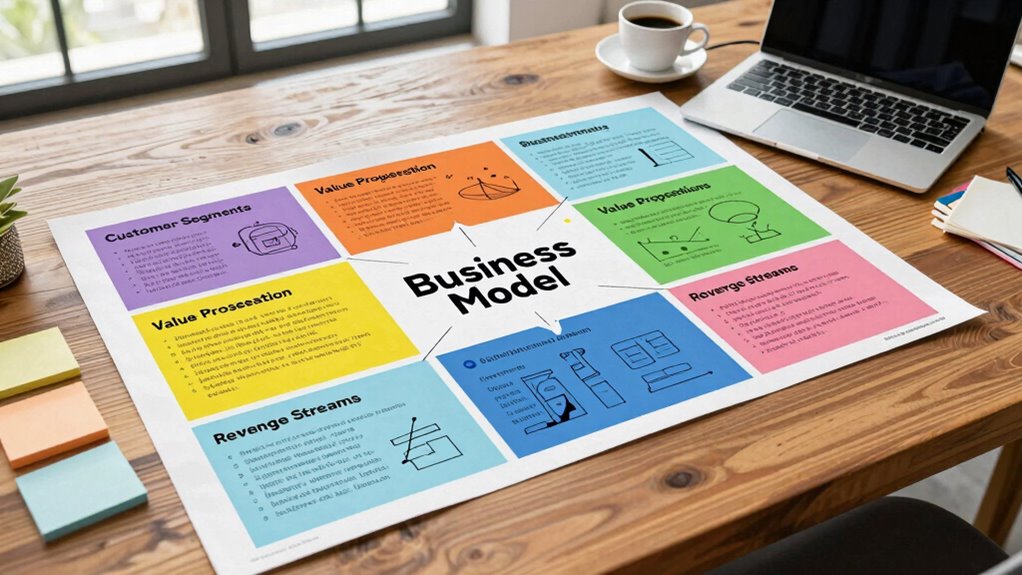
Have you ever wondered how successful companies turn their business ideas into actionable plans? Real-world examples and case studies show how the Business Model Canvas helps clarify strategies across industries. For instance, Airbnb’s canvas emphasizes customer segments like travelers and hosts, while Uber focuses on drivers and riders. These industry examples reveal how visualizing key components exposes opportunities and gaps. Researching companies thoroughly can help identify potential red flags and improve strategic planning. Additionally, understanding business model components enhances your ability to adapt and innovate within your industry. Here’s a quick overview:
| Company | Key Focus Areas | Unique Approach | Outcomes |
|---|---|---|---|
| Airbnb | Customer segments & value proposition | Peer-to-peer platform | Rapid growth & market disruption |
| Uber | Revenue streams & channels | On-demand transportation | Market dominance & scalability |
Using these case studies, you can see how the canvas guides strategic decisions and uncovers blind spots that might otherwise be overlooked.
How to Analyze Your Canvas to Make Smarter Business Decisions
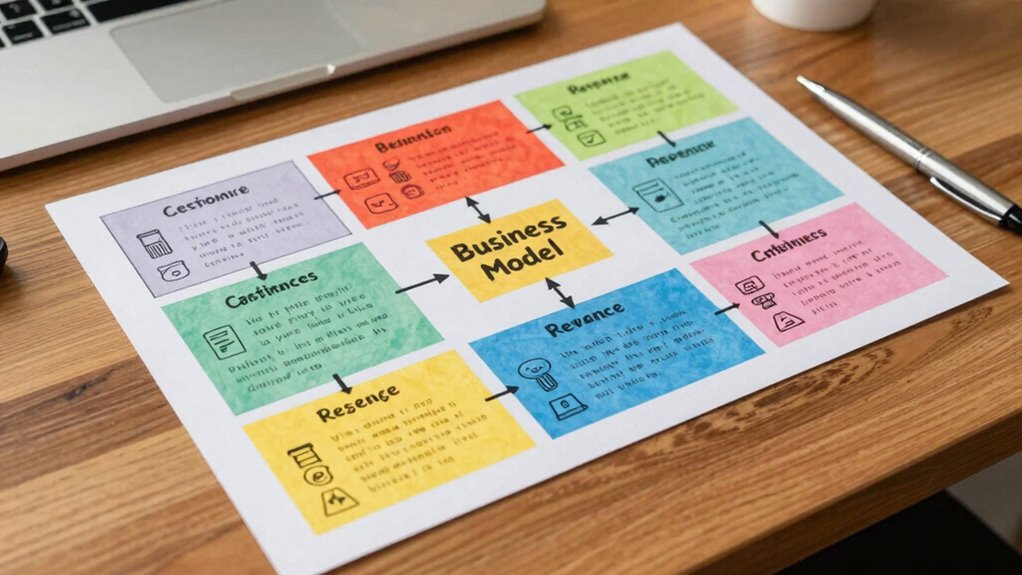
Ever wondered how to make your Business Model Canvas truly work for your strategic decisions? Start by analyzing your customer segmentation to understand who your ideal customers are and what they truly need. Look for patterns and overlaps that reveal underserved markets or overlooked opportunities. Next, evaluate your value proposition to see if it aligns with your customer segments’ needs. Ask yourself if your offerings truly solve their problems or create value for them. Cross-reference these elements with other blocks like channels and customer relationships to identify gaps or redundancies. By systematically analyzing these core components, you can refine your strategy, prioritize actions, and make smarter business decisions that resonate with your target audience and maximize your value delivery.
FAQs About the Business Model Canvas and Its Use

Understanding how to effectively use the Business Model Canvas can raise questions, especially if you’re new to the tool or trying to refine your strategy. You might wonder how it helps identify key factors like market segmentation or gain a competitive advantage. The Canvas simplifies complex concepts, making it easier to visualize customer segments and tailor your offerings accordingly. It also highlights areas where your business can stand out from competitors. Common FAQs include how often to update the Canvas, whether it’s suitable for startups or established companies, and how to leverage it for strategic planning. Overall, the Canvas is a flexible, practical tool designed to give you a clear overview of your business model, revealing blind spots and opportunities to strengthen your market position.
Frequently Asked Questions
Can the Business Model Canvas Be Adapted for Different Industries?
Yes, you can adapt the Business Model Canvas for different industries by incorporating industry-specific adaptations. Its flexible structure allows you to tailor sections to meet unique sector needs, whether you’re in tech, retail, or healthcare. This cross-sector flexibility helps you better understand your business’s core components, identify gaps, and develop strategies suited to your industry’s dynamics, making it a versatile tool for any business context.
What Are Common Mistakes to Avoid When Using the Canvas?
Don’t let your business plan turn into a house of cards; avoid common errors like neglecting customer segments or overcomplicating your value propositions. Pitfall avoidance is key—stay focused on clear, concise elements. Be cautious not to overlook the importance of testing assumptions and updating your canvas regularly. By spotting these pitfalls early, you set yourself up for success and keep your business model from collapsing under preventable mistakes.
How Often Should I Update My Business Model Canvas?
You should update your business model canvas regularly, ideally on a monthly or quarterly basis, to keep it relevant. Establish a revision schedule that aligns with your business cycles and market changes. Frequent updates help you spot blind spots early and adapt strategies quickly. Don’t wait too long; consistent review guarantees your canvas accurately reflects your current operations and future plans, keeping your business agile and competitive.
Is the Business Model Canvas Suitable for Startups and Established Companies?
Yes, the Business Model Canvas suits both startups and established companies. It enhances startup adaptability by helping you quickly pivot and refine your strategy. For established firms, it offers industry versatility, allowing you to visualize new opportunities or optimize current operations. Whether you’re launching a new venture or refining an existing one, this tool keeps your business aligned and agile, ensuring you stay competitive in dynamic markets.
How Does the Canvas Support Long-Term Strategic Planning?
You can use the Business Model Canvas for strategic foresight by regularly updating it to reflect market changes and emerging opportunities. It helps you identify potential risks early, improving risk management. By visualizing all key components on one page, you can align your long-term goals, adapt your strategies proactively, and make informed decisions that guarantee sustained growth and resilience over time.
Conclusion
Think of the Business Model Canvas as your business’s heartbeat—revealing hidden chambers and guiding your path forward. By mapping out each building block, you’ll uncover blind spots lurking in the shadows. It’s your compass, your map, your secret weapon to smarter decisions. Embrace this one-page wonder, and watch your business dance confidently through challenges, turning blind spots into stepping stones on your journey to success.