
To build a better access control policy for your office, start by identifying sensitive areas and defining clear roles for employees to prevent unauthorized entry. Use suitable security systems like keycards or biometrics, and regularly review access permissions to keep them current. Train staff on security procedures and foster a security-conscious culture. Develop and practice emergency protocols for quick response. For an all-encompassing plan that adapts to evolving threats, explore the full strategies outlined next.

Get office and shipping supplies delivered free — and shop member deals
- Fast, free delivery on millions of items
- Access to Prime Big Deal Days deals on October 6–7
- Prime Video, Amazon Music and more included
Key Takeaways
- Conduct comprehensive risk assessments to identify critical areas and tailor access controls accordingly.
- Define clear roles and permissions to restrict access based on job responsibilities and security needs.
- Implement multi-factor authentication methods like biometrics and keycards for enhanced security.
- Regularly review and update access rights to reflect personnel changes and evolving security threats.
- Train employees on security protocols, credential safeguarding, and emergency procedures to foster awareness.
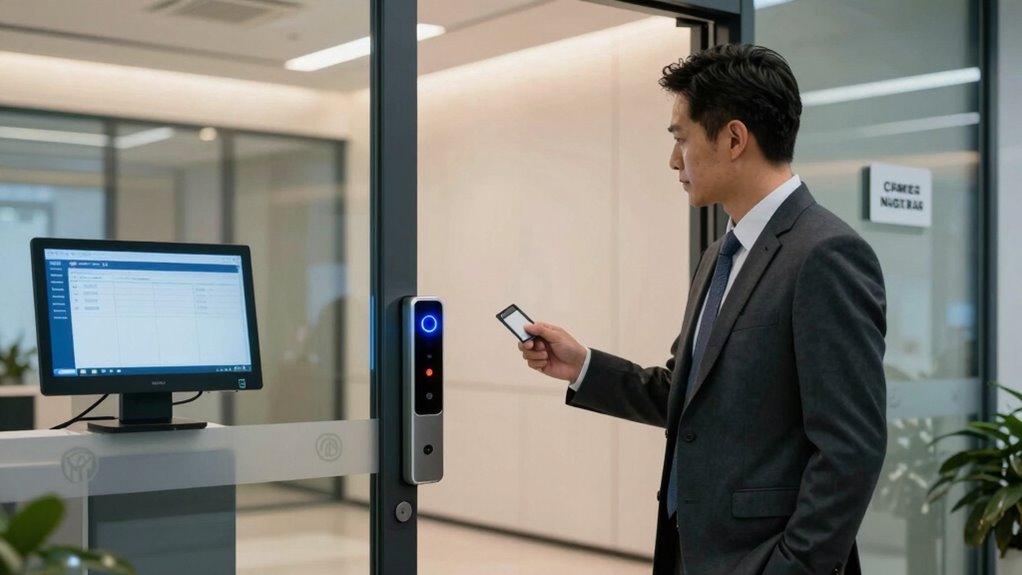
Have you ever wondered how organizations guarantee their office spaces remain secure and only authorized personnel gain access? The key lies in developing a robust access control policy that clearly defines who can enter, how they gain access, and what procedures follow in case of emergencies. The best policies also incorporate physical security measures that complement technology, creating a layered defense system. A well-structured policy combines physical security measures with effective employee training and well-established emergency protocols to minimize risks and ensure safety.
Start by identifying the specific needs of your office environment. Determine which areas require restricted access and establish clear roles for employees based on their responsibilities. This helps prevent unauthorized entry and ensures sensitive information or equipment stays protected. Once you’ve defined these boundaries, implement access control systems like keycards, biometric scanners, or PIN codes to regulate entry. But technology alone isn’t enough—your team needs to understand how to use these systems properly. Regular employee training becomes essential here. Conduct sessions that explain the importance of access controls, proper use of security devices, and the significance of safeguarding credentials. When employees understand their role in security, they’re more likely to follow protocols diligently, reducing vulnerabilities.
Equally important is the development of comprehensive emergency protocols. No security system is infallible, so your policy should include clear steps to follow during emergencies such as fires, break-ins, or medical incidents. Train your staff on these procedures, emphasizing quick response, evacuation routes, and communication channels. Ensuring everyone knows their role during crises not only minimizes chaos but also helps protect lives and assets. Regular drills can reinforce these protocols, making responses more instinctive and effective in real situations. Incorporating security audits regularly can also help identify weaknesses and ensure continuous improvement. Additionally, conducting risk assessments periodically can help prioritize security efforts based on potential threats.
Furthermore, your access control policy should outline procedures for managing access rights, including how to handle new employees, departures, or role changes. This prevents outdated credentials from causing security gaps. Incorporate periodic reviews of access permissions to keep the system current, and establish a process for reporting lost or stolen access devices immediately. Implementing a security audit process can help identify potential vulnerabilities and improve your overall security posture. Staying aware of potential vulnerabilities, including security gaps, enables organizations to proactively address weaknesses before they are exploited.
Finally, your policy must emphasize continuous improvement. Stay informed about advances in security technology and update your controls accordingly. Reassess your emergency protocols periodically to address new threats or changing office layouts. By integrating employee training, clear emergency procedures, and ongoing system reviews, you create a resilient access control framework. This approach not only secures your office but also fosters a security-conscious culture, empowering your team to uphold safety and trust at all times.
office access control keycard system
As an affiliate, we earn on qualifying purchases.
As an affiliate, we earn on qualifying purchases.
Frequently Asked Questions
How Often Should Access Control Policies Be Reviewed?
You should review your access control policies at least annually to guarantee they stay effective. Regular access policy updates help address evolving security threats and organizational changes. During these reviews, focus on compliance monitoring to identify gaps or unauthorized access. Frequent evaluations enable you to refine permissions, revoke outdated access, and maintain a secure environment, ultimately reducing risks and aligning your policies with current security standards and regulatory requirements.
What Tools Are Best for Managing Access Permissions?
You might think managing access permissions is complex, but tools like Okta or Microsoft Azure AD simplify this with user authentication and role-based access features. These platforms let you control who accesses what, when, and how, reducing risks. By automating permission management, you guarantee only authorized personnel get entry, maintaining security. Embrace these tools to streamline your access control, making it both effective and easy to oversee.
How to Handle Access for Temporary or Visiting Personnel?
To handle access for temporary or visiting personnel, you should implement a visitor management system that grants temporary access. Issue time-limited credentials or badges that automatically expire after their visit. Make certain visitors are logged and monitored during their stay, and restrict access to sensitive areas. This approach maintains security while providing flexibility for temporary personnel, helping you control who enters your office and when.
What Training Is Necessary for Staff on Access Policies?
You need to guarantee staff awareness through thorough training modules that clearly explain access policies. Provide regular training sessions, using engaging materials to reinforce the importance of security protocols. Make sure employees understand how to handle access requests, identify unauthorized attempts, and follow procedures consistently. By actively involving staff in training, you promote a security-conscious culture, reducing risks and ensuring everyone knows their role in maintaining office safety.
How to Balance Security and Convenience Effectively?
Imagine a visitor easily bypassing security because the process was cumbersome. To balance security and convenience, implement biometric authentication for employees, ensuring quick, secure access. Combine this with an efficient visitor management system that tracks guests without delays. This approach minimizes frustration while maintaining robust security, letting staff move freely and visitors feel welcome, all without compromising safety.
biometric fingerprint scanner for office security
As an affiliate, we earn on qualifying purchases.
As an affiliate, we earn on qualifying purchases.
Conclusion
By crafting a clear access control policy, you set the tone for security and trust. When you define who can enter and when, you create a safer environment, preventing unintended breaches. As you implement these measures, remember that consistency is key—regular reviews keep your policy aligned with evolving needs. In the end, a well-structured policy isn’t just about security; it’s about safeguarding your office’s future, one step at a time, ensuring peace of mind for everyone involved.
multi-factor authentication device
As an affiliate, we earn on qualifying purchases.
As an affiliate, we earn on qualifying purchases.
As an affiliate, we earn on qualifying purchases.
Fall Picks
fall essentials
As an affiliate, we earn on qualifying purchases.