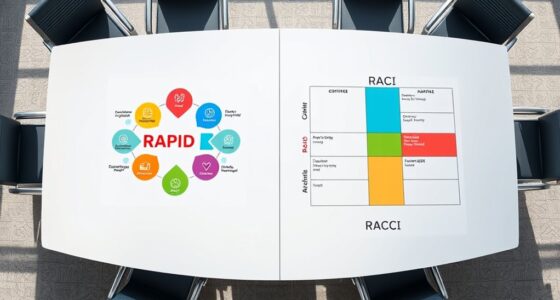
Using rounds and check-ins in meetings helps make certain that everyone’s voice is heard and valued. These tools encourage inclusivity by giving quiet team members space to share and prevent a few voices from dominating discussions. Structuring these moments with clear questions keeps conversations focused and productive. Active listening builds trust, making your team feel more engaged and connected. Keep going to discover how to implement these strategies effectively for more inclusive, efficient meetings.
Key Takeaways
- Use structured rounds to ensure all team members have equal opportunities to share insights and concerns.
- Establish clear prompts and time limits to keep check-ins focused and inclusive for everyone.
- Foster active listening and acknowledgment to build trust and make team members feel valued.
- Encourage quieter participants by explicitly inviting their input and creating a safe sharing environment.
- Clearly communicate the purpose of check-ins to boost engagement and demonstrate how feedback influences decisions.

Rounds and check-ins are essential tools for maintaining effective communication and ensuring team coordination. When you incorporate these practices into your meetings, you create a space where every team member feels heard and valued. This approach fosters a culture of inclusion, making team participation more meaningful and consistent. By systematically checking in with each individual, you can gather diverse perspectives, identify potential issues early, and keep everyone aligned on goals. As a result, meetings become more efficient because they stay focused, structured, and productive.
Regular rounds and check-ins foster inclusive, focused meetings that enhance team cohesion and efficiency.
Using rounds and check-ins helps prevent dominance by a few voices and encourages quieter team members to share their insights. When you set aside dedicated time for each person to speak, you ensure that no one is left out of the conversation. This not only boosts team participation but also enhances engagement, as members know their contributions matter. When everyone’s input is valued, team members become more committed to shared objectives, which ultimately improves meeting efficiency. You’ll notice fewer misunderstandings and less need for follow-up discussions because ideas and concerns are addressed upfront.
To maximize the benefits, you should establish a clear, consistent format for your rounds and check-ins. For example, you might go around the virtual or physical room, giving each person a set time to share updates or voice concerns. Keep the process simple but intentional—prompt team members with specific questions, such as “What’s your main focus today?” or “Are there any obstacles you’re facing?” This targeted approach helps keep the conversation on track and prevents tangents that can waste time. When you actively listen and acknowledge each contribution, you reinforce that every team member’s voice is important, fostering trust and openness.
Additionally, make sure your team understands the purpose of these check-ins. When they see that their feedback directly influences decisions or project adjustments, they’re more likely to stay engaged. This inclusivity creates a positive cycle: increased participation leads to better communication, which streamlines decision-making and improves overall meeting efficiency. Remember, the goal isn’t just to fill time but to create a dynamic environment where everyone’s input is integrated into the team’s progress. Incorporating structured communication frameworks can further enhance the effectiveness of these practices.
Top picks for "round check inclusive"
Open Amazon search results for this keyword.
As an affiliate, we earn on qualifying purchases.
Frequently Asked Questions
How Can I Facilitate Rounds in Large Groups Effectively?
To facilitate rounds effectively in large groups, you should focus on managing group dynamics and using facilitation techniques. Start by setting clear rules and encouraging equal participation. Use structured prompts to guide responses and keep everyone engaged. Incorporate time limits to maintain flow, and consider breaking the group into smaller sections if needed. Active facilitation helps guarantee all voices are heard, creating an inclusive and productive environment.
What Are Common Challenges in Implementing Check-Ins?
You might face challenges like balancing cultural sensitivity and time management during check-ins. Some participants may feel uncomfortable sharing due to cultural differences, while others might dominate the conversation, making it hard to stay on schedule. To overcome these issues, set clear guidelines, guarantee everyone understands the importance of inclusivity, and allocate specific time slots for each person. This way, you create a respectful, efficient environment that encourages participation.
How Do I Ensure Inclusivity During Rounds?
Think of your team as a garden needing diverse blooms. To guarantee inclusivity during rounds, foster cultural sensitivity by actively listening and respecting different perspectives. Create emotional safety by encouraging openness and reassuring confidentiality. Use inclusive language, avoid assumptions, and invite everyone to share without pressure. This approach helps all voices thrive, making your meetings richer and more welcoming for everyone involved.
Can Rounds Replace Traditional Meeting Agendas?
Rounds can replace traditional meeting agendas by fostering team bonding and encouraging creative brainstorming. They create a more inclusive environment where everyone shares ideas, making meetings more engaging and collaborative. Instead of following a rigid agenda, you focus on open communication, which helps build trust and sparks innovation. This approach keeps meetings dynamic, ensuring all voices are heard, and everyone feels valued, ultimately improving team cohesion and productivity.
What Tools Support Virtual Rounds and Check-Ins?
You can use tools like Zoom, Microsoft Teams, or Google Meet for virtual collaboration during rounds and check-ins. Digital facilitation features such as breakout rooms, polls, and shared documents help create inclusive, engaging meetings. These tools support real-time interaction, ensuring everyone’s voice is heard. They make it easy to facilitate virtual rounds, foster connection, and keep your team aligned, regardless of where everyone is located.
Conclusion
By embracing rounds and check-ins, you foster an inclusive space where everyone’s voice matters—like a well-tuned orchestra humming in harmony. Remember, even in a world of smartphones and instant messages, taking the time for genuine connection keeps your team united. So, don’t let your meetings become a “fire and brimstone” ordeal; instead, make them a gentle rain that nurtures growth. With these tools, your meetings will be more lively and equitable than ever.